62 citations
,
November 2022 in “Acta Pharmaceutica Sinica B” This study reported that an injectable hydrogel based on platelet-rich plasma and laponite improved wound healing in diabetic and normal rats by enhancing angiogenesis and macrophage polarization.
 37 citations
,
April 2011 in “Journal of Biological Chemistry”
37 citations
,
April 2011 in “Journal of Biological Chemistry” This study discovered a novel interaction between the vitamin D receptor and LEF1, essential for normal Wnt signaling in keratinocytes, which is crucial for regular hair cycling.
August 2016 in “KU ScholarWorks (The University of Kansas)” This study demonstrated that transplanting in vitro differentiated Wharton's jelly mesenchymal stem cells on acellular dermal grafts led to complete skin regeneration with appendages in a mouse model of full-thickness wounds.
10 citations
,
September 2021 in “American Journal of Medical Genetics Part A” This study on Qatari patients with Woodhouse-Sakati syndrome highlights the high incidence and diverse clinical presentation due to a specific genetic variant, emphasizing early diagnosis for effective management.
 3 citations
,
August 2024 in “Cureus”
3 citations
,
August 2024 in “Cureus” This study found that DALL-E 2 performed poorly in generating accurate images of most pediatric dermatological conditions, highlighting the need for more domain-specific and inclusive training data.
 April 2016 in “Journal of Investigative Dermatology”
 This study found that the peptide derivative beta-Ala-Pro-Dab-NHbenzyl may reduce wrinkles and sebum production in human skin by inhibiting dipeptidyl peptidase 4, suggesting potential for acne and skin inflammation treatment.
1 citations
,
September 2021 in “Frontiers in genetics” This case report identifies a previously undocumented nonsense mutation in DCAF17 in a Chinese patient with Woodhouse-Sakati syndrome, inherited from consanguineous parents.
January 2026 in “Advanced Science” In this study, a chronotherapeutic bilayer dressing system showed enhanced diabetic wound healing in a model by reducing inflammation through polyphenols and promoting repair with sustained PDGF-BB delivery, leading to faster re-epithelialization and hair follicle regeneration.
 April 2006 in “Dermatologic Clinics”
 This study found that white wax and its extract significantly promoted hair growth in a mouse model of androgenetic alopecia, outperforming finasteride by inhibiting 5α-reductase activity and enhancing cellular proliferation.
56 citations
,
September 2014 in “Molecular Endocrinology” This study found that the absence of unliganded vitamin D receptor significantly impairs cWnt and hedgehog signaling pathways necessary for hair cycle initiation in VDR-null mice.
 3 citations
,
December 2021 in “Frontiers in endocrinology”
3 citations
,
December 2021 in “Frontiers in endocrinology” In this study, a novel DCAF17 gene mutation was identified in a Chinese family, suggesting a potential role in pancreatic β cell dysfunction and diabetes development in Woodhouse-Sakati syndrome.
 November 2023 in “International Journal of Cosmetic Science”
 This study found that a wheat polar lipid complex supplement significantly reduced hair loss and improved hair growth and volume in women experiencing acute hair shedding, including postmenopausal women.
136 citations
,
September 2019 in “Journal of Clinical Investigation” This study found that mature dermal adipocytes have high plasticity, undergoing dedifferentiation and redifferentiation, which plays a significant role in hair cycling and wound healing.
 4 citations
,
August 2021 in “Biomedicine & Pharmacotherapy”
4 citations
,
August 2021 in “Biomedicine & Pharmacotherapy” This review summarizes the association between 5-alpha reductase inhibitors and depression, discussing potential mechanisms such as neuroactive steroid alterations and neuroinflammation, but reports no new clinical results.
August 2024 in “International Journal of Molecular Sciences” This study found that root hairs of wild-type Arabidopsis grow faster and longer under low potassium stress, with changes in actin filament dynamics and specific regulation by the actin bundling proteins VLN1 and VLN4.
 3 citations
,
July 2023 in “International Journal of Biological Macromolecules”
3 citations
,
July 2023 in “International Journal of Biological Macromolecules” In this study, the researchers developed a hydrogel mimicking the fetal environment that significantly accelerated wound healing and hair follicle regeneration in vivo, with over 94% wound closure in 14 days, surpassing hydrogels lacking certain additives.
May 2021 in “Research Square”  21 citations
,
March 2018 in “Experimental Dermatology”
21 citations
,
March 2018 in “Experimental Dermatology” This practical guide introduces methods to study human dermal white adipose tissue but does not report new clinical results, emphasizing available techniques and staining protocols.
 April 2018 in “Journal of Investigative Dermatology”
 This study suggests that for dermatomyositis patients with minimal skin disease activity, further improvement in cutaneous symptoms may not translate into better quality of life, highlighting a need to revise trial endpoints.
 November 2022 in “Journal of Investigative Dermatology”
 This study found that the cytoplasmic dynein component Dynlt3 is essential for effective melanosome transport and transfer in mouse melanocytes, linking melanosome positioning and acidity to the Wnt/β-catenin signaling pathway.
58 citations
,
March 2019 in “Frontiers in Pharmacology” This study found that wedelolactone from Eclipta prostrata L. significantly reduced lung inflammation and fibrosis in mice with bleomycin-induced pulmonary fibrosis, suggesting potential therapeutic benefits through AMPK activation.
May 2025 in “Experimental Dermatology” In this study, researchers developed a novel genetic tool using Wif1-CreER knock-in mice for precise labeling and manipulation of dermal papilla cells, which could enhance understanding of hair biology and aid in developing targeted therapies for hair-related disorders.
 86 citations
,
March 2018 in “ACS Biomaterials Science & Engineering”
86 citations
,
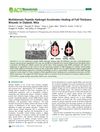
March 2018 in “ACS Biomaterials Science & Engineering” This study found that MDP hydrogel significantly accelerated wound healing and improved tissue formation in diabetic mice compared to a standard clinical hydrogel and control buffer.
In this study, PDLLA treatment in middle-aged mice was observed to enhance hair growth by increasing macrophage M2 polarization and hair follicle stem cell proliferation, potentially rejuvenating the skin's microenvironment and offering a novel approach for age-related hair loss.
28 citations
,
September 2014 in “Journal of Veterinary Internal Medicine” This study found that the novel drug VDC-1101 showed a 45% objective response rate in treating canine cutaneous T-cell lymphoma, offering a potential treatment option for this challenging disease.
September 2021 in “IP Indian Journal of Clinical and Experimental Dermatology” In this study, Diabliss Hair Water was found to improve hair growth rate, density, and quality while reducing hair fall in healthy adults experiencing hair thinning concerns.
14 citations
,
March 2018 in “The American journal of case reports” This study highlights the phenotypic variability in 5 patients with Woodhouse-Sakati syndrome carrying the c.436delC mutation, suggesting a broader range of clinical presentations than previously recognized.
 13 citations
,
November 2013 in “Journal of Endocrinology/Journal of endocrinology”
13 citations
,
November 2013 in “Journal of Endocrinology/Journal of endocrinology” This study found that the vitamin D receptor, but not its ligand, regulates genes involved in hair cycle progression, suggesting a role in integrating hormone signaling pathways for hair and epidermal functions.
 14 citations
,
April 2019 in “Genes”
14 citations
,
April 2019 in “Genes” This study identified a genetic locus associated with coat type in domestic dogs, showing certain variants linked to single-coated breeds and suggesting potential regulatory roles.
 November 2022 in “Van Sağlık Bilimleri Dergisi”
 This study found no association between W locus allele variations and phenotypic traits like eye color, head spotting, and fur length in Turkish Van cats, suggesting other genetic factors should be explored.