January 2022 in “Faculty of 1000 Research Ltd” This study found that many participants in India lacked awareness and proper practices for home-based COVID-19 management, highlighting the need for targeted educational programs.
 1 citations
,
January 2020 in “Research Square (Research Square)”
1 citations
,
January 2020 in “Research Square (Research Square)” This study found that ethyl acetate extract of Musa × pardisiaca L. leaves showed anticancer activity against cervical carcinoma and malignant melanoma in vitro.
8 citations
,
September 2013 in “Molecular carcinogenesis” This study found that rapamycin effectively inhibits TPA-induced keratinocyte proliferation and skin tumor promotion by targeting mTORC1 signaling in both wild-type and transgenic mice.
 April 2010 in “The Journal of Urology”
 This study found that ureteroileal anastomosis with direct intraluminal visualization had a 4.2% stricture rate, which compares favorably to other techniques with rates between 3.5% and 11.1%.
9 citations
,
October 2015 in “Cutaneous and ocular toxicology” This case report observed vemurafenib-induced pityriasis amiantacea, a scalp scaling reaction, in a patient with metastatic melanoma, which was managed symptomatically without altering vemurafenib treatment.
 26 citations
,
September 2020 in “Journal of the European Academy of Dermatology and Venereology”
26 citations
,
September 2020 in “Journal of the European Academy of Dermatology and Venereology” This publication is a letter discussing the association between an androgen receptor genetic variant and COVID-19 disease severity in hospitalized male patients, but it reports no new research results.
August 2019 in “Pharmacoscript” This study found that a combination of pandanus and sansevieria leaf extracts at a 3:2 ratio showed improved hair growth activity compared to individual extracts and controls.
 February 2017 in “Cancer Causes & Control”
 In this study, Swedish men carrying the AR haplotype H2 were found to have a significantly lower risk of prostate cancer compared to those with the more common H1 variant.
5 citations
,
August 1983 in “PubMed” This study found that isozyme profiles in polyoma virus-induced tumors were consistent and distinctive for each tumor type, except for salivary and mammary tumors which shared a profile.
 111 citations
,
October 2008 in “Nature Genetics”
111 citations
,
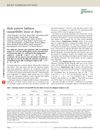
October 2008 in “Nature Genetics” In their study, Tim Spector and colleagues identified a new genetic association at chromosome 20p11.22 with male-pattern baldness, confirmed by the increased risk when combined with a known androgen receptor gene variant.
 June 2017 in “Journal of Traditional and Folk Practices”
 This study enumerates the traditional uses of Begonia malabarica by tribes in Tamil Nadu, where it is reported to be used for treating a variety of ailments, with further research planned to evaluate its biological potential.
60 citations
,
January 2021 in “BMC Genomics” This study mapped genomic copy number variation in Chinese fine-wool sheep, identifying genes involved in sensory perception, nutrient metabolism, growth, and development, and highlighting significant selection on the RXFP2 gene.
82 citations
,
January 2011 in “New Phytologist” This study demonstrated that AtVLN4 plays a role in root hair growth by regulating actin organization in a calcium-dependent manner.
 4 citations
,
April 2013 in “International Journal of Pharmaceutical Sciences and Drug Research”
4 citations
,
April 2013 in “International Journal of Pharmaceutical Sciences and Drug Research” This study found that ethanol extracts from Musa paradisiaca cv. Puttabale corms have significant anthelmintic activity against Pheretima posthuma, outperforming the standard drug piperazine citrate in terms of paralysis and death times.
8 citations
,
June 2017 in “The Journal of Infection in Developing Countries” 73 citations
,
October 2009 in “Anti-Cancer Agents in Medicinal Chemistry” This study found that new curcumin analogues, such as ASC-J9, can inhibit prostate cancer cell growth by promoting androgen receptor degradation.
50 citations
,
February 2007 in “The Journal of Pathology” This study found a rare germline mutation in the Birt–Hogg–Dubé gene in a Japanese patient with renal cell carcinoma, suggesting distinct biological features and challenging current renal tumor classifications.
 February 2024 in “BMC genomics”
 This study identified a gene variant in the TRPV3 gene that may explain the suri alpaca phenotype, characterized by longer and less crimped fleece, suggesting this variant's involvement in the development of these hair characteristics compared to the huacaya phenotype.
 April 2016 in “Journal of Investigative Dermatology”
 This study identified mefloquine as a potent inducer of lethal ER stress that effectively eliminated vemurafenib-resistant and sensitive melanoma cells, suggesting its potential for repurposing as a melanoma treatment.
 October 2025 in “Cermin Dunia Kedokteran”
 This review outlines the strategies for managing TB-IRIS in HIV patients, emphasizing early detection, prevention, and appropriate treatment to reduce morbidity and mortality.
3 citations
,
January 2025 in “Animal Genetics” In this study, researchers conducting a genome-wide association study on 263 adult female goats identified significant genomic variants linked to coarse hair diameter, particularly emphasizing a crucial region on Chromosome 10. These findings enhance understanding of the genetic factors influencing fiber diameter in goats.
1 citations
,
November 2025 in “Neuro-Oncology” In this study, safusidenib erbumine was evaluated for its efficacy and safety in patients with untreated IDH1-mutated WHO grade 2 gliomas, achieving a 44.4% objective response rate and 87.9% 24-month event-free probability, but with some mild to moderate adverse effects.
 45 citations
,
February 2018 in “Journal of basic and clinical physiology and pharmacology/Journal of basic & clinical physiology & pharmacology”
45 citations
,
February 2018 in “Journal of basic and clinical physiology and pharmacology/Journal of basic & clinical physiology & pharmacology” This review summarizes the ethno-medicinal uses, phytochemical constituents, and biological activities of Acorus calamus, highlighting its potential therapeutic benefits and the importance of further scientific work on this plant.
 1 citations
,
September 2023 in “Journal of the American Academy of Dermatology”
1 citations
,
September 2023 in “Journal of the American Academy of Dermatology” This abstract introduces baricitinib as an approved treatment for adults with severe alopecia areata in the US, Europe, and Japan, but does not report any specific study results or findings.
 5 citations
,
November 2017 in “Asian journal of pharmaceutical and clinical research”
5 citations
,
November 2017 in “Asian journal of pharmaceutical and clinical research” This study found that water fractions of Angiopteris evecta stimulated hair growth in male rabbits, suggesting potential alopecia treatment benefits pending further research in humans.
 January 2023 in “Burns & Trauma”
 This study introduced a volar skin excisional wound model that closely mirrors human wound healing and supports evaluation of skin regeneration with multiple appendages and innervation.
 June 2026 in “Zenodo (CERN European Organization for Nuclear Research)”
 This case report describes significant improvement in a 23-year-old male with alopecia areata of toxic origin after 10 days of Ayurvedic treatment involving Shamana and Shodhana therapies, as new hair emerged.
 1 citations
,
October 2018 in “International research journal of pharmacy”
1 citations
,
October 2018 in “International research journal of pharmacy” This study found that ethanol extract and n-hexane fraction of rampai leaves may stimulate hair growth in rabbits, showing potential as an anti-alopecia treatment.
January 2022 in “Mammalian Genome” This study found that the wavy coat trait in Nakano cataract mice is polygenic, involving major and minor genes, and resembles human curly scalp hair associated with the PRSS53 gene alteration.