 May 2024 in “Animal genetics”
 The researchers investigated a Maine Coon cat with suspected classical Ehlers-Danlos Syndrome and discovered a heterozygous deletion in the COL5A1 gene, underscoring the value of whole-genome sequencing for precise veterinary diagnostics.
7 citations
,
July 2001 in “Endocrinology” This study observed that knocking out the 1α-hydroxylase gene in mice resulted in rickets and growth retardation, demonstrating the enzyme's crucial role in vitamin D function in animals.
 1 citations
,
April 2023 in “Frontiers in Genetics”
1 citations
,
April 2023 in “Frontiers in Genetics” This report on individuals with AEBP1-related classical-like EDS confirmed previous findings and identified hair loss as a potential characteristic feature of this rare condition for the first time. Additionally, cardiovascular complications observed in some individuals suggest that cardiovascular monitoring may be necessary.
1 citations
,
January 2008 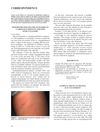 21 citations
,
January 2005 in “Pediatric Dermatology”
21 citations
,
January 2005 in “Pediatric Dermatology” An 8-year-old girl with vitiligo developed extra hair growth on her knee after using tacrolimus ointment.
January 2010 in “Seoul National University Open Repository (Seoul National University)” This study investigated vitamin D receptor expression in normal hair follicles and those affected by alopecia areata, focusing on various markers using immunohistochemical staining.
 20 citations
,
February 2016 in “American Journal of Pathology”
20 citations
,
February 2016 in “American Journal of Pathology” This study indicates that the OVOL1-OVOL2 axis may play a significant role in hair follicle differentiation and growth, potentially serving as therapeutic targets for hair disorders like alopecia and in the tumorigenesis of pilomatricoma.
April 2017 in “The journal of investigative dermatology/Journal of investigative dermatology” This case report identified a 6-month-old girl with congenital generalized hypertrichosis and gingival hyperplasia, where a de novo CNV on chromosome 17q24.2-24.3 was associated with reduced expression of ABCA5 and SOX9.
 August 2019 in “International journal of contemporary pediatrics”
 This case study reports that a 3 ½ year-old male with vitamin D-dependent type II rickets showed partial improvement in alopecia and rickets when treated with high doses of 1,25(OH)2 vitamin D3.
 10 citations
,
February 2008 in “Photochemistry and photobiology”
10 citations
,
February 2008 in “Photochemistry and photobiology” This study suggests that the vitamin D receptor and hairless gene may directly regulate each other via a transcriptional mechanism, potentially explaining phenotypic similarities between atrichia and VDRRIIa rickets.
2 citations
,
March 2020 in “JAAD case reports” This article discusses the various clinical manifestations of kwashiorkor, resulting from severe protein malnutrition, and reports no new research findings.
1 citations
,
December 2020 in “Case reports in dermatological medicine” This case report discusses a 67-year-old male with pre-existing pemphigus vulgaris who showed nearly 90% resolution of his skin lesions after two weeks of acyclovir treatment, accompanied by continued use of systemic steroids.
10 citations
,
January 1925 in “Archives of Dermatology” This article discusses a historical case of a rare skin disorder involving alopecia and follicular plugs reported in 1907; it presents no new findings.
 9 citations
,
November 2019 in “Cell calcium”
9 citations
,
November 2019 in “Cell calcium” This study found that a mutation causing Stormorken syndrome in mice led to skeletal abnormalities and unusual hair growth, showcasing the STIM1 R304W protein’s role in bone development and cell fate.
17 citations
,
March 1994 in “Pediatric Dermatology” This report describes the co-occurrence of vitiligo and alopecia areata in pediatric cases but provides no new clinical findings.
August 2020 in “European Journal of Dermatology” This study identified three EDAR gene variants potentially linked to hypohidrotic ectodermal dysplasia in three Pakistani families, which could aid in genetic counseling for similar cases.
60 citations
,
August 2009 in “Journal of the American Academy of Dermatology” This study describes five patients with porokeratotic adnexal ostial nevus, a rare skin disorder, highlighting its clinical features and proposing a new encompassing term for related conditions.
September 2019 in “The journal of investigative dermatology/Journal of investigative dermatology” This study identifies two previously unreported pathogenic RIPK4 gene variants, suggesting a functional link with cell adhesion molecules in ectodermal dysplasias.
 9 citations
,
October 2013 in “Journal of Investigative Dermatology”
9 citations
,
October 2013 in “Journal of Investigative Dermatology” This study found that the OVOL1 gene in mouse neonatal dermal cells is crucial for hair follicle neogenesis, suggesting it plays a significant role in maintaining trichogenicity.
December 2019 in “The American Journal of Gastroenterology” In this study, three cases of Cronkhite-Canada syndrome revealed small bowel mucosal lesions, but these findings did not correlate with clinical symptoms or steroid treatment outcomes.
 5 citations
,
September 1986 in “Pediatric Dermatology”
5 citations
,
September 1986 in “Pediatric Dermatology” This study reported a previously undescribed form of hereditary hypotrichosis in a family, characterized by childhood-onset hair loss, morphea, and probable autosomal dominant inheritance.
 3 citations
,
May 2019 in “BMJ case reports”
3 citations
,
May 2019 in “BMJ case reports” This report describes a rare case of severe combined immunodeficiency caused by a FOXN1 gene variant, complicated by Epstein-Barr virus infection and high-grade B-cell lymphoma, leading to the infant's death despite treatment efforts.
 August 2025 in “BMC Pregnancy and Childbirth”
 In this study, prenatal ultrasonography was found to be a valuable tool for screening ectodermal dysplasia during pregnancy, and a new EDA gene variant associated with X-linked hypohidrotic ectodermal dysplasia was identified, aiding in more accurate diagnoses and reproductive decision-making.
4 citations
,
January 2023 in “Journal of Clinical Investigation” This study identified a recurrent mutation in the endothelin receptor type A associated with mandibulofacial dysostosis with alopecia, and proposed a mechanism involving increased ligand affinity due to structural changes.
 January 2026 in “Immunity & Inflammation”
 This review discusses a "stochastic multi-hit model" to explain the onset, progression, and recurrence of vitiligo and other autoimmune skin diseases, emphasizing genetic and environmental influences, immune cell interactions, and unexplored mechanistic gaps.
73 citations
,
January 2004 in “Journal of the American Academy of Dermatology” Immunocompromised patients can develop skin and hair issues due to a virus.
21 citations
,
September 2013 in “Pediatric Dermatology” This case report describes three patients with Netherton syndrome who experienced growth hormone deficiency and improved growth rates following growth hormone therapy.
3 citations
,
December 2020 in “Skin Appendage Disorders” This case report highlights a family member with a confirmed diagnosis of hypotrichosis with juvenile macular dystrophy due to a CDH3 gene mutation, emphasizing the importance of genetic testing for accurate counseling.
 January 2023 in “Annals of Dermatology”
 This study found that alopecia areata patients with a CCHCR1 gene variant had higher recurrence rates and structural abnormalities in hair compared to those without the variant.
 June 2023 in “British journal of dermatology/British journal of dermatology, Supplement”
 In this study, two cases of cutis verticis gyrata were associated with chronic traction alopecia due to tight hairstyles, highlighting the need to consider hairstyling history in diagnosis and management.