 5 citations
,
January 2017 in “Anais brasileiros de dermatologia/Anais Brasileiros de Dermatologia”
5 citations
,
January 2017 in “Anais brasileiros de dermatologia/Anais Brasileiros de Dermatologia” This review reports two new cases of porokeratotic eccrine and hair follicle nevus and analyzes all known cases in the Spanish and English literature, suggesting a link to a GJB2 gene mutation.
2 citations
,
July 2013 in “Journal of Life Sciences” In this case report, researchers described a two-year-old girl with Vitamin D dependent rickets Type II, noting elevated 1,25-dihydroxyvitamin D3 and alopecia, and observed limited treatment response likely due to poor compliance.
 December 2022 in “Gastroenterology”
 This report describes a case of Cronkhite-Canada syndrome diagnosed in a 54-year-old man with symptoms including gastrointestinal polyps, alopecia, skin hyperpigmentation, and severe diarrhea, who experienced significant symptom improvement with azathioprine.
16 citations
,
March 2011 in “Ophthalmic genetics” This case report documents a 63-year-old with Birt-Hogg-Dubé Syndrome who developed choroidal melanoma alongside multiple lid folliculomas, marking the first known association of these conditions.
September 2007 in “The American Journal of Gastroenterology” This case report describes a 37-year-old Filipino man with Cronkhite-Canada syndrome who improved after receiving nutritional support and medical treatment, despite the typically poor prognosis of the condition.
This article reviews current understanding of Hutchinson–Gilford Progeria Syndrome and suggests RNA-based treatments show promise, but no new clinical findings are reported.
9 citations
,
August 2002 in “British journal of ophthalmology” This case report describes a young man diagnosed with encephalocraniocutaneous lipomatosis who had unique bilateral optic disc colobomas, a previously unreported association with this syndrome.
7 citations
,
March 2002 in “AIDS” This case report presents an HIV-1 patient who experienced osteosclerosis and new bone formation potentially due to long-term indinavir therapy and concurrent use of vitamin A, with symptoms reducing after switching to nelfinavir.
 10 citations
,
August 2016 in “Oxford Medical Case Reports”
10 citations
,
August 2016 in “Oxford Medical Case Reports” This case report describes the development of halo naevi, vitiligo, and diffuse alopecia areata in a 33-year-old woman undergoing tocilizumab therapy, suggesting a link between these conditions and cellular and humoral immune factors.
 August 2010 in “Journal of The American Academy of Dermatology”
 This educational activity reports no new research findings; it aims to help physicians assess and improve their clinical skills through self-evaluation and continued medical education.
 October 2007 in “Clinical Biochemistry”
 This study identified a new genotype, V281+I172N/V281L, linked to non-classical 21-hydroxylase deficiency, suggesting it should be considered in genetic panels for the condition.
 February 2010 in “Journal of The American Academy of Dermatology”
 A woman with Degos disease managed her condition for nine years with medications and had two healthy pregnancies, while a separate finding suggests a possible link between female pattern hair loss and high blood pressure.
 June 2023 in “British Journal of Dermatology”
 In this case report, researchers described a female child with total alopecia due to a mutation in the SNRPE gene, emphasizing the need for updated genetic testing as knowledge advances to avoid diagnostic delays in hereditary nonsyndromic hypotrichosis.
July 2020 in “Faculty Opinions – Post-Publication Peer Review of the Biomedical Literature”  41 citations
,
November 2011 in “The Journal of Dermatology”
41 citations
,
November 2011 in “The Journal of Dermatology” This review identifies genetic mutations associated with congenital hair loss disorders in Japanese populations, particularly highlighting common LIPH gene mutations linked to woolly hair/hypotrichosis, and reports no new clinical results.
2 citations
,
March 2010 in “European journal of dermatology/EJD. European journal of dermatology” This case report describes a 5-year-old girl with trichorrhexis nodosa and highlights the presence of isolated curly hairs on her scalp despite hair loss over four months.
January 2026 in “Animal Genetics” This study investigated a Labrador Retriever with paw pad hyperkeratosis and identified a unique de novo heterozygous missense variant in the GJB6 gene, suggesting its potential role in the condition, analogous to Clouston syndrome in humans, although differences between species may provide further insights.
1 citations
,
September 2022 in “European Journal of Dermatology” This study identified a novel splice-site variant of the LAMB3 gene that may cause junctional epidermolysis bullosa, suggesting gene sequencing is essential for accurate diagnosis.

This abstract is a navigation and policy notice for a website and does not contain any research findings.
3 citations
,
January 2011 in “生物医学研究杂志:英文版” In this study, a novel heterozygous transition mutation in the KRT86 gene was identified, which may be pathogenic for monilethrix in a Chinese family.
1 citations
,
August 2013 in “The Journal of Cell Biology” This study found that Wnt secretion is important for skin homeostasis in mice, as Evi-deficient mice developed skin lesions resembling psoriasis and showed immune cell imbalance.

This study found clinical markers like leukotrichia and trichrome lesions in non-segmental vitiligo patients were linked to greater disease extent and poor response to treatment.
12 citations
,
January 1987 in “Ophthalmic Paediatrics and Genetics” This report describes a patient with biotinidase deficiency presenting bilateral optic atrophy, and confirms autosomal recessive inheritance through enzyme dosage analysis in the patient and family members.
1 citations
,
December 1997 in “Archives of dermatology” This report describes a case of trichostasis spinulosa, a condition with pruritic, black papules on the face caused by keratotic plugs with embedded vellus hairs.
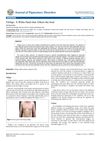 2 citations
,
January 2017 in “Journal of Pigmentary Disorders”
2 citations
,
January 2017 in “Journal of Pigmentary Disorders” This article discusses vitiligo, reviewing its symptoms, possible causes, and classification, but reports no new clinical findings.
55 citations
,
April 2008 in “Clinical Genetics” This report identifies a novel mutation in the ST14 gene in a female with autosomal recessive ichthyosis with hypotrichosis, highlighting similar features to previously reported cases.
June 2010 in “Seoul National University Open Repository (Seoul National University)” This article discusses the expression of vitamin D receptor in hair follicles and its role in alopecia, without presenting new findings; the authors highlight the involvement of Wnt/b-catenin signaling in hair growth.
 23 citations
,
December 2013 in “British Journal of Dermatology”
23 citations
,
December 2013 in “British Journal of Dermatology” This study identified a new PNPLA1 mutation in a Spanish family with autosomal recessive congenital ichthyosis.
 5 citations
,
January 1970 in “Journal of Nepal Paediatric Society”
5 citations
,
January 1970 in “Journal of Nepal Paediatric Society” This article reviews Vitamin D-dependent rickets Type II with a focus on alopecia as a potential diagnostic clue for this rare disorder, reporting no new clinical findings.
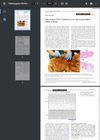 May 2024 in “Animal genetics”
 The researchers investigated a Maine Coon cat with suspected classical Ehlers-Danlos Syndrome and discovered a heterozygous deletion in the COL5A1 gene, underscoring the value of whole-genome sequencing for precise veterinary diagnostics.