July 2011 in “Journal of Pediatric and Adolescent Gynecology” This report discusses a teenager with blistering of localized epidermolysis bullosa simplex—Weber Cockayne type, recommending referral to dermatology, and includes no new clinical trials or broader conclusions.
 April 2024 in “Indian Journal of Paediatric Dermatology”
 This case report highlights a rare association between congenital triangular alopecia and vitiligo, noting that treatment with tofacitinib improved the patient's vitiligo but not the alopecia.
81 citations
,
January 2011 in “Allergology International” Among Japanese patients with generalized vitiligo, this study found a genetic susceptibility to autoimmune diseases, particularly autoimmune thyroid disease, within families.
 February 2026 in “bonndoc (University of Bonn)”
 This study identified novel genetic variants related to rare skin and hair disorders, expanding the understanding of conditions like COLED, EV, and monilethrix, including a newly discovered type I keratin gene, KRT31, as a cause for monilethrix.
19 citations
,
December 1999 in “International Journal of Dermatology” This case report diagnosed variegate porphyria in a 33-year-old woman based on significant laboratory abnormalities, but with clinical features resembling porphyria cutanea tarda.
9 citations
,
October 1995 in “Clinical Dysmorphology” This study described a Scottish family with hidrotic ectodermal dysplasia featuring variable symptoms such as hypo/oligodontia, thin hair, and heat tolerance, and concluded they exhibited overlapping traits with Clouston syndrome.
 May 2020 in “International journal of biology, pharmacy and allied sciences”
 This review discusses the correlation between vitiligo and various autoimmune, systemic, and dermatological diseases, highlighting the need to increase awareness of these comorbidities.
 14 citations
,
July 2010 in “Experimental Dermatology”
14 citations
,
July 2010 in “Experimental Dermatology” A new mutation in the HR gene causes hair loss in a specific family.
 11 citations
,
March 2020 in “American Journal of Medical Genetics Part A”
11 citations
,
March 2020 in “American Journal of Medical Genetics Part A” This study identified a novel homozygous EDNRA variant linked to Oro-Oto-Cardiac Syndrome and showed that EDNRA signaling is essential for normal craniofacial and cardiovascular development.
 8 citations
,
May 2022 in “Orphanet Journal of Rare Diseases”
8 citations
,
May 2022 in “Orphanet Journal of Rare Diseases” This study reported that the Undiagnosed Disease Program at Ghent University Hospital successfully provided definite diagnoses for 18% of referred adults with suspected rare diseases, primarily through genomic technologies.
May 2009 in “OPAL (Open@LaTrobe) (La Trobe University)” In this study, a transgenic mouse model suggested that suppressing the expression of the HGPS mutation may reverse disease symptoms, including skin abnormalities, supporting the potential for treatment development.
1 citations
,
July 2018 in “JAMA dermatology” This abstract contains navigation and subscription information for JAMA Dermatology and reports no new clinical findings.
 1 citations
,
September 2023 in “British journal of dermatology/British journal of dermatology, Supplement”
1 citations
,
September 2023 in “British journal of dermatology/British journal of dermatology, Supplement” The researchers reported that WNT10A gene variants are linked to short anagen hair syndrome, which suggests a potential genetic factor contributing to this hair condition.

This study found that wavy sinus hairs in cats were significantly associated with feline leukemia virus infection, suggesting this physical trait might be useful for identifying infected cats.
2 citations
,
July 2021 in “Genes” This study identified a new genetic variant in the KRT71 gene responsible for a breed-specific form of hypotrichosis in Hereford cattle, potentially serving as a model for similar human conditions.
47 citations
,
September 2002 in “Journal of Bone and Mineral Research” This study found that a specific VDR amino acid substitution in children with hereditary vitamin D-resistant rickets disrupts ligand binding and gene activation but does not impair hair follicle development.
11 citations
,
January 2014 in “Dermatology” This study identified three SPINK5 mutations, including two novel ones, in Israeli patients with Comèl-Netherton syndrome, suggesting recurring mutations that should inform future diagnostic strategies in Israel.
 27 citations
,
July 2017 in “Scientific Reports”
27 citations
,
July 2017 in “Scientific Reports” This study found that conditional knockout of N-WASP in keratinocytes of mice led to skin barrier defects, increased immune cell infiltration, and hyperproliferation of keratinocytes, indicating its crucial role in skin homeostasis.
 2 citations
,
January 2000 in “Journal of Toxicologic Pathology”
2 citations
,
January 2000 in “Journal of Toxicologic Pathology” This study identified a single autosomal recessive gene responsible for hypotrichosis in a mutant rabbit strain, affecting hair growth and causing epidermal and hair follicle abnormalities.
June 2023 in “Zenodo (CERN European Organization for Nuclear Research)” This review discusses Hutchinson-Gilford Progeria Syndrome, its symptomatology, and the progress in developing treatment strategies, emphasizing that while a cure remains elusive, advances in understanding the disease's molecular mechanisms show promise for future approaches.
October 1990 in “Pediatric Research” This case report details a severe instance of VDR-II where intravenous calcium infusions, administered nightly, successfully improved clinical, radiological, and biochemical signs of rickets without alopecia despite ineffective calcitriol therapy.
11 citations
,
January 2021 in “British Journal of Dermatology” This report describes a new case of syndromic ichthyosis caused by compound heterozygous mutations in AP1B1, detailing the associated clinical features and molecular consequences in the patient.
13 citations
,
April 1994 in “Baillière's clinical endocrinology and metabolism” This review discusses inherited forms of vitamin D-dependent rickets and explains their genetic and metabolic causes but reports no new clinical findings.
12 citations
,
January 2013 in “Indian dermatology online journal” This case report presents a patient with woolly hair and associated symptoms, including keratosis pilaris, nail dystrophy, increased interdental spaces, and recurrent bullous impetigo, observing a combination not previously reported.
 September 2023 in “International journal of science and healthcare research”
 In this report, a preterm neonate was found to have total irreversible hair loss due to congenital atrichia, confirmed by a mutation in the human hairless gene on chromosome 8p22, illustrating this rare autosomal recessive disorder.
 1 citations
,
September 2011 in “Journal of Dermatology”
1 citations
,
September 2011 in “Journal of Dermatology” This letter reports a woman with nevoid basal carcinoma syndrome and pronounced androgenic alopecia associated with a novel PTCH gene mutation p.Leu1159fsx32, suggesting a genetic link in this case study.
 February 2026 in “Frontiers in Medicine”
 In this case report, a three-generation family with Gorlin-Goltz syndrome showed a heterozygous PTCH1 splice-donor variant associated with the disease, and two affected relatives benefited from individualized, side-effect-guided dosing of the drug sonidegib, experiencing regression of basal cell carcinoma lesions.
 13 citations
,
November 2009 in “Journal of Dermatological Science”
13 citations
,
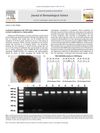
November 2009 in “Journal of Dermatological Science” This article discusses various dermatological studies cited by previous authors and reports no new clinical results.
 1 citations
,
June 2022 in “Movement disorders clinical practice”
1 citations
,
June 2022 in “Movement disorders clinical practice” This study reports a unique case of trichotillomania as a presenting sign in a patient with neurological Wilson's disease, confirmed by genetic testing and copper abnormalities.
1 citations
,
July 2017 in “PubMed” This study describes two Danish cases of Cronkhite-Canada syndrome presenting with malnutrition and gastrointestinal issues; both patients underwent successful treatment and remission after developing colonic adenocarcinomas.