26 citations
,
October 2020 in “Biomedicines” This review discusses the applications and potential of Bioengineered Artificial Skin Substitutes in cosmetics and pharmacology research, with no new clinical findings reported.
21 citations
,
October 2023 in “The Journal of Physical Chemistry C” This study used theoretical calculations to show that phosphates strongly bind to cerium dioxide surfaces in various stable configurations, with spectral signatures identifiable in the infrared and Raman spectra, informing future experimental efforts in controlling the enzymatic activity of ceria nanoparticles.
16 citations
,
February 2019 in “Journal of Cellular and Molecular Medicine” This study established a rat model of radiation-induced dermatitis using 90 Gy irradiation, which may aid in exploring new treatments and understanding the pathology, particularly highlighting autophagy regulation as a potential therapeutic target.
14 citations
,
November 2022 in “Development” This review discusses how transposable element activation may hinder tissue regeneration and explores mechanisms to control this activity, reporting no new experimental results.
13 citations
,
May 2006 in “Annals of Saudi Medicine” The researchers reported substantial discrepancies in prescribing information between generic drugs marketed in Saudi Arabia and standard references, indicating a need for regulatory improvements to ensure accuracy and patient safety.
10 citations
,
May 2017 in “Symmetry” This study observed that among !Kung San males, adult androgen levels, particularly DHT, were negatively associated with indicators of fluctuating and directional asymmetry, suggesting a link to phenotype quality.
7 citations
,
October 2024 in “Cells” The researchers reported that autophagy, a lysosome-dependent degradation mechanism, plays a significant role in the cellular remodeling of keratinocyte differentiation in the skin, affecting the properties of the differentiation products by altering cellular components during this process.
5 citations
,
July 2024 in “Journal of Microbiology and Biotechnology” This study investigated autophagy activator ICP5249 and found it promotes hair growth by enhancing cell proliferation and autophagy-related markers in human dermal papilla cells and hair follicles, with AMPKα playing a regulatory role, suggesting its potential as a hair growth ingredient.
 1 citations
,
May 2023 in “European Journal of Human Genetics”
1 citations
,
May 2023 in “European Journal of Human Genetics” This study observed that numerical chromosomal aberrations were more common in men with severe male factor infertility and azoospermia compared to those with other sperm quality issues, while chromosomal translocations were significantly associated with oligoasthenozoospermia, highlighting important genetic counseling considerations.
 July 2026 in “Biomimetics”
 This review discusses recent advancements in bone tissue engineering, emphasizing a shift from passive to smart responsive antibacterial strategies to prevent implant-associated infections, and highlights AI's role in optimizing bone scaffold design for personalized, infection-free implants.
 September 2025 in “International Journal of Molecular Sciences”
 In this review, researchers explored hair as a promising tool for identifying biomarkers in schizophrenia, highlighting its potential for supporting personalized medicine through ease of sampling, though acknowledging challenges like individual variability and methodological inconsistencies.
 May 2024 in “Clinical Cosmetic and Investigational Dermatology”
 In this study, researchers reviewed the roles of autophagy and mitophagy in hair follicle cycles, exploring their potential links to hair loss and investigating how manipulating these pathways might offer new therapeutic strategies.
 March 2024 in “Organic letters”
 This study reports that difluoromethyl nitrile oxide can rapidly functionalize various alkenes at room temperature, leading to products that can transform into valuable medicinal chemistry building blocks like CF2H-isoxazolines for bioactive molecule modification.
 August 2026 in “Molecular Biomedicine”
 This review outlines the design and engineering of multifunctional hydrogels, emphasizing their evolving biomedical applications, notably in controlled drug delivery, tissue support, and disease management, and discusses their potential for clinical translation.

This article reviews the cutaneous side effects of immune checkpoint inhibitors and targeted therapies for skin cancers, noting that while generally mild, these effects can influence treatment decisions and quality of life, underscoring the need for physicians to be aware of these adverse reactions.

In this case study, gentian violet in diluted shampoo successfully alleviated symptoms of a Malassezia pachydermatis infection in a cat initially unresponsive to conventional treatments.
13 citations
,
September 2014 in “Journal of photochemistry and photobiology. B, Biology” This study found that UV radiation exposure increased protein elution and altered protein characteristics in hair fibers, suggesting environmental factors impact hair shaft proteins.
 1 citations
,
March 2017 in “Archives of Plastic Surgery”
1 citations
,
March 2017 in “Archives of Plastic Surgery” This paper describes a new technique using gentian violet to improve visualization during follicular unit extraction in white-haired patients, suggesting it enhances the accuracy of the procedure.
 3 citations
,
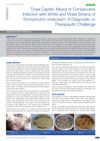
January 2015 in “Journal of clinical and diagnostic research”
3 citations
,
January 2015 in “Journal of clinical and diagnostic research” This case report described a seven-year-old with tinea capitis, which improved clinically after six weeks of griseofulvin treatment, changing the fungal strain from Trichophyton violaceum white variant to violet strain.
 59 citations
,
January 2013 in “Annals of Dermatology”
59 citations
,
January 2013 in “Annals of Dermatology” In this study, researchers found that Asian hair contains more integral lipids than European or African hair, which may protect it better from UV-induced damage.
This article reviews the medicinal uses of sweet violet in traditional Persian medicine, highlighting its benefits for conditions like coughing in asthmatic patients, constipation, insomnia, and allergic rhinitis, while noting no special side effects at therapeutic doses.
65 citations
,
April 2000 in “The Laryngoscope” This study concluded that clotrimazole, miconazole, and tolnaftate appeared safe in guinea pigs, whereas gentian violet showed potential for severe ototoxicity, and nystatin left a concerning residue.
3 citations
,
August 2021 in “European journal of medical research” This case report suggests that a cutaneous microbial biofilm could be an underlying cause of red scrotum syndrome, based on the observed onset and treatment response in one patient.
 August 2018 in “Journal of The American Academy of Dermatology”
 A 54-year-old man with painful skin blisters and fever was diagnosed with Sweet syndrome and successfully treated with corticosteroids.
 January 2014 in “Revista Brasileira de Cirurgia Plástica”
 This publication describes the role of the Revista Brasileira de Cirurgia Plástica in documenting and promoting advancements in plastic surgery, but does not present new research findings.
This study reports that using stamps to mark scalp incisions with gentian violet ink and a barrier film improved incision symmetry and maintained slot visibility for hair graft insertion in the frontal region.
 April 2021 in “BMJ Case Reports”
 This case report discusses a rare instance of pseudolymphomatous folliculitis in a 19-year-old man, highlighting the challenge in diagnosing PLF due to its low clinical suspicion index and variable initial clinical diagnoses.
 November 1999 in “Australian Psychologist”
 This abstract provides a list of books covering various psychological and social topics but reports no specific study findings.
 14 citations
,
September 2018 in “The journal of allergy and clinical immunology/Journal of allergy and clinical immunology/The journal of allergy and clinical immunology”
14 citations
,
September 2018 in “The journal of allergy and clinical immunology/Journal of allergy and clinical immunology/The journal of allergy and clinical immunology” In this study, a novel homozygous mutation in the STAT5B gene was identified in a 17-year-old boy with growth hormone-refractory growth failure, severe eczema, and autoimmune disease, suggesting a similarity to known STAT5B deficiency phenotypes.
 3 citations
,
August 2024
3 citations
,
August 2024 In this study, researchers using single nuclei RNA-sequencing found that fibroblasts in deeper layers of mouse skin expressed higher levels of pro-inflammatory genes post-wounding compared to other cells, highlighting their significant role in early inflammation and tissue repair processes.