 22 citations
,
July 2004 in “International Journal of Cosmetic Science”
22 citations
,
July 2004 in “International Journal of Cosmetic Science” This article reviews the impact of UV radiation and visible light on human hair structure and summarizes protective strategies, reporting no new clinical results.
 April 2023 in “The journal of investigative dermatology/Journal of investigative dermatology”
 This study found that deleting Ube2n in adult mouse skin leads to inflammation and other skin changes, and identifies IRAK1/4 as potential treatment targets for inflammatory skin disorders.
9 citations
,
June 2009 in “Cell Proliferation” This study found that Cream 1 effectively prevented UV radiation-induced nerve ending damage in human skin samples, unlike placebo and SPF15 creams.
 April 2026 in “Frontiers in Bioengineering and Biotechnology”
 This study found that a cellulose membrane significantly shortened the healing time and reduced the ulcer area in patients with chronic venous leg ulcers compared to a standard antimicrobial dressing.
2 citations
,
July 2004 in “Cell Biology International” This study found that urokinase plasminogen activator (uPA) is elevated in hyperproliferative hair follicle keratinocytes in mice, and its inhibition significantly reduces their proliferation.
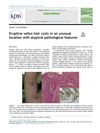 January 2018 in “The Kaohsiung journal of medical sciences”
 This case report describes an atypical presentation of eruptive vellus hair cysts on the elbows, where standard diagnostic techniques were unreliable due to the loss of cystic structural integrity.
 November 2011 in “Australasian Journal of Dermatology”
 Cellulite may be linked to low adiponectin, isotretinoin with UVB can treat psoriasis effectively, permanent alopecia post-chemotherapy resembles a unique hair loss, deodorants may cause fragrance allergies, desmoplastic melanoma is becoming more common, and intensive UVB treatment can give long-term psoriasis remission.
28 citations
,
January 2005 in “Photochemistry and Photobiology” This study found that overexpression of PKCepsilon in mouse epidermis was associated with increased susceptibility to metastatic squamous cell carcinoma, potentially through a mechanism involving tumor necrosis factor-alpha.
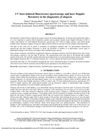 April 2016 in “Proceedings of SPIE”
 This study found that UV laser-induced fluorescence spectroscopy can effectively differentiate between types of alopecia in patients, showing a high correlation between blood circulation levels and tissue autofluorescence intensity.
2 citations
,
May 2018 in “Dermatologic Surgery” This overview outlines the Dermatologic Surgery journal's comprehensive focus on cosmetic and reconstructive procedures, but it does not present any new research findings.
This pilot study employed in-vivo multiphoton microscopy to visualize pigment-producing melanocytes in vitiligo patients, aiming to enhance understanding of treatment impacts and potentially improve transplantation therapies.
 March 2025 in “Clinical Cosmetic and Investigational Dermatology”
 In this study, researchers found that the "U" allele of the Tru9I variant may be associated with low vitamin D levels and altered VDR gene activity in alopecia areata patients, while the "u" allele might have a protective role against developing the condition.
9 citations
,
October 2014 This chapter hypothesizes that vitamin D signaling in the skin may suppress UV radiation-induced epidermal tumor formation, reviewing potential mechanisms without reporting new clinical results.
 2 citations
,
February 2023 in “Transgenic Research”
2 citations
,
February 2023 in “Transgenic Research” In this study, the presence of the HPV11-E2 protein in transgenic mice was found to increase and vary the expression of a reporter gene in hair follicle bulge regions.
January 2025 in “Stem Cells International” This study found that exosomes from human umbilical cord mesenchymal stem cells reduced oxidative stress and inflammation in UVB-induced skin injury in cell and mouse models, suggesting their potential for treating UV-damaged skin by influencing Nrf2 and NF-κB pathways.
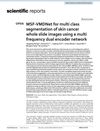 April 2026 in “Scientific Reports”
 In this study, the proposed MSF-VMDNet, combining dual encoder networks with a multi-frequency domain mechanism, significantly outperformed existing methods in segmenting skin cancer tissues from histological slide images, achieving high accuracy with an MIoU of 95.37% and a Dice coefficient of 95.11%.
19 citations
,
December 1999 in “International Journal of Dermatology” This case report diagnosed variegate porphyria in a 33-year-old woman based on significant laboratory abnormalities, but with clinical features resembling porphyria cutanea tarda.
21 citations
,
August 2002 in “British Journal of Ophthalmology” This report notes that while surgical excision is typically curative for squamous cell carcinoma, the authors suggest considering the intralesional use of cidofovir for its potential success without systemic toxicity.
 1 citations
,
November 2017 in “The journal of investigative dermatology/Journal of investigative dermatology”
1 citations
,
November 2017 in “The journal of investigative dermatology/Journal of investigative dermatology” In this study, Makarova et al. found that topical vitamin D3 significantly delayed basal cell carcinoma development in UVR-exposed, BCC-prone mice, while oral vitamin D3 supplements did not prevent carcinogenesis, suggesting a potential role of UV-induced vitamin D3 in inhibiting tumor growth.
 1 citations
,
March 2017 in “Archives of Plastic Surgery”
1 citations
,
March 2017 in “Archives of Plastic Surgery” This paper describes a new technique using gentian violet to improve visualization during follicular unit extraction in white-haired patients, suggesting it enhances the accuracy of the procedure.
In this study, researchers developed a photocurable polyurethane resin for 3D printing, creating high-resolution elastomeric microwell arrays that effectively promote uniform spheroid formation and growth of A549 cells, which could aid in disease modeling and organoid research.
10 citations
,
January 2018 in “International journal of trichology” This case report highlights the importance of histopathological examination in accurately diagnosing eruptive vellus hair cyst due to its rarity and resemblance to other conditions.
7 citations
,
January 2002 in “PubMed” This study observed significant skin changes, including epidermal thickening and pleomorphic keratinocytes, in rats after subchronic UVB irradiation, highlighting specific reactions in the dorsal skin.
9 citations
,
January 2021 in “Mediators of Inflammation” In this study, 15d-PGJ2 administered in a topical cream inhibited oxidative and inflammatory skin changes caused by UVB radiation in hairless mice, suggesting it as a promising treatment approach.
 1 citations
,
January 2014 in “Hair therapy & transplantation”
1 citations
,
January 2014 in “Hair therapy & transplantation” This report describes benefits of advanced hair transplant techniques, micro-FUE and U-FUE, which may result in natural, undetectable hair restoration and discrete post-procedure appearance.
8 citations
,
January 2018 in “Journal of Analytical Methods in Chemistry” This study developed a reliable HPLC-UV/Vis method to determine aluminum phthalocyanine chloride in skin, supporting its use in skin permeation studies for photodynamic therapy of cutaneous tumors.
122 citations
,
December 2022 in “International Journal of Molecular Sciences” In this review, researchers discussed recent advances in nanotechnology for topical skin applications, highlighting how nanocarriers enhance skin penetration and targeting in treatments for diseases like melanoma and psoriasis, while acknowledging that the penetration mechanisms and health impacts of nanoparticles remain not fully understood.
105 citations
,
December 2017 in “Journal of Biological Engineering” This review discusses the challenges of skin graft acceptance and examines current strategies and alternatives for full-thickness skin replacement and repair, noting that immunological rejection remains a significant hurdle.
100 citations
,
August 2011 in “Journal of Investigative Dermatology” Lack of vitamin D receptor increases skin tumor risk by boosting hedgehog signaling.
65 citations
,
March 2004 in “Journal of Clinical Investigation” In this study, overexpression of ornithine decarboxylase accelerated basal cell carcinoma in Ptch1+/– mice under UVB exposure, while its inhibition reduced tumor induction, suggesting potential chemoprevention strategies in humans.