February 2015 in “Oxford University Press eBooks” This article discusses various aspects of sex steroid production and physiology in men, along with a clinical case of primary amenorrhoea, but reports no new research findings.
October 1984 in “Kidney international” This case report describes a 23-year-old woman with a history of ambiguous genitalia and complex medical conditions, including a pelvic mass and hirsutism, observed from childhood to adulthood.
 4 citations
,
September 2020 in “Andrologia”
4 citations
,
September 2020 in “Andrologia” This study found that Origanum vulgare extract improved testicular structure and function in mice against finasteride-induced damage by enhancing antioxidant defense and modulating gene expression related to apoptosis.
June 2011 in “British Journal of Urology” This review discusses the challenges in developing combination therapies for urological conditions and notes that regulatory requirements and financial disincentives hinder progress, without presenting new clinical findings.
2 citations
,
October 2019 in “Minia Journal of Medical Research” This study found that urinary tract infections were prevalent among the Egyptian population, with 31.1% of Enterobacteriaceae strains showing multidrug resistance, which may complicate treatment.
 3 citations
,
February 2019 in “Journal of endourology case reports”
3 citations
,
February 2019 in “Journal of endourology case reports” This report discusses a rare case of polypoid cystitis in a 45-year-old Asian man, which mimicked a bladder tumor and caused bilateral upper tract obstruction that was successfully treated through staged endoscopic management, ureteral stenting, and oral steroids.
27 citations
,
May 2019 in “Jo'jig gonghag gwa jaesaeng uihag/Tissue engineering and regenerative medicine” This review discusses strategies and translational advancements in urethral tissue engineering, concluding that a combination of hypoxia-preconditioned mesenchymal stem cells on pre-vascularized synthetic scaffolds may be most effective; it reports no new clinical results.
5 citations
,
May 2018 in “European journal of pharmacology” This study reviewed the pharmacological properties of fesoterodine and found that its ability to effectively treat overactive bladder, especially in the elderly, is likely due to its specific properties, including its receptor affinity, blood-brain barrier penetration, metabolic conversion, and extended-release formulation.
1 citations
,
February 2023 in “Actas Urológicas Españolas (English Edition)” 5 citations
,
June 2017 in “BJU international” In this review, the authors highlight the occupational risks faced by pregnant urologists, such as radiation and exposure to certain medications, and emphasize the importance of avoiding specific drugs and practicing good hygiene, but note limited data on radiation risk.
1 citations
,
January 1999 in “Theriogenology”  March 2026 in “Inflammopharmacology”
 This study found that ursolic acid at 50 mg/kg improved biochemical, hormonal, and ovarian histopathological markers in a rat model of PCOS, suggesting its potential as a therapeutic option.
3 citations
,
June 2017 in “The Journal of urology/The journal of urology” This study found that men aged 60 or older with postoperative urinary retention were more likely to undergo bladder outlet procedures within three years.
 13 citations
,
September 2011 in “International Urology and Nephrology” 10 citations
,
April 2022 in “BMJ Open”
13 citations
,
September 2011 in “International Urology and Nephrology” 10 citations
,
April 2022 in “BMJ Open” This study found that lower urinary tract symptoms were linked to reduced functional ability in older adults, with distinct associations for nocturia in men and frequency, urgency, and overactive bladder in women.
10 citations
,
February 2003 in “The Journal of Urology” This study found that bladder outlet obstruction's common complication, detrusor overactivity, tends to persist with medical therapy or watchful waiting but significantly decreases with surgical treatment, especially prostatectomy.
1 citations
,
July 2024 in “Journal of Assisted Reproduction and Genetics” 
This report discusses Titanflow as a potential improvement in male urinary health by focusing on the detrusor muscle rather than prostate size, suggesting it may offer relief where other supplements have limited effectiveness.
January 2011 in “Chinese Journal of General Practice” This study found that tailored treatments based on urodynamic testing improved urinary bladder dysfunction in Parkinson's disease patients, thereby enhancing their quality of life and protecting kidney function.
8 citations
,
March 2015 in “Molecular Medicine Reports” This study found that para-phenylenediamine induces cytotoxic effects in normal human hair dermal papilla cells by altering microRNA expression and causing cell death, cell cycle arrest, and oxidative stress.
 8 citations
,
July 2019 in “Pure and Applied Chemistry”
8 citations
,
July 2019 in “Pure and Applied Chemistry” This study identified natural compounds from Iris plants that showed potential as inhibitors of urease and carbonic anhydrase-II enzymes, suggesting their possible use in treating related disorders.
October 2008 in “The Journal of Urology” This editorial comment in the Journal of Urology reviews various studies related to prostate cancer and therapies but reports no new research findings.
 September 2009 in “European Urology Supplements”
 This study found that a 3 mm margin around the prostate CTV may be adequate if accompanied by frequent imaging, but superior-inferior displacements were notably greater than in other directions.
 January 2025 in “The Analyst”
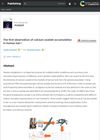
 In this study, researchers identified a novel biomarker of oxalate metabolism, which plays a crucial role in conditions like hyperoxaluria and kidney stones, marking the first time this detection has been reported.
September 2007 in “The Journal of Urology” This editorial comment discusses combination therapy for benign prostatic hyperplasia but presents no new research findings.
 July 2011 in “Journal of Nursing UFPE on line”
 This study found that 13% of women who underwent ultrasound imaging showed suggestive signs of polycystic ovaries, but ultrasound findings alone are insufficient to diagnose polycystic ovary syndrome.
October 2021 in “European urology open science” April 2018 in “The Journal of urology/The journal of urology” This study found that independent pharmacies in the St. Louis metropolitan area offer significantly lower prices for certain generic urologic medications compared to chain pharmacies, regardless of geography or zip code income.