This study concluded that removing alopecia and mucous membrane components from the CLASI-A score limits the ability to capture crucial clinical information about cutaneous lupus erythematosus activity, recommending their retention.
4 citations
,
August 2023 in “Frontiers in Pediatrics” This study observed that children with multisystem inflammatory syndrome associated with COVID-19 exhibited physical intolerance and fatigue shortly after the acute phase, but significant improvements in exercise capacity, laboratory markers, and cardiac health were reported by six months post-discharge.
3 citations
,
December 2023 in “Aging” In liver cancer cells, this study found that upregulating hsa_circ_0002980 inhibits cell proliferation, metastasis, and EMT by modulating the miR-1303/CADM2 axis, suggesting it as a potential therapeutic target.
1 citations
,
December 2025 in “Stem Cell Research & Therapy” The researchers reported that mesenchymal stem cells promote wound healing by using Cx43 hemichannels to mediate ATP secretion, which supports macrophage polarization, angiogenesis, and fibroblast migration, suggesting a potential therapeutic strategy for improving tissue repair.
13 citations
,
August 2024 in “iScience” This study found that 3D spheroid culture reprogrammed mesenchymal stem cells into a uniform immunosuppressive phenotype, suggesting potential therapeutic applications for inflammatory diseases like psoriasis.
December 2025 in “JGH Open” In this case study, a 78-year-old Japanese woman with Cronkhite-Canada syndrome experienced mesenteric lymphadenopathy, which reduced in size after treatment with the corticosteroid prednisolone. This suggests that mesenteric lymphadenopathy, though uncommon in CCS, may respond to steroid therapy.
November 2022 in “The Journal of Urology” This study suggests that adopting the Mark Cuban Cost Plus Drug Company model for purchasing urological medications could have saved Medicare about $1.29 billion in 2020.
 December 2023 in “The journal of cell biology/The Journal of cell biology”
 This study developed the mTurquoise2-Col4a1 mouse model and used fluorescent tagging of collagen IV to offer new insights into basement membrane dynamics during hair follicle budding, revealing that basement membranes are flexible and stable structures in developing skin tissue.
1 citations
,
October 2023 in “Pharmaceuticals” In this study, researchers investigated GAGs from the marine invertebrate Microcosmus exasperatus, finding that its polysaccharides possess antitumoral properties without affecting anticoagulant activity. The unique composition shows potential for cancer treatment when combined with existing therapies in future studies.
6 citations
,
September 2021 in “Medical Journal of Cell Biology” This review discusses the potential of mesenchymal stem cells and their secretome as promising therapeutic tools for systemic lupus erythematosus but reports no new clinical results.
6 citations
,
October 2001 in “British Journal of Ophthalmology” This article discusses the potential of intralesional cidofovir for treating SCC without systemic toxicity, noting that surgical excision remains the best treatment option; it reports no new clinical results.
 21 citations
,
October 1980 in “Gastroenterology”
21 citations
,
October 1980 in “Gastroenterology” This report is the first to associate Cronkhite-Canada syndrome with multiple myeloma, describing regenerative pseudopolyps in a 58-year-old woman rather than true adenomatous polyps.
14 citations
,
July 2015 in “International Journal of Molecular Sciences” This study found that S-Methylmethionine sulfonium (SMMS) enhances cell survival and reduces damage from UVB irradiation in skin cells, suggesting its potential as a cosmetic ingredient for UV protection.
 8 citations
,
November 1990 in “Archives of Dermatology”
8 citations
,
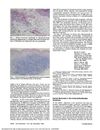
November 1990 in “Archives of Dermatology” This case report details a woman with eosinophilia-myalgia syndrome associated with L-tryptophan ingestion, highlighting skin lesions with abundant dermal mucin.
 May 2023 in “International Journal of Molecular Sciences”
 This review highlights the complications of radiation therapy, specifically radiation cystitis, and explores the potential of mesenchymal stem cell-based therapies for tissue repair while discussing their therapeutic potential and limitations.
 18 citations
,
November 2008 in “Disease-a-Month”
18 citations
,
November 2008 in “Disease-a-Month” This study developed a multifunctional injectable hydrogel that effectively provided hemostasis and accelerated healing of infected skin wounds, demonstrating significant potential for clinical wound dressing applications.
 September 2024 in “Frontiers in Veterinary Science”
 In this study, researchers observed that introducing an Environmental Enrichment Program improved the reproductive and zootechnical performance of Calomys callosus rodents by enhancing reproductive indices, parental care, and overall health, including reduced non-infectious lumbar alopecia.
December 2025 in “Advanced Healthcare Materials” In this study, a new topical formulation containing amine-activated carboxymethyl chitosan and hydrolyzed extracellular matrix showed promising results in a mouse model by reducing oxidative stress, inflammation, and promoting hair regeneration, potentially offering an alternative treatment for inflammatory hair loss.
September 2024 in “Dokumentenrepositorium der RUB (Ruhr University Bochum)” This study found that patients with higher baseline monocyte counts (\(\geq\) 925/\(\mu\)l) were significantly more likely to see treatment failure with adalimumab for hidradenitis suppurativa.
 4 citations
,
June 2025 in “Cochrane Database of Systematic Reviews”
4 citations
,
June 2025 in “Cochrane Database of Systematic Reviews” This Cochrane review found no clear superiority among treatments for central serous chorioretinopathy, with low-dose photodynamic therapy, supplements, and eplerenone showing slightly higher probabilities of improving visual acuity, but evidence remains uncertain due to biases and small study sizes.
 November 2023 in “PubMed”
 In this study using animal models, umbilical cord stem cell conditioned media combined with oral anti-androgens improved hair regeneration in androgenetic alopecia, enhancing hair follicle cycles and reducing inflammation, suggesting potential as a promising therapy.
November 2017 in “Belarusian State Pedagogical University repository (Belarusian State Pedagogical University)” The authors concluded that burned skin contains viable mesenchymal stem cells which enhance wound healing in animal models without altering key biological functions due to burn trauma.
 January 1999 in “American Journal of Medical Genetics Part A”
 This case report describes a rare occurrence of ectodermal dysplasia features in a 14-year-old with MBTPS1 gene variants, expanding the known spectrum of related disorders.
 December 2025 in “Academic Journal of Science and Technology”
 This review explores the potential of mesenchymal stem cells in skin regeneration and rejuvenation, highlighting their ability to modulate immune response and enhance extracellular matrix strength but does not provide new clinical evidence.
January 2024 in “Indian Journal of Psychiatry” This study found that precision 40Hz gamma-transcranial alternating current stimulation significantly improved negative and cognitive symptoms in patients with schizophrenia compared to a sham group, suggesting promising potential for this neuromodulation technique in treating these symptoms.
December 2024 in “Clinical and Experimental Dermatology” This study found that patients with central centrifugal cicatricial alopecia preferred shared decision-making with their doctors regarding treatment management.
January 2008 in “Zhongguo zuzhi gongcheng yanjiu yu linchuang kangfu” This study found that selecting human vaginal mucosa stem cells by adhesion to type Ⅳ collagen for 20 minutes and culturing them with feeder layer and epidermal total culture media was most effective in maintaining their characteristics.
36 citations
,
March 2014 in “Cell death and differentiation” This study indicated that abnormal Bmp signaling in β-catenin gain-of-function mutants is associated with anorectal malformations, shedding light on potential mechanisms underlying these congenital conditions.
6 citations
,
February 2023 in “Genes” This study found that overexpression of the CUX1 protein promotes proliferation of Hu sheep dermal papilla cells and affects key genes in the Wnt/β-catenin signaling pathway.
 July 2025 in “ACS Applied Materials & Interfaces”
 This study found that combining ultrasound with a GelMA hydrogel able to deliver mesenchymal stem cell-derived vesicles significantly improved wound healing in a mouse model by enhancing fibroblast activity, promoting re-epithelialization, and facilitating hair follicle regeneration, highlighting a novel approach to skin regeneration therapy.