1 citations
,
February 2023 in “International Journal of Rheumatic Diseases” This study reported that tuberculosis can mimic lupus-like symptoms, including the production of autoantibodies, which may confuse the diagnosis with systemic lupus erythematosus flares.
 December 2025 in “Nature Communications”
 This study demonstrated that skin organoids derived from human stem cells can model cutaneous tuberculosis, revealing that fibrosis development in Mycobacterium tuberculosis-infected organoids is linked to the PI3K-AKT and AP1 pathways in fibroblasts, and suggesting the potential for antifibrotic treatment evaluation.
 May 2025 in “The Journal of Rheumatology”
 This case report describes a young female with pediatric SLE and latent TB who was found to have gastrointestinal tuberculosis, a rarely recognized and often misdiagnosed condition, highlighting the diagnostic challenges and need for early recognition in such cases.
 May 2023 in “Authorea (Authorea)”
 In this report, researchers documented a rare complication linked to levofloxacin, used as a second-line treatment for tuberculosis, which could include various adverse events during TB therapy.
 2 citations
,
December 2019 in “Leprosy Review”
2 citations
,
December 2019 in “Leprosy Review” This report describes a rare case of leprotic alopecia in a 26-year-old female, secondary to paucibacillary leprosy, with a clinical picture mimicking alopecia areata-vitiligo overlap syndrome.
2 citations
,
March 1986 in “BMJ”  February 2025 in “Revista Eletrônica Acervo Saúde”
 This report emphasizes the importance of considering thyroid tuberculosis in the differential diagnosis of cervical masses, highlighting the role of biopsy and histopathological examination for accurate diagnosis and treatment.
October 2023 in “F1000Research” This case report describes a 21-year-old woman with systemic lupus erythematosus who developed tuberculous lymphadenitis, highlighting the increased risk of TB in patients on long-term immunosuppressive therapy.
June 2023 in “F1000Research” This case report describes a 21-year-old female with systemic lupus erythematosus who developed tuberculous lymphadenitis, which was attributed to her compromised immune system from long-term immunosuppressive therapy.
1 citations
,
January 2015 in “Journal of Arthritis” This case report describes an 18-year-old girl with systemic lupus erythematosus who developed lupus pneumonitis, initially misdiagnosed as tuberculosis, and responded dramatically to corticosteroid treatment.
January 2023 in “Faculty of 1000 Research Ltd” This report details a case of tuberculous lymphadenitis in a 21-year-old female with SLE, suggesting that immune suppression may increase susceptibility to this extra-pulmonary TB.
7 citations
,
February 2023 in “Exploration of Medicine” This review discusses various strategies for drug repurposing in tuberculosis treatment, highlighting significant potential but reports no new clinical results.
4 citations
,
July 2023 in “Frontiers in Microbiology” HGF combined with ADA is highly accurate for diagnosing tuberculous pleural effusion, especially in younger females.
 October 2025 in “International journal of research and scientific innovation”
 This case report highlights the importance of considering lupus pneumonitis as a differential diagnosis for respiratory symptoms in systemic lupus erythematosus, especially in areas endemic to tuberculosis.
November 2023 in “Faculty of 1000 Research Ltd” This case report describes a rare instance of tuberculous lymphadenitis in a patient with systemic lupus erythematosus, highlighting the potential link between immune suppression and tuberculosis risk.
December 2011 in “Thorax” In this study, researchers reported that individuals from iodine-deficient regions have an increased risk of developing hypothyroidism from MDR-TB treatment regimens containing PAS and/or Prothionamide.
 November 2025 in “Mendeley Data”
 This study observed that JAK inhibitors were safe and effective for patients with moderate-to-severe alopecia areata and comorbid latent hepatitis B or stable tuberculosis, with careful monitoring and selective prophylaxis.
 November 2025 in “Mendeley Data”
 This study observed that JAK inhibitor therapy may be safely administered to patients with alopecia areata and latent HBV or stable TB, without reactivation of these infections, when appropriate monitoring and prophylaxis are used.
January 2023 in “Faculty of 1000 Research Ltd” This case report describes a 21-year-old female with systemic lupus erythematosus who developed tuberculous lymphadenitis, highlighting the risk of TB in patients with weakened immune systems on long-term immunosuppressive therapy.
January 2023 in “Faculty of 1000 Research Ltd” This case report details a 21-year-old female with systemic lupus erythematosus who developed tuberculous lymphadenitis, illustrating how immunosuppressive therapy in SLE patients can lead to such infections.
 47 citations
,
March 2019 in “Journal of immunology research”
47 citations
,
March 2019 in “Journal of immunology research” This review discusses the effects of valproic acid on immune cell activation and gene expression, potentially influencing infection outcomes and suggesting its promise for autoimmune and hypersensitivity condition management.
 October 2023 in “Frontiers in medicine”
 This study analyzed screening data from 218 alopecia areata patients before starting Janus kinase inhibitors, revealing the importance of pre-treatment screening due to risks of infections like tuberculosis and hepatitis B, with 74.8% of patients proceeding to treatment in real-world settings.
 10 citations
,
November 2012 in “International Journal of Dermatology”
10 citations
,
November 2012 in “International Journal of Dermatology” This study identified that certain diseases, including AIDS and systemic lupus erythematosus, may cause African hair to change to a silky, wavy texture similar to neonatal hair in affected patients.
 4 citations
,
December 2013 in “International Journal of Dermatology”
4 citations
,
December 2013 in “International Journal of Dermatology” This correspondence discusses nasal sporotrichosis in children and does not report any clinical results.
 January 2024 in “Journal of Ayurveda Campus”
 In this review, researchers reported that Psoralea corylifolia, extensively used in Ayurveda and Traditional Chinese Medicine, exhibits various pharmacological activities, including antioxidant and antidiabetic effects, and is primarily used for treating skin diseases. The authors suggest further clinical trials to explore its therapeutic potential.
 January 2022 in “Przegla̧d dermatologiczny”
 This article reviews various treatment options for diseases associated with cicatricial alopecia but reports no new clinical results.
2 citations
,
August 2023 in “Infection and Drug Resistance” This study reported a case where a 46-year-old woman developed alopecia without itching or pain on her scalp due to a cutaneous infection from *Mycobacterium abscessus*, which was resolved after three months of antibacterial treatment, resulting in new hair growth.
 January 2021 in “Journal of Cutaneous and Aesthetic Surgery”
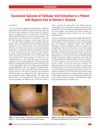
 Follicular unit extraction successfully restored hair growth in a leprosy patient without disease relapse.
 19 citations
,
September 2002 in “Acta dermato-venereologica”
19 citations
,
September 2002 in “Acta dermato-venereologica” In this retrospective study, anti-tuberculous agents, likely rifampicin, were effective adjunctive therapies for a chalazion, coinciding with spontaneous drainage in a patient with rosacea.
20 citations
,
December 2021 in “Plants” This review concludes that Tamarix aphylla, used traditionally for ailments such as tuberculosis and hepatitis, demonstrates various pharmacological activities, including antidiabetic and wound-healing effects, but stresses the need for further research to confirm its safety and effectiveness in humans.