 September 2025 in “JMIR Dermatology”
 This narrative review reported that direct-to-consumer teledermatology improves access to care, adherence, and patient satisfaction for treating male androgenetic alopecia, but may lead to higher drug costs.
23 citations
,
November 2007 in “Journal of cutaneous medicine and surgery” This case report suggests that topical tacrolimus may effectively manage erosive pustular dermatosis of the scalp and reverse skin atrophy, although long-term use requires monitoring for side effects.
 4 citations
,
December 1992 in “The American Journal of Cosmetic Surgery”
4 citations
,
December 1992 in “The American Journal of Cosmetic Surgery” The modified S pattern for scalp reduction is effective for removing more bald scalp and hiding scars in hair restoration.
 December 2023 in “Curēus”
 In this case study, researchers reported the first instance of keratoacanthoma on the scalp of an elderly patient in Saudi Arabia, highlighting the diagnostic challenge due to its resemblance to squamous cell carcinoma.
January 2019 in “Egyptian Journal of Dermatology and Venereology /Egyptian Journal of Dermatology and Venerology” This study investigated the efficacy and safety of a gel combining topical calcipotriol and steroid for alopecia areata. It found the combination worked similarly to steroids alone in reducing hair loss, but with fewer side effects.
7 citations
,
November 1997 in “Pediatric Dermatology” This case report identifies an association between trichothiodystrophy and a urologic malformation with primary hypercalciuria, adding to the spectrum of TTD-related abnormalities.
 June 2017 in “International Journal of Research in Dermatology”
 In this study, researchers observed that skin conditions in Timbi are influenced by occupation, literacy, and systemic diseases, with widespread improper steroid use contributing to complications.
20 citations
,
February 2004 in “Clinical & Experimental Immunology” This study suggests that long-term treatment with the contact sensitizer SADBE in mice may reduce leucocyte traffic in alopecia areata through impaired leucocyte extravasation.
20 citations
,
January 2019 in “Toxicology Reports” In this study, no signs of toxicity were observed in mice and rats given 100 mg/kg of Dunaliella salina daily for three months, while hemoglobin levels increased, suggesting its potential as a safe supplement.
April 2020 in “The Egyptian Journal of Plastic and Reconstructive Surgery” In this retrospective study of 29 patients with scalp burn alopecia, researchers utilized a simple method involving tissue expansion to reconstruct the temporal and lateral sideburn areas, resulting in satisfactory, symmetrical, and standardized aesthetic outcomes according to both objective and subjective evaluations.
February 2025 in “Canadian Journal of Health Technologies” This review assessed the clinical and cost-effectiveness of baricitinib, an oral treatment for severe alopecia areata in adults, to inform Canadian reimbursement recommendations, excluding Quebec.
October 2022 in “Amplla Editora eBooks” Tilapia skin helps heal skin injuries faster and cheaper.
 77 citations
,
January 1989 in “Clinical Infectious Diseases”
77 citations
,
January 1989 in “Clinical Infectious Diseases” Toxic Shock Syndrome progresses quickly, often involves multiple organs, and is linked to Staphylococcus aureus toxins, with treatment options available but diagnostic challenges remaining.
 4 citations
,
February 2014 in “Journal of the European Academy of Dermatology and Venereology”
4 citations
,
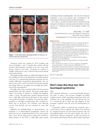
February 2014 in “Journal of the European Academy of Dermatology and Venereology” Early diagnosis of hair tourniquet syndrome saved a baby's toe from being lost.
8 citations
,
January 1991 in “Soviet physics. Doklady” This article suggests that testosterone therapy might be considered if other treatments fail, but emphasizes discussing potential risks and benefits with patients before prescribing.
 59 citations
,
August 2010 in “Journal of The American Academy of Dermatology”
59 citations
,
August 2010 in “Journal of The American Academy of Dermatology” This study observed that certain hair care practices, such as wearing cornrows and using hair extensions, were strongly associated with the development of traction alopecia and seborrheic dermatitis in African American girls.
 48 citations
,
January 2011 in “International journal of trichology”
48 citations
,
January 2011 in “International journal of trichology” This study found that intralesional triamcinolone acetonide was most effective for hair regrowth in localized alopecia areata, with betamethasone valerate foam also being beneficial, while tacrolimus ointment showed no significant effect.
 March 2014 in “Hair transplant forum international”
 This article discusses the various titles given to individuals assisting in hair transplant surgeries and provides no clinical research findings.
 11 citations
,
January 2013 in “International Journal of Trichology”
11 citations
,
January 2013 in “International Journal of Trichology” This report discusses a case of short anagen syndrome in a 3-year-old Hispanic girl and emphasizes its differentiation from loose anagen syndrome, without presenting new empirical findings.
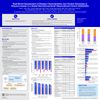
In this retrospective study of alopecia areata patients across several European countries, researchers observed a notable reduction in SALT scores, but few patients reached or maintained a clinically significant SALT score of ≤20, indicating potentially limited effectiveness of current treatments for extensive hair loss.
39 citations
,
January 2017 in “Dermatologic Therapy” This study found that topical calcipotriol lotion resulted in hair regrowth in 59.1% of alopecia areata patients, with better response observed in those with lower serum vitamin D levels.
May 2025 in “JEADV Clinical Practice” This study found that using calcipotriene and betamethasone dipropionate cream in a real-world setting significantly improved clinical outcomes and patient quality of life for adults with mild-to-moderate scalp psoriasis, especially among those with higher adherence, demonstrating high treatment satisfaction.
January 2023 in “Faculty of 1000 Research Ltd” This report details a case of tuberculous lymphadenitis in a 21-year-old female with SLE, suggesting that immune suppression may increase susceptibility to this extra-pulmonary TB.
March 2025 in “Clinical and Experimental Dermatology” In this study, 37.5% of alopecia areata patients treated with tofacitinib were identified as super-responders, with significant predictors for this status being older age and no prior JAK inhibitor treatment, leading to faster and sustained hair regrowth.
 19 citations
,
September 2002 in “Acta dermato-venereologica”
19 citations
,
September 2002 in “Acta dermato-venereologica” In this retrospective study, anti-tuberculous agents, likely rifampicin, were effective adjunctive therapies for a chalazion, coinciding with spontaneous drainage in a patient with rosacea.
 September 2023 in “Acta dermato-venereologica”
 This study observed that oral tofacitinib was effective and safe for treating alopecia areata in paediatric patients, with 82% of pre-adolescent participants experiencing hair regrowth and 64% showing significant improvement in their hair loss severity scores.
January 2012 in “Human health handbooks” This review discusses various topical treatments for scalp psoriasis, noting the preference for shampoos among patients, but highlights that no single treatment consistently excels across all clinical situations.
 March 2014 in “Journal of The American Academy of Dermatology”
 Tavaborole is a safe and effective toenail fungus treatment, with the 5% solution being the best option.
5 citations
,
July 1996 in “Journal of Cutaneous Medicine and Surgery” This study explains that while trichothiodystrophy and xeroderma pigmentosum share genetic defects, TTD patients primarily exhibit issues in transcription initiation, not the increased skin cancer risk seen in XP.
 January 2024 in “International Journal of Dermatology Research”
 In this study, platelet-rich plasma therapy was observed to provide better improvement in hair regrowth for alopecia areata patients than intralesional triamcinolone acetonide, as measured by lower SALT scores.