 March 2025 in “Indian Journal of Dermatology Venereology and Leprology”
 In this study, tofacitinib showed significant efficacy in treating alopecia totalis and universalis over a 6-month period, with notable hair regrowth outcomes, while younger age of onset and shorter treatment duration were linked to less effectiveness.
 July 2024 in “JAAD Case Reports”
 This study reports two cases of central serous chorioretinopathy developing after intralesional corticosteroid injections to the scalp for alopecia areata, suggesting a potential association that warrants cautious use and monitoring for ocular complications.
 September 2024 in “Journal of the American Academy of Dermatology”
 This review suggests that tight hairstyles and prolonged periods of wearing hijabs can lead to traction alopecia, with specific management strategies needed for hijab-wearing individuals.
 7 citations
,
January 2003 in “Nippon Ishinkin Gakkai Zasshi”
7 citations
,
January 2003 in “Nippon Ishinkin Gakkai Zasshi” This case report from Japan detailed a 10-year-old girl with alopecia successfully treated with daily terbinafine, identifying Trichophyton tonsurans as the causative fungus.
December 2020 in “Forum Dermatologicum” In this case report, a combination treatment of intralesional triamcinolone acetonide, oral acitretin, and topical clobetasol propionate showed effectiveness in reducing symptoms of Graham-Little-Piccardi-Lasseur syndrome in one patient over two months, with no new areas of hair loss observed.

This study reported that topical calcipotriol led to complete scalp hair regrowth in three patients with alopecia totalis, with no relapse observed for 6 months post-treatment.
 13 citations
,
June 2012 in “Journal of Dermatological Case Reports”
13 citations
,
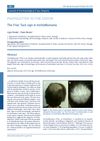
June 2012 in “Journal of Dermatological Case Reports” This report describes an 8-year-old male with trichotillomania, confirmed by trichoscopy showing characteristic hair damage and patterns.
1 citations
,
January 2024 in “Dermatologic Therapy” This study found that combining excimer light at 308 nm with tacrolimus 0.1% was more effective in treating alopecia areata of the scalp compared to excimer light alone, as indicated by a greater reduction in the SALT score and better improvement in Treg function.
 July 2022 in “International Journal of Trichology”
 This case report describes a young Indian boy with resistant alopecia areata who experienced nearly complete hair regrowth within 5 months of treatment with oral tofacitinib.
 18 citations
,
October 2005 in “International Journal of Pharmaceutics”
18 citations
,
October 2005 in “International Journal of Pharmaceutics” This study found that incorporating 0.5% TPGS into topical minoxidil solutions enhanced hair growth in mice, although increasing TPGS to 2% decreased effectiveness.
 October 2024 in “Canadian Journal of Health Technologies”
 This CADTH recommendation advises that Olumiant should be publicly reimbursed for treating severe alopecia areata in adults, provided conditions such as a 50% scalp hair loss and specific prescribing criteria are met.
1 citations
,
May 2025 in “The Journal of Dermatology” In this study, increased Treg cell activity indicated by IL-10 and IL-15 was identified as a feature of ADTA, distinguishing it from AA and potentially explaining ADTA's more favorable prognosis.
63 citations
,
May 2015 in “PloS one” This study found that GALT5 and GALT2 are redundant enzymes essential for O-glycosylation of AGPs, with mutations leading to significant growth and development defects in plants.
This study found that expressions of TLR-3, TLR-7, TLR-8, and TLR-9 were significantly higher in alopecia areata patients compared to healthy controls, indicating a potential role in disease autoimmunity.
10 citations
,
January 1997 in “Dermatology” This case report details two siblings with trichothiodystrophy, identifying reduced hair sulfur content as essential for diagnosis despite varied symptoms complicating recognition.
2 citations
,
September 2021 in “JAAD case reports” This report describes a case of trichodysplasia spinulosa in a renal transplant patient, characterized by unique dermatoscopic features and highlighting the need for timely diagnosis.
August 2004 in “Veterinary Dermatology” This study found that current clinical, microscopic, and laboratory analyses did not reliably distinguish Alaskan malamutes with coat funk from normal dogs, indicating more research with larger samples is needed.
 4 citations
,
May 2019 in “Sultan Qaboos University Medical Journal”
4 citations
,
May 2019 in “Sultan Qaboos University Medical Journal” Tofacitinib helped regrow hair in a patient with severe hair loss and improved their quality of life without side effects.
 2 citations
,
February 2025 in “International Journal of Molecular Sciences”
2 citations
,
February 2025 in “International Journal of Molecular Sciences” This study identified key proteins, such as Sfrp1 and Ppard, involved in the complex and dynamic regulation of yak hair follicle growth and degeneration across different stages, offering insights into yaks' adaptation to highland environments.
 January 2022 in “International Journal of Medicine in Developing Countries”
 In this study, 35.4% of telogen effluvium patients showed ferritin deficiency and 34.2% had vitamin D deficiency, suggesting these should be included in TE screening; TSH testing should be individualized.

This study of patients with moderate to severe alopecia areata in Morocco found that oral betamethasone mini-pulses yielded ≥50% hair regrowth in 62.5% of cases, improved quality of life scores, and were generally well-tolerated, though relapses and mild side effects were noted.
 5 citations
,
September 2018 in “Bioscience, Biotechnology, and Biochemistry”
5 citations
,
September 2018 in “Bioscience, Biotechnology, and Biochemistry” In this study, sodium thiosulfate was observed to promote hair growth in mice by encouraging hair follicles to enter the growth phase and complementing the effects of minoxidil, suggesting potential benefits for hair loss treatment.
August 2025 in “Skin Appendage Disorders” This study reported that the combination of tacrolimus, clobetasol, and minoxidil improved hair measurements and stabilized inflammation in primary cicatricial alopecia patients, with most tolerating the treatment well.
 March 2022 in “International Journal of Trichology”
 In this case report, a young female Indian patient with alopecia areata saw hair regrowth within 2 months of treatment with oral tofacitinib, with continued improvements over a 5-month period and no reported side effects.
 3 citations
,
March 2020 in “International Journal of Dermatology”
3 citations
,
March 2020 in “International Journal of Dermatology” This correspondence about the treatment of chronic alopecia areata with tildrakizumab reports no clinical results; the authors present an open-label pilot study setup.
17 citations
,
January 2015 in “Dermatology online journal” This report describes a patient experiencing hair repigmentation linked to adalimumab therapy, a TNF inhibitor, a phenomenon not previously associated with this class of drugs.
 12 citations
,
January 2008 in “Drugs”
12 citations
,
January 2008 in “Drugs” This review critically assesses current topical therapies for scalp psoriasis and reports no new clinical results; the authors highlight the need for controlled trials to evaluate treatment efficacy.
 January 2018 in “The Egyptian Journal of Hospital Medicine”
 This study found that an unbalanced diet was the most significant factor contributing to hair loss among Saudi women surveyed.
2 citations
,
May 2022 in “The journal of immunology/The Journal of immunology” In vivo using the C3H mouse model, this study observed that BST2 expression occurs before hair loss in alopecia areata and is followed by an increase in epidermal γδ T cell numbers.
 September 2025 in “JMIR Dermatology”
 This narrative review reported that direct-to-consumer teledermatology improves access to care, adherence, and patient satisfaction for treating male androgenetic alopecia, but may lead to higher drug costs.