 January 2023 in “Indian Dermatology Online Journal”
 This study found that there was no significant difference in hair regrowth between clobetasol and bimatoprost for scalp alopecia areata over 12 weeks, but bimatoprost had fewer side effects and prompted earlier, more pigmented hair regrowth.
1 citations
,
October 2010 in “Proceedings of SPIE, the International Society for Optical Engineering/Proceedings of SPIE” This study found that while short-term use of PEG-400 and Thiazone affected rat skin structure, the changes were reversible with no long-term effects observed.
 23 citations
,
February 2004 in “Clinical and Experimental Ophthalmology”
23 citations
,
February 2004 in “Clinical and Experimental Ophthalmology” This case report describes a 68-year-old woman with metastatic breast cancer who experienced significant improvement in visual acuity after stopping tamoxifen, which was associated with bilateral optic neuropathies.
January 2018 in “Journal of analytical, bioanalytical and separation techniques”  8 citations
,
March 2011 in “Archives of Dermatology”
8 citations
,
March 2011 in “Archives of Dermatology” This study suggests that corkscrew hair could serve as a new diagnostic marker for tinea capitis and that dermoscopy might help diagnose atypical cases swiftly.
 January 2024 in “Figshare”
 This study suggests that a turpentine ointment may be an effective and safe treatment for acute folliculitis, as it showed improvements over placebo in lesion evolution, responder rate, and patient assessments.
 53 citations
,
October 2012 in “The FASEB Journal”
53 citations
,
October 2012 in “The FASEB Journal” This study found that bimatoprost stimulated hair growth in both human scalp follicle cultures and mouse pelage in vivo, suggesting it might offer a promising treatment for scalp alopecias.
 January 2016 in “International journal of basic and clinical pharmacology”
 This case report describes the development of central serous retinopathy after prescribing a low dose of prednisolone for androgenic alopecia, which resolved after gradual steroid withdrawal.
1 citations
,
December 2009 in “Asian Journal of Research in Chemistry” This study developed and validated ultraviolet spectrophotometric and reversed phase high performance liquid chromatographic methods for simultaneously estimating Tamsulosin and Finasteride in tablet form, showing statistical validation and effectiveness in pharmaceutical analysis.
13 citations
,
January 2018 in “Skin Appendage Disorders” This study found that dermoscopy improves clinical diagnosis accuracy for trichostasis spinulosa and proposes a new dermoscopic classification with implications for treatment outcomes.
 April 2023 in “Dermatology practical & conceptual”
 This study observed that a tacrolimus solution (0.1%) applied to the scalp was effective and well-tolerated for treating inflammatory scalp conditions, with 72.7% of patients showing an excellent response after 2 months of treatment, which persisted after 6 months.
 June 2024 in “International Journal of Pharmaceutical Quality Assurance”
 This study established a new reverse-phase high-performance liquid chromatography method to accurately and precisely quantify silodosin and dutasteride in mixtures, meeting International Council of Harmonization validation criteria for stability, sensitivity, and recovery.
 3 citations
,
April 2010 in “Clinical Neuropharmacology”
3 citations
,
April 2010 in “Clinical Neuropharmacology” In this case report, a 75-year-old man with benign essential blepharospasm and Parkinson disease experienced significant symptom relief from dystonia after starting finasteride, suggesting it may be a potential therapeutic option.
July 2024 in “Skin Appendage Disorders” This review discusses the role of trichoscopy in diagnosing lichen planopilaris and reports no clinical results; the authors emphasize early recognition to potentially prevent permanent scarring.
 July 2023 in “World Journal of Biology Pharmacy and Health Sciences”
 This research suggests that the drugs trazodone and chlorpromazine, which have effects on specific receptors, may help restore libido synaptic circuits and potentially treat sexual dysfunction associated with post-SSRI and post-finasteride syndromes.
This study introduces a novel pro-drug formulation of all-trans retinoic acid that reduces skin inflammation and achieves sustained drug release over several days compared to traditional methods.
 69 citations
,
April 2010 in “Dermatologic Surgery”
69 citations
,
April 2010 in “Dermatologic Surgery” This review discusses the safety and efficacy of bimatoprost ophthalmic solution 0.03% for enhancing eyelash growth by influencing the eyelash hair cycle and follicles, and it reports no new results.
 March 2026 in “Clinical Cosmetic and Investigational Dermatology”
 This research found that combining a 308-nm excimer laser with oral compound glycyrrhizin and topical 0.03% tacrolimus was more effective for treating pediatric facial and cervical vitiligo, resulting in faster and higher rates of repigmentation with minimal adverse effects compared to glycyrrhizin and tacrolimus alone.
 November 2025 in “Archives of Dermatological Research”
 Using a higher concentration of triamcinolone acetonide leads to faster hair regrowth in scalp patchy alopecia areata.
December 2025 in “Al-Azhar International Medical Journal /Al-Azhar International Medical Journal” This study compared the diagnostic effectiveness of Folliscope and Trichoscope in 100 men with androgenetic alopecia, concluding that using both methods enhances diagnostic accuracy by providing complementary insights—Trichoscope highlights patterns while Folliscope offers objective measurements.
 February 2025 in “Revista Eletrônica Acervo Saúde”
 This integrative review found that triamcinolone hexacetonide remains the primary treatment for mild to moderate alopecia areata but noted its significant side effects with prolonged use, while emerging therapies like PRP and minoxidil offer promising alternative benefits with fewer risks.
 August 2021 in “Josai University Repository of Academia (Josai University)”
 This study found that Sol/ASC-DP nanoparticles could enhance the skin permeability of minoxidil due to improved stability and hydrophobic interactions in the nanoparticle structure.
 30 citations
,
August 2009 in “Journal of the American Academy of Dermatology”
30 citations
,
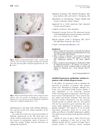
August 2009 in “Journal of the American Academy of Dermatology” This study found that while bimatoprost was safe for 16 weeks, it was not effective for eyelash growth in patients with significant loss due to alopecia areata, though some with less loss experienced growth.
 96 citations
,
January 2013 in “International Journal of Trichology”
96 citations
,
January 2013 in “International Journal of Trichology” This article reviews the use of trichoscopy for diagnosing various types of alopecia and reports no new clinical results; it is suggested as a non-invasive method for diagnosis and monitoring treatment responses.
 January 2015 in “DOAJ (DOAJ: Directory of Open Access Journals)”
 This study developed a precise and simple HPLC method for estimating tamsulosin and finasteride simultaneously in pharmaceutical forms, demonstrating good precision and potential usefulness for combined dosage analysis.
1 citations
,
February 2025 in “Archives of Dermatological Research” Using Excimer light with topical steroids is the most effective treatment for alopecia areata.
 26 citations
,
July 2014 in “Analytical Chemistry Research”
26 citations
,
July 2014 in “Analytical Chemistry Research” This study presents a validated HPTLC method for simultaneously determining five BPH drugs, showing high sensitivity and selectivity for potential use in quality-control analysis.
3 citations
,
February 2020 in “DOAJ (DOAJ: Directory of Open Access Journals)” This review discusses the challenges of managing intraoperative floppy iris syndrome during cataract surgery and highlights the importance of preoperative risk assessment and multidisciplinary collaboration, reporting no new clinical results.

In this case report, the authors observed that onabotulinum toxin A therapy, extended to areas around traumatic excoriations and alopecia, resulted in notable healing and hair regrowth in a patient with trigeminal trophic syndrome and trichotillomania.