1 citations
,
June 2016 in “Medicina” This article reviews monilethrix, a rare genetic hair disorder causing brittle hair and alopecia, and emphasizes the need for clinical diagnosis and characteristic tricoscopic findings.
18 citations
,
January 2013 in “Dermatology Online Journal” This case report describes a 19-year-old woman with typical clinical and histopathological findings of trichofolliculoma, a rare hair follicle hamartoma usually located on the face or scalp.
3 citations
,
January 2020 in “International journal of trichology” This study reports that congenital triangular alopecia, which can be misdiagnosed as other conditions, lacks effective treatment and generally requires no therapeutic intervention.
4 citations
,
January 2018 in “Annals of dermatology/Annals of Dermatology” Hair transplantation successfully treated hair loss in a patient with Trichorhinophalangeal syndrome.
 January 2016 in “Elsevier eBooks”
 This chapter reviews trichoscopic criteria and diagnostic features for various hair and scalp conditions, emphasizing their utility in non-invasive diagnosis, but reports no new clinical results.
October 2021 in “Indian Journal of Plastic Surgery” This article reviews the use of trichoscopy for differentiating mimickers of patterned hair loss and assessing donor sites in hair transplant patients, without providing new clinical findings.
 17 citations
,
November 2012 in “Journal of Investigative Dermatology”
17 citations
,
November 2012 in “Journal of Investigative Dermatology” This paper reviews the genetic aspects of hair disorders and suggests that understanding these genes could advance treatment and diagnosis; it reports no new experimental findings.
 April 2023 in “Our Dermatology Online”
 Trichoscopy is effective in diagnosing trichotillomania by showing specific hair patterns.
 4 citations
,
February 2020 in “Journal of Cosmetic Dermatology”
4 citations
,
February 2020 in “Journal of Cosmetic Dermatology” This study found that androgenetic alopecia was the most common cause of frontal hairline recession in Egyptian female patients, supporting the use of trichoscopy as a noninvasive diagnostic tool.
10 citations
,
August 2007 in “Journal der Deutschen Dermatologischen Gesellschaft” Individualized treatment plans are crucial for managing excessive hair growth.
 1 citations
,
September 2024 in “Indian Journal of Postgraduate Dermatology”
1 citations
,
September 2024 in “Indian Journal of Postgraduate Dermatology” In this report, trichoscopy was highlighted as a valuable tool for diagnosing temporal triangular alopecia in children due to its ability to reveal distinctive patterns that differentiate it from similar conditions like alopecia areata, eliminating the need for invasive biopsy.
26 citations
,
December 1979 in “Journal of Cutaneous Pathology” This study found that trichostasis spinulosa was present in some seborrheic keratoses, indicating they may partly originate from hair follicle cells.
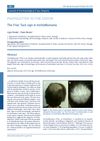 13 citations
,
June 2012 in “Journal of Dermatological Case Reports”
13 citations
,
June 2012 in “Journal of Dermatological Case Reports” This report describes an 8-year-old male with trichotillomania, confirmed by trichoscopy showing characteristic hair damage and patterns.
 November 2023 in “Skin appendage disorders”
 This retrospective study conducted at two centers in west Mexico identified distinctive trichoscopic features in pediatric androgenetic alopecia, with 70% of patients being male and most showing vitamin D deficiency; topical minoxidil was effective and well-tolerated as a treatment.
 36 citations
,
August 2018 in “Dermatologic Clinics”
36 citations
,
August 2018 in “Dermatologic Clinics” This article reviews various hair abnormalities observable through trichoscopy in conditions like monilethrix, trichorrhexis nodosa, and ectodermal dysplasias, with no new clinical findings reported.
14 citations
,
January 2010 in “Dermatology” This study reports five cases of congenital triangular alopecia featuring a central island of short terminal hair, with the cause remaining unknown.
 2 citations
,
January 1908 in “Journal of the American Medical Association”
2 citations
,
January 1908 in “Journal of the American Medical Association” Fear of hair-related issues causes significant mental distress, especially in high-stress women.
2 citations
,
June 2001 in “Medical Electron Microscopy” This study observed that the keratinization pattern of trichilemmal cysts in two Japanese women may originate from the proliferation of the outer root sheath in the follicular isthmus of anagen hairs.
5 citations
,
April 2014 in “International Journal of Pediatric Endocrinology” This study concluded that prepubertal girls with hypertrichosis have androgen receptors with enhanced sensitivity, which may contribute to their increased body hair growth.
September 2021 in “CRC Press eBooks” This article discusses trichotillomania and trichoteiromania, focusing on their clinical presentation, main trichoscopic features, and similarities in hair loss patterns but reports no new research findings.
 2 citations
,
June 2016 in “PubMed”
2 citations
,
June 2016 in “PubMed” This case study reports successful treatment of an 11-year-old girl's trichotillomania with cognitive behavioral therapy, mild topical treatments, and supportive parental involvement, without psychopharmacologic intervention.
28 citations
,
July 1980 in “British Journal of Dermatology” This study describes a case of generalized trichorrhexis nodosa and finds that defects in alpha-keratin chain formation and low cystine levels in hair may contribute to the condition.
 August 2010 in “Journal of Investigative Dermatology”
 New hair regrowth model introduced, imiquimod kills skin cancer cells, T-cadherin loss makes skin cancer more invasive, no strong link between PTCH1 gene and skin cancer after transplant, and male teens more likely to have hereditary hair loss.
1 citations
,
March 2022 in “Anais brasileiros de dermatologia/Anais Brasileiros de Dermatologia” This study found that trichoscopy is a useful tool in differentiating between alopecia areta and trichotillomania on the eyebrows based on distinct hair and follicle features.
 September 2024 in “Indian Journal of Dermatology”
 This study found that trichoscopic examination in patients with androgenetic alopecia revealed that hair shaft heterogeneity was common, while the white peripilar sign and focal atrichia were associated with more advanced disease stages in both genders.
February 2025 in “International Journal of Clinical & Experimental Dermatology” In this study, trichoscopy was identified as an effective tool for diagnosing trichotillomania in children, and a multidisciplinary, individualized approach along with family support was deemed essential for managing the condition and achieving sustained remission.
 26 citations
,
December 2011 in “Journal of Investigative Dermatology”
26 citations
,
December 2011 in “Journal of Investigative Dermatology” This review discusses major advances in understanding inherited hair diseases through genetic research and reports no new clinical results; the authors emphasize the potential for new preventive and therapeutic tools.
 5 citations
,
October 2012 in “Expert Review of Dermatology”
5 citations
,
October 2012 in “Expert Review of Dermatology” This article reviews trichoscopic techniques for diagnosing common hair loss conditions and presents a revised algorithm for identifying specific features of cicatricial and noncicatricial alopecia, but reports no new clinical results.
 13 citations
,
December 2010 in “Archives of Dermatology”
13 citations
,
December 2010 in “Archives of Dermatology” This abstract provides website information and publication navigation for JAMA Dermatology, but it includes no research results or study findings.
29 citations
,
February 1989 in “Journal of Cutaneous Pathology” This case report identifies a new type of hair matrix tumor called "rippled pattern trichomatricoma," distinguished by its unique cell arrangement and differentiation features.