3 citations
,
January 2017 in “Acta Dermato Venereologica” This study found that a specific T-cell receptor motif associated with lipid-antigen stimulation may play a role in the pathogenesis of folliculotropic mycosis fungoides.
 30 citations
,
July 2019 in “PloS one”
30 citations
,
July 2019 in “PloS one” This study found that T-regulatory cells, specifically the FOXP3 CD39 subset, were significantly reduced in both circulation and hair follicles of alopecia areata patients compared to healthy subjects, suggesting potential therapeutic targets.
This study conducted a genome-wide association analysis on 1,125 ewes and identified 24 SNPs associated with wool production traits, and highlighted potential candidate genes like ADAR and TP53 for further research into the genetic mechanisms influencing wool growth in sheep.

This study investigated dual TCR Treg cells in mouse tissues, revealing a high proportion and diverse pairing patterns compared to single TCR Tregs, providing insights into their origins and characteristics across different tissue locations.

In this study, researchers analyzed over 5,000 T cells per sample using scRNA+TCR-seq technology and found that dual TCR Tregs are present in high proportions across various mouse tissues, showing unique TCR pairing patterns, V(D)J usage, and mRNA expression compared to single TCR Tregs.
 88 citations
,
August 2019 in “Nature communications”
88 citations
,
August 2019 in “Nature communications” In this study, researchers identified a specific T cell receptor associated with carbamazepine-induced severe cutaneous adverse reactions, demonstrating its potential for therapeutic development in patients with the HLA-B*15:02 genotype.
 March 2022 in “Marmara University Open Access System”
 This article critically examines the relationship between new media and digital games, emphasizing their cultural and historical contexts, but provides no new empirical findings.
 6 citations
,
October 2022 in “Journal of cell science”
6 citations
,
October 2022 in “Journal of cell science” This study re-analyzed single-cell RNAseq data from human and mouse skin, confirming and refining insights into keratin gene regulation during keratinocyte differentiation in epithelial tissues.
 1 citations
,
July 2021 in “Current Issues in Molecular Biology”
1 citations
,
July 2021 in “Current Issues in Molecular Biology” This study found that finasteride treatment of male rats led to changes in their male offspring's testicular gene expression, potentially affecting sperm function in response to odorant-like signals.
 May 2018 in “White Rose eTheses Online (University of Leeds, The University of Sheffield, University of York)”
 In this study, researchers found that alopecia areata patients show a significant reduction in suppressive regulatory T-cells and an increase in inflammatory T-cell populations, suggesting an immunological imbalance contributing to the disease.
 4 citations
,
May 2025 in “npj Parkinson s Disease”
4 citations
,
May 2025 in “npj Parkinson s Disease” This study identified peripheral myeloid cells as the earliest dysregulated immune cells in PINK1 KO mice with Parkinson’s-like symptoms following intestinal infections, suggesting that PINK1 regulates gut immune functions linked to early Parkinson’s disease mechanisms.
46 citations
,
October 2018 in “JCI insight” In this study, the researchers found that treatment with the JAK inhibitor tofacitinib in alopecia areata patients may reduce clonal CD8+ T cell expansions but does not eliminate them entirely, which could contribute to disease relapse.
10 citations
,
May 2025 in “Cell Biomaterials” This perspective highlights how advancements in single-cell sequencing and digital pathology can help understand the complex mechanisms of immune responses, fibrosis, and tissue remodeling related to medical implants, aiming to address the challenges of implant-related tissue reactions reported in this study.
4 citations
,
June 2025 in “Cell Reports” In this study using the C3H/HeJ mouse model of alopecia areata, researchers found that hyperexpanded CD8+ T cell clones were sufficient to initiate disease, establishing a causal link between T cell clonality and pathogenicity.
169 citations
,
February 2018 in “Immunity” In this study, researchers found that quiescent stem cells resist immune attack due to downregulated antigen presentation, which may help explain the immune evasion of early cancer-initiating cells.
July 2025 in “Journal of Investigative Dermatology” TRIV-509 quickly improves skin barrier and cell health in atopic dermatitis.
 1 citations
,
December 2018 in “Journal of genetic medicine”
1 citations
,
December 2018 in “Journal of genetic medicine” In this case report, a 20-year-old male with tricho-rhino-phalangeal syndrome was found to have a de novo frameshift mutation in the TRPS1 gene, highlighting the challenges in diagnosing this rare disorder.
4 citations
,
April 2014 in “Lasers in Surgery and Medicine” This observational study reports that a TRASER device using specific wavelengths for vascular and follicular targets showed both clinical responses and histological changes, suggesting its potential as an effective vascular and hair removal tool.
 6 citations
,
October 2012 in “Journal of Heredity”
6 citations
,
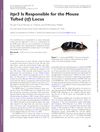
October 2012 in “Journal of Heredity” This study identified the Itpr3 gene as responsible for the tufted hair loss phenotype in the BTBR mouse strain.
 January 2024 in “Genetics in Medicine Open”
 In this report, two adult patients with Tatton-Brown-Rahman syndrome exhibited new cardiac features, such as atrial fibrillation and ventricular and atrial dilatation, highlighting the importance of cardiovascular follow-up in adults with this condition.
 December 2013 in “Appetite”
 This study identified a nonfunctional Itpr3 gene in BTBR mice, attributed to a 12-bp deletion, which likely causes their simultaneous hair loss and taste perception deficits.
November 2025 in “Journal of Investigative Dermatology” Certain immune cells in atopic dermatitis skin could be targeted for treatment.
June 2020 in “Faculty Opinions – Post-Publication Peer Review of the Biomedical Literature” This study found a specific T cell receptor that may be key in carbamazepine-induced Stevens-Johnson syndrome and toxic epidermal necrolysis, suggesting potential therapeutic targets.
October 2024 in “Journal of the Endocrine Society” This case report highlights that a patient with resistance to thyroid hormone was misdiagnosed as having Graves’ disease, leading to unnecessary radioactive iodine treatment.
July 2025 in “Journal of Investigative Dermatology” A new mutation in the TRPS1 gene caused Trichorhinophalangeal syndrome in a 17-year-old, highlighting the need for genetic testing.
1 citations
,
January 2010 in “SRX Pharmacology” This study found that bupropion SR may improve symptoms in female trichotillomania patients who did not respond to SSRIs, with benefits maintained through a 16-month follow-up.
5 citations
,
April 2022 in “The journal of investigative dermatology/Journal of investigative dermatology” This article discusses junctional epidermolysis bullosa caused by COL17 deficiency, noting a lack of experimental therapies and the impact of nonsense mutations, but it reports no new clinical results.
July 2025 in “Clinical Case Reports” In this case report, a 17-year-old male with a specific TRPS1 gene mutation presented with sparse, soft hair, short thumbs and toes, misaligned teeth, and distinctive bone abnormalities in the fingers and toes as observed through X-ray analysis.
January 2019 in “Columbia Academic Commons (Columbia University)” This study used cryo-electron microscopy to reveal the structural mechanisms by which TRPV6 and TRPV3 ion channels open, close, and are regulated, providing insights for potential future research.