19 citations
,
November 1985 in “Archives of Dermatology” This case study documented a black male newborn developing large bullae that healed with hypopigmentation, suspecting proteolytic enzymes in keratinocytes caused the collagenolysis responsible for the condition.
 23 citations
,
April 1999 in “Dermatologic Clinics”
23 citations
,
April 1999 in “Dermatologic Clinics” This study found that the Epilight multiple wavelength pulsed-intense light source was effective for long-lasting hair removal, particularly in individuals with dark hair and light skin.
 November 2023 in “Journal of cosmetic dermatology”
 This report describes three cases of erythromelanosis follicularis faciei et colli showing significant improvement in facial telangiectasia following treatment with a 595-nm pulsed dye laser, with minimal recurrence observed during follow-up.
 28 citations
,
August 2013 in “Facial Plastic Surgery Clinics of North America”
28 citations
,
August 2013 in “Facial Plastic Surgery Clinics of North America” This article discusses using body and beard hair for hair restoration and reviews the indications, techniques, and risks involved, but reports no new clinical results.
 10 citations
,
May 2012 in “Journal of Plastic Reconstructive and Aesthetic Surgery”
10 citations
,
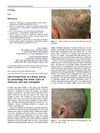
May 2012 in “Journal of Plastic Reconstructive and Aesthetic Surgery” This article discusses various methods for minimizing and repairing strip scars from follicular unit hair transplants but reports no new clinical results.
82 citations
,
November 1985 in “Archives of Dermatology” This case report describes a black male newborn who developed bullae that healed with hypopigmentation, linked to collagenolysis and RER vacuoles potentially containing proteolytic enzymes.
17 citations
,
August 2021 in “Dermatologic surgery” This review found that microneedling is generally safe, with most adverse effects being minor and resolving quickly, though there is increased risk in patients with active infections, darker skin, or metal allergies.
 37 citations
,
January 2011 in “Annals of Dermatology”
37 citations
,
January 2011 in “Annals of Dermatology” In this study, photodynamic therapy significantly reduced inflammatory acne lesions and sebum secretion, possibly by inducing apoptosis in sebaceous glands and down-regulating TLR-2 and TLR-4 expression.
21 citations
,
March 2020 in “Journal of lasers in medical sciences” In this study, diode laser treatment for hair removal effectively reduced hair across different ethnicities and Fitzpatrick skin types, though side effects like sensitivity, hyperpigmentation, and burns varied by ethnicity and number of treatments. However, these were temporary and did not compromise overall treatment success.
12 citations
,
January 2021 in “Journal of Cutaneous and Aesthetic Surgery” This systematic review describes current findings on the use of recombinant epidermal growth factor (rhEGF) for skin aging and wound healing, emphasizing its potential benefits but highlighting the need for more controlled studies to optimize dosing and treatment protocols.

This study found that 1064 nm QS Nd:YAG laser treatment effectively lightens hair and improves skin appearance in Indian subjects with minimal adverse effects, offering a safer alternative to chemical lightening products.
 May 2023 in “Current Medicinal Chemistry”
 This review highlights the potential of microneedle devices in dermatology for conditions like skin aging and autoimmune skin diseases, emphasizing their ability to facilitate targeted drug delivery by creating temporary skin pathways.
September 2020 in “Journal of Mind and Medical Sciences” This study reported that using a Cutera Xeo laser with specific probes may help treat rosacea symptoms like diffuse facial erythema and telangiectasias, with some risks like bruises and hypopigmentation.
1 citations
,
November 2024 in “Journal of Cosmetic Dermatology” In this study, researchers reviewed data on isotretinoin and concluded that delaying certain skin procedures like laser hair removal and chemical peels after isotretinoin treatment may not be necessary, though caution is advised for fully ablative treatments, and lower isotretinoin doses are recommended.
 February 2023 in “Indian journal of private psychiatry/Indian Journal of Private Psychiatry”
 This case report highlights a rare instance of fingernail and toenail hyperpigmentation following the use of valproic acid, which resolved after discontinuation of the drug.
 30 citations
,
June 2006 in “British journal of dermatology/British journal of dermatology, Supplement”
30 citations
,
June 2006 in “British journal of dermatology/British journal of dermatology, Supplement” In this study, oral zinc sulphate was found to cause hair hypopigmentation and significantly inhibit eumelanogenesis in mice.
 February 2024 in “International Journal For Multidisciplinary Research”
 This review examines the advances in nanostructured lipid carriers for treating hyperpigmentation but presents no new clinical results; the authors highlight their potential benefits and applications.
 1 citations
,
May 2017 in “Journal of Stem Cell Research & Therapeutics”
1 citations
,
May 2017 in “Journal of Stem Cell Research & Therapeutics” This review discusses current and potential approaches using stem cells for treating hypopigmentation disorders like vitiligo but does not present new clinical findings.
3 citations
,
August 2019 in “JAAD Case Reports” This case study reports a unique instance of temporary alopecia occurring after intralesional 5-fluorouracil treatment for keloids, marking the first such report associated with this localized chemotherapy approach.
 1 citations
,
April 2026 in “Aesthetic Plastic Surgery”
1 citations
,
April 2026 in “Aesthetic Plastic Surgery” This study found that radiofrequency microneedling is effective and well-tolerated for improving various skin conditions, showing comparable efficacy to fractional lasers for atrophic acne scars with generally favorable patient satisfaction and safety.

Tailored nonsurgical cosmetic procedures are crucial for safely treating diverse skin types, especially skin of color.
 29 citations
,
January 2007 in “Dermatologic Clinics”
29 citations
,
January 2007 in “Dermatologic Clinics” This study found that photodynamic therapy using 5-aminolevulinic acid or methyl aminolevulinate is a safe and effective treatment for acne vulgaris, particularly with 30 to 60 minutes of contact time and three treatments for significant long-term improvement.
 108 citations
,
August 2017 in “Clinical, Cosmetic and Investigational Dermatology”
108 citations
,
August 2017 in “Clinical, Cosmetic and Investigational Dermatology” This review highlights microneedling's promise as an adjuvant therapy for enhanced drug delivery in dermatology, especially for conditions like atrophic scars and pigmentation disorders, though its efficacy for vitiligo is limited.
 41 citations
,
April 2017 in “JAMA Dermatology”
41 citations
,
April 2017 in “JAMA Dermatology” This study found that the top 10 film villains have a higher frequency of significant dermatologic features than the top 10 heroes, which may contribute to societal prejudice against individuals with skin conditions.
 33 citations
,
February 2019 in “Journal of Tissue Engineering and Regenerative Medicine”
33 citations
,
February 2019 in “Journal of Tissue Engineering and Regenerative Medicine” This review discusses the use of platelet-rich plasma for various dermatological conditions and highlights the need for more research to standardize its protocols and understand its biological mechanisms.
 22 citations
,
September 2004 in “Journal of The European Academy of Dermatology and Venereology”
22 citations
,
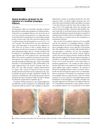
September 2004 in “Journal of The European Academy of Dermatology and Venereology” Bimatoprost can cause longer, thicker, darker eyelashes and eyebrows.
 5 citations
,
January 2018 in “Springer eBooks”
5 citations
,
January 2018 in “Springer eBooks” Acne in dark skin is influenced by environmental factors and can lead to hyperpigmentation, with various treatment options available.
2 citations
,
January 2023 in “Dermatologic Therapy” This study found that intradermal injections of autologous cell-free fat extract significantly improved the condition of postinflammatory hyperpigmentation patients, with high patient satisfaction and minimal adverse effects.
 1 citations
,
January 2021 in “Journal of Dermatology and Dermatologic Surgery”
1 citations
,
January 2021 in “Journal of Dermatology and Dermatologic Surgery” This study found that taking Vitamin D supplements may be associated with a higher risk of hyperpigmentation after laser hair removal.

This study highlights that azelaic acid, initially recognized for skin hypopigmentation, shows potential in treating various skin conditions due to its complex mechanisms, even though these are not yet fully understood, indicating a need for further research.