 October 2021 in “Journal of Investigative Dermatology”
 In this research, investigators used in vitro models to study the Merkel cell-neurite complex and reported that mechanical stimulation, similar to gentle touch, can induce molecular changes that are potentially relevant to hair growth, thus contributing to the understanding of its underlying mechanisms.
39 citations
,
March 2022 in “Nature Protocols” This study describes a protocol for generating hair-bearing skin organoids from human pluripotent stem cells, achieving full complexity resembling fetal skin tissue by day 130 in vitro.
 31 citations
,
November 2016 in “Cell Reports”
31 citations
,
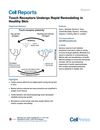
November 2016 in “Cell Reports” This study reveals that somatosensory neurons in mouse skin exhibit structural plasticity during hair-follicle regeneration, which may temporarily impair the reliability of encoding gentle touch.
19 citations
,
February 2013 in “Journal of Investigative Dermatology” Touch domes in human skin are complex sensory structures not directly linked to hair.
5 citations
,
January 2024 in “Science Advances” In this study, researchers identified Tenascin-C as a marker for touch dome keratinocytes, which maintain themselves and can develop into Merkel cells following injury, showing they share molecular traits with various epidermal keratinocytes.
1 citations
,
June 2017 in “The journal of investigative dermatology/Journal of investigative dermatology” This symposium discussed recent advances in understanding skin as a sensory organ, emphasizing the interactions between itch, pain, and touch pathways and highlighting potential therapeutic targets.
24 citations
,
March 2008 in “Neuroscience Research” This study revealed the complex three-dimensional innervation of touch domes in cat forepaw skin, highlighting the extensive branching and unmyelinated endings associated with Merkel cell–axon complexes.
 April 2019 in “Journal of Investigative Dermatology”
 This study found that post-hematopoietic cell transplantation epidermal grafting significantly reduced chronic wound size in patients with recessive dystrophic epidermolysis bullosa.
This study identified the TALE homeodomain transcription factor Meis2 as a crucial regulator for the maturation and end-organ innervation of certain mechanoreceptors in mice, with its absence leading to altered sensory neuron structure and impaired touch sensitivity.
 81 citations
,
June 2014 in “Cold Spring Harbor perspectives in medicine”
81 citations
,
June 2014 in “Cold Spring Harbor perspectives in medicine” This article discusses recent advances in understanding the mechanisms of tactile end organs in the epidermis and hair follicles from studies of mouse hairy skin, but it reports no new clinical results.
 September 2024 in “Journal of the American Academy of Dermatology”
 This study reports that oxytocin receptor expression in keratinocytes shows a potential relationship with touch sensory neurons, suggesting a role in skin sensitivity and the broader function of sensory neurons.
 19 citations
,
February 2023 in “Environmental and experimental botany”
19 citations
,
February 2023 in “Environmental and experimental botany” This review discusses the role of jasmonic acid and its conjugates in enhancing plant stress tolerance and balancing growth and defense mechanisms but provides no new experimental data.
 84 citations
,
June 2013 in “Stem Cells Translational Medicine”
84 citations
,
June 2013 in “Stem Cells Translational Medicine” This review discusses strategies for regenerating cutaneous nerve function in burn patients and highlights the potential role of autologous skin-derived adult stem cells in improving sensory recovery, but reports no new experimental findings.
32 citations
,
February 2019 in “eLife” This study identified key cells and pathways needed for the development of touch receptor patterns in mouse skin, notably that certain keratinocytes are crucial for innervation patterns, while Merkel cells and BMP signaling have distinct roles.

This study found that upper-bulge epidermal stem cells in mouse hair follicles are specialized for nerve interactions, crucial for forming tactile sensory units, and influence touch responses via EGFL6 and αv integrin pathways.
 April 2016 in “Journal of Investigative Dermatology”
 This study found that Sonic hedgehog signaling is crucial for Merkel cell development around hair follicles in mice, with Polycomb repressive complex 2 loss causing ectopic Merkel cells across all hair types.
 4 citations
,
November 2014
4 citations
,
November 2014 The skin protects the body, regulates temperature, senses touch, and makes vitamin D.
April 2019 in “Journal of Investigative Dermatology” This study found that, in mice, different precursor populations give rise to Merkel cells in hairy versus glabrous skin, but their formation is controlled by a common genetic program involving FGFR2 signaling.

In this study, researchers observed a high degree of plasticity in somatosensory axons innervating Merkel cells in adult mouse skin, with both epithelial and neural components exhibiting dynamic remodeling, highlighting intricate epithelial-neural interactions in maintaining homeostasis.
 April 2023 in “The journal of investigative dermatology/Journal of investigative dermatology”
 This study developed protocols to create skin organoids with hair follicles and other appendages from human induced pluripotent stem cells, representing a significant step towards understanding hair follicle development and potential applications in modeling skin diseases and reconstructive surgeries.
 71 citations
,
February 2020 in “Journal of Translational Medicine”
71 citations
,
February 2020 in “Journal of Translational Medicine” This article reviews current strategies and advancements in regenerating skin appendages and sensory nerves in tissue-engineered skin, highlighting the challenge of restoring skin sensations like pain, temperature, and touch to improve patients’ quality of life.

In this study, upper-bulge epidermal stem cells in mouse hair follicles were shown to play a role in forming tactile sensory units by creating an extracellular matrix that supports nerve interactions.
 June 2012 in “Expert Review of Dermatology”
 Japanese researchers created new hair follicles from human cells that grew hair when put into mice, and other findings showed a link between eye disease severity and corneal thickness, gene mutations affecting hearing and touch, and the safety of the shingles vaccine for adults over 50.
 1 citations
,
January 2013 in “Journal of Investigative Dermatology”
1 citations
,
January 2013 in “Journal of Investigative Dermatology” The document concludes that stem cells and their environments are crucial for skin and hair health and have potential for medical treatments.
In this study, activation of Hedgehog signaling in both epithelial and stromal cells induced new hair follicles in adult mouse skin, but also resulted in the formation of tumors.
This study found that activating Hedgehog signaling in both epithelial and stromal cells can induce new hair follicles in adult mice, but this also leads to tumor formation.
 85 citations
,
July 2012 in “Cold Spring Harbor perspectives in biology”
85 citations
,
July 2012 in “Cold Spring Harbor perspectives in biology” This article discusses the roles of epidermal stem cells in maintaining skin homeostasis and highlights how deregulation in signaling pathways may lead to cancer, but it reports no new experimental results.
This chapter emphasizes the critical role of the integumentary system in animal physiology, detailing its structures, immune functions, and sensory capabilities as crucial for homeostasis, protection, and various physiological processes.
January 2020 in “VCU Scholars Compass (Virginia Commonwealth University)” This study established a protocol using anti-steroid antibodies to differentially label epidermal cell contributors, suggesting potential applications in simplifying complex trace DNA mixtures before profiling.
 January 1997 in “Elsevier eBooks”
 This review discusses the development and types of hair and nails as skin appendages and reports no new research findings.