 125 citations
,
December 2016 in “Molecules”
125 citations
,
December 2016 in “Molecules” This review discusses the extraction, purification, modification, and biological activity of polysaccharides from Traditional Chinese Medicine and reports no new research findings.
 112 citations
,
November 2023 in “Nano-Micro Letters”
112 citations
,
November 2023 in “Nano-Micro Letters” This review discusses the developments over the past five years in nanozyme-based theranostics for tumor therapy, including their classification, design, and synergistic strategies. It also outlines the challenges and prospects of using nanozymes to enhance selectivity, biosafety, repeatability, and stability in therapeutic applications.
 104 citations
,
January 2016 in “Food & Function”
104 citations
,
January 2016 in “Food & Function” This review found that olive oil phenols may have anti-cancer properties in animal models and some human studies, but further research is needed to confirm these effects in humans.
 75 citations
,
November 2016 in “Medicines”
75 citations
,
November 2016 in “Medicines” This review discusses the properties and therapeutic potentials of beta-sitosterol, highlighting a need for more detailed studies on its mechanisms and long-term effects in humans; it reports no new results.
 73 citations
,
July 2016 in “Cosmetics”
73 citations
,
July 2016 in “Cosmetics” This review discusses the use of mushrooms and their bioactive compounds in cosmeceuticals and nutricosmetics and reports no new clinical findings, highlighting potential areas for future research and development.
 59 citations
,
May 2014 in “Expert Opinion on Therapeutic Targets”
59 citations
,
May 2014 in “Expert Opinion on Therapeutic Targets” This review discusses current therapeutic targets and treatments for androgenic alopecia but reports no clinical results; the authors highlight the challenge of developing multi-target drugs for effective treatment.
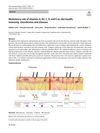 47 citations
,
September 2023 in “Pharmacological Reports”
47 citations
,
September 2023 in “Pharmacological Reports” In this review, researchers explored the roles of vitamins A, B3, C, D, and E in skin immunity, highlighting their potential as therapeutics for skin diseases due to their antioxidant, anti-inflammatory, and antimicrobial properties.
 44 citations
,
August 2017 in “Food Bioscience”
44 citations
,
August 2017 in “Food Bioscience” This study found that betasitosterol-loaded nanostructured lipid carriers, when added to butter, improved its nutritional profile and antioxidant properties, maintaining stability over a three-month storage period.
 40 citations
,
August 2018 in “Skin appendage disorders”
40 citations
,
August 2018 in “Skin appendage disorders” This review examines complementary and alternative medicine for alopecia and finds limited support from robust clinical trials, highlighting the need for standardized studies to evaluate efficacy and safety.
 37 citations
,
January 2019 in “Dermatologic Therapy”
37 citations
,
January 2019 in “Dermatologic Therapy” This article is a letter to the editor discussing the treatment of telogen effluvium using a dietary supplement, but it provides no new research results.
 37 citations
,
January 2015 in “Evidence-based Complementary and Alternative Medicine”
37 citations
,
January 2015 in “Evidence-based Complementary and Alternative Medicine” This study found that Bokusoku extract and its compound pentagalloyl glucose inhibited testosterone metabolism and sebum synthesis, suggesting potential therapeutic use for androgen-related acne.
 34 citations
,
October 2021 in “Scientific Reports”
34 citations
,
October 2021 in “Scientific Reports” This study found that nobiletin-loaded vesicles effectively restored skin condition in a mouse model of skin cancer, suggesting they are a promising treatment delivery system.
 32 citations
,
July 2018 in “Scientific Reports”
32 citations
,
July 2018 in “Scientific Reports” In this study, the authors reported that feeding cashmere goats with essential oil-cobalt significantly enhanced their growth, meat quality, and fiber quality, while stimulating immune-related physiological changes.
 23 citations
,
January 2001 in “International journal of toxicology”
23 citations
,
January 2001 in “International journal of toxicology” This review discusses the cosmetic use and safety of Hypericum Perforatum Extract and Oil, finding that current data are insufficient to support their safety in formulations due to a lack of comprehensive testing.
 23 citations
,
January 2017 in “Journal of Oleo Science”
23 citations
,
January 2017 in “Journal of Oleo Science” This review discusses the use of supercritical carbon dioxide for extracting rice bran oil, noting its advantages over conventional methods for preserving nutrients and antioxidants, but provides no new experimental results.
 21 citations
,
January 2019 in “Elsevier eBooks”
21 citations
,
January 2019 in “Elsevier eBooks” The authors suggest that nanoparticles, synthesized from biological sources, may enable targeted cancer therapy with fewer side effects than traditional methods.
 17 citations
,
May 2023 in “Aesthetic Plastic Surgery”
17 citations
,
May 2023 in “Aesthetic Plastic Surgery” This review found that among emerging technologies for skin anti-aging, stem cell therapies using recipient chimerism might be more beneficial than CRISPR-Cas9 and other current innovations, though further studies on safety and efficacy are needed.
 16 citations
,
April 2017 in “Journal of Cosmetic Dermatology”
16 citations
,
April 2017 in “Journal of Cosmetic Dermatology” This study found that fig leaf extract significantly downregulated inflammatory and androgenic gene expression in vitro, suggesting potential topical benefits for certain skin disorders.
 14 citations
,
September 2020 in “Clinical, cosmetic and investigational dermatology”
14 citations
,
September 2020 in “Clinical, cosmetic and investigational dermatology” This study found that a hair serum containing amla extract, freeze-dried coconut water, and selenium significantly improved hair growth rate, density, and reduced hair fall among healthy volunteers over 90 days.
 13 citations
,
May 2019 in “Cancer Prevention Research”
13 citations
,
May 2019 in “Cancer Prevention Research” This study found that a three-month regimen of leucoselect phytosome, a grape seed extract complex, was well tolerated and significantly reduced bronchial proliferation markers in heavy active and former smokers.
 12 citations
,
November 2017 in “Archives of Dermatological Research”
12 citations
,
November 2017 in “Archives of Dermatological Research” This study suggests that high consumption of raw vegetables and fresh herbs, which are part of the Mediterranean diet, may reduce the risk of androgenetic alopecia in genetically predisposed men.
 11 citations
,
December 2020 in “Notulae botanicae Horti Agrobotanici Cluj-Napoca”
11 citations
,
December 2020 in “Notulae botanicae Horti Agrobotanici Cluj-Napoca” This study found that arbuscular mycorrhizal fungus inoculation and shading improved tea seedlings' growth, nutrient absorption, and stress resistance by enhancing root biomass and regulating phytohormone levels and gene expression.
 11 citations
,
December 2018 in “Assay and Drug Development Technologies”
11 citations
,
December 2018 in “Assay and Drug Development Technologies” This review highlights the challenges in screening for steroid 5 alpha-reductase inhibitors and discusses significant variability in the effectiveness of finasteride and dutasteride, calling for standardized testing methods to develop safer, more specific inhibitors from herbal preparations.
 11 citations
,
January 2017 in “Oxidative medicine and cellular longevity”
11 citations
,
January 2017 in “Oxidative medicine and cellular longevity” This study found that antroquinonol inhibited CD8+ T cell proliferation and reduced proinflammatory cytokine secretion in vitro, while also ameliorating H2O2-induced depigmentation and resisting reductions in hair follicle length, skin thickness, and tyrosinase expression in mice.
 11 citations
,
January 2014 in “The Scientific World Journal”
11 citations
,
January 2014 in “The Scientific World Journal” This study found that Cynatine HNS significantly improved hair and nail health in women after 90 days compared to placebo.
 10 citations
,
January 2017 in “Journal of Evidence-Based Complementary & Alternative Medicine”
10 citations
,
January 2017 in “Journal of Evidence-Based Complementary & Alternative Medicine” This study found that several local vegetables from Northern Thailand demonstrated significant antioxidant and 5α-reductase inhibitory activities, suggesting their potential for development into health-promoting products.
 10 citations
,
January 2025 in “Frontiers in Nutrition”
10 citations
,
January 2025 in “Frontiers in Nutrition” This review discusses the potential role of the dietary antioxidant index in reducing the risk of various diseases, including obesity-related conditions, certain cancers, osteoporosis, and mental illnesses, but calls for further studies to confirm these findings.
 10 citations
,
August 2024 in “Clinical Cosmetic and Investigational Dermatology”
10 citations
,
August 2024 in “Clinical Cosmetic and Investigational Dermatology” This review reports that natural compounds show promise in slowing skin photoaging by targeting cellular pathways in keratinocytes and fibroblasts. However, comprehensive clinical studies are needed to verify their efficacy and safety.
 8 citations
,
January 2017 in “Elsevier eBooks”
8 citations
,
January 2017 in “Elsevier eBooks” This review discusses the use of nutraceuticals in dermatology for preventing and reversing signs of skin aging, but it reports no new clinical results.
 7 citations
,
July 2019 in “International Journal of Molecular Sciences”
7 citations
,
July 2019 in “International Journal of Molecular Sciences” This study found that PGA-4HGF nanoparticles enhanced hair growth in mice more effectively than 4HGF alone by increasing anagen phase duration and dermal papilla cell proliferation.