 1 citations
,
March 2021 in “Skin health and disease”
1 citations
,
March 2021 in “Skin health and disease” This review evaluates laboratory models used in androgenetic alopecia research but reports no new findings, emphasizing the potential of human-derived 3-D models for future studies.
 1 citations
,
January 2017 in “Social Science Research Network”
1 citations
,
January 2017 in “Social Science Research Network” This paper suggests that to better protect traditional and indigenous knowledge, TKDL should expand its database or establish a separate confidential resource for indigenous, tribal, and nomadic communities.
 May 2026 in “AAPS PharmSciTech”
 This study found that PEGylated LUT-Aspasomes significantly improved neuroprotective effects in stressed rats, enhancing spatial memory, reducing depressive-like behavior, and preserving hippocampal architecture better than free luteolin. Additionally, it increased brain delivery and stability, suggesting potential for treating stress-related neurobehavioral disorders.
 April 2026 in “Al-Kufa University Journal for Biology”
 This pilot study observed that post-bariatric surgery, both zinc and iron deficiencies increased among Iraqi patients, underscoring the importance of lifelong nutritional monitoring and targeted supplementation to address these issues and prevent related complications.

Bee pollen, green tea, essential oils, and various plant extracts improve skin and hair health.
 April 2016 in “The journal of investigative dermatology/Journal of investigative dermatology”
 This study found that topical bortezomib increased cell proliferation in hair follicles and sebaceous glands in mice and may activate hair keratin gene expression through GATA-3 transcription factors.
 April 2016 in “The journal of investigative dermatology/Journal of investigative dermatology”
 The researchers reported that disrupting the RPGRIP1L gene in mice impaired desmosome function, causing skin blistering, and their findings suggest that PKCβII inhibition could help treat pemphigus.
 March 2014 in “Journal of The American Academy of Dermatology”
 The document lists various dermatology topics, treatments, and diagnostic methods.
 August 2001 in “Veterinary Dermatology”
 This article reviews topics from the American Academy of Veterinary Dermatology and American College of Veterinary Dermatology Annual Meeting and contains no new clinical findings.
 19 citations
,
July 2007 in “Dermatologic clinics”
19 citations
,
July 2007 in “Dermatologic clinics” This paper discusses the need for a standardized classification and meta-analysis of treatments for hypopigmented disorders and reports no new clinical results.
 17 citations
,
January 2016 in “Dermatology research and practice”
17 citations
,
January 2016 in “Dermatology research and practice” In this study, topical Emu oil delayed burn wound healing but increased hair follicle activity and collagen synthesis in Balb/c mice.
 7 citations
,
January 2010 in “Pharmacognosy Research”
7 citations
,
January 2010 in “Pharmacognosy Research” This study evaluated the hair growth potential of a microbial biotransformed extract of tobacco leaves in male albino wistar rats, but no new results are provided in the abstract.
 1 citations
,
January 1997 in “Skin research”
1 citations
,
January 1997 in “Skin research” Hinokitiol and pantothenylethylether in hair products can cause strong allergic reactions.
 February 2024 in “Digital Library of Theses and Dissertations (Universidade de São Paulo)”
 This study demonstrated that using a mass spectrometry imaging technique, researchers were able to visualize the incorporation of argan, avocado, and coconut oils into hair fibers, suggesting their potential in cosmetic and alopecia treatments by confirming oil absorption and fiber modification.

In this study, a very low-calorie ketogenic diet significantly improved metabolic and hormonal profiles in obese men, but did not significantly enhance most semen parameters except for sperm motility.

This study found that while iron depletion through phlebotomies is safe for women with functional ovarian hyperandrogenism, it does not improve their cardio-metabolic profile and may reduce non-enzymatic antioxidant capacity.

This research focused on formulating finasteride, dutasteride, and minoxidil with cyclodextrins to enhance their solubility and skin penetration for topical use, potentially reducing scalp irritation from current alcohol-based preparations.
 January 2012 in “Surgical & Cosmetic Dermatology”
 This study found that a dietary supplement improved hair strength and shine in participants with hair damage from breakage.
March 2019 in “Reactions Weekly” July 2025 in “Journal of Investigative Dermatology” Solid Lipid Particle technology makes retinol more stable, effective, and gentle on the skin.
2 citations
,
September 2018 in “Walailak Journal of Science and Technology (WJST)” This study found that Thuja orientalis fruits have higher monoterpene, flavonoid, phenolic content, and antioxidant activity than leaves, suggesting potential value for the pharmaceutical industry.
 November 2022 in “Journal of Investigative Dermatology”
 This study developed a chalcone-based molecule that significantly increased tyrosinase inhibition and solubility, showing potential as a safe and effective skin depigmenting and antiaging agent, with supportive epigenetic and antioxidant properties observed in vitro.
 14 citations
,
July 2012 in “Journal of the American Academy of Dermatology”
14 citations
,
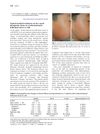
July 2012 in “Journal of the American Academy of Dermatology” This study found that topical tacalcitol improved roughness and scaling in erythromelanosis follicularis faciei et colli, although it was less effective for facial erythema.
39 citations
,
June 2009 in “Oncology” This study observed that high-dose retinol palmitate was well-tolerated in resected stage I lung cancer patients, though it raised concerns about potential impacts on lipid metabolism due to elevated gamma-GT levels and triglycerides.
 17 citations
,
April 2004 in “Acta Clinica Belgica”
17 citations
,
April 2004 in “Acta Clinica Belgica” This study found that ultraviolet light-enhanced visualization can detect subtle skin changes linked to carotene and vitamin A deficiency, which improved with dietary correction in deficient individuals.
November 2025 in “JOURNAL OF EXPERIMENTAL ZOOLOGY INDIA” This study observed that thymol from Origanum marjoram essential oil significantly promoted hair regrowth and reduced inflammation in cyclophosphamide-induced alopecia in rabbits, with effects that were comparable to or exceeded those of betamethasone, highlighting its potential as a safer treatment alternative.
![Distribution of 1,25-Dihydroxyvitamin D3[22-Oxa] In Vivo Receptor Binding in Adult and Developing Skin](/images/assets/d9b990e6-6243-4abe-b868-68801a5844f7/small/35023.jpg) 15 citations
,
January 1995 in “Archives of dermatological research”
15 citations
,
January 1995 in “Archives of dermatological research” In this study, OCT showed strong nuclear binding in certain skin cells, suggesting similar genomic effects to vitamin D with potential therapeutic benefits due to its lower calcaemic effect.
 29 citations
,
June 2014 in “Drug delivery”
29 citations
,
June 2014 in “Drug delivery” This study reported that nanoemulsions significantly improved the skin permeability of thiocolchicoside compared to its aqueous solution, suggesting they are effective carriers for its transdermal delivery.
7 citations
,
April 1996 in “Archives of dermatological research” This study found that after topical application in rats, 1,24-dihydroxyvitamin D3 absorbed through both the stratum corneum and hair follicles, with about 30% excreted via the faeces.
15 citations
,
June 2016 in “Computers in Biology and Medicine” This study's simulation found that Ascorbyl Tetraisopalmitate penetrates more efficiently through the skin's stratum corneum than via the infundibulum, following different pathways and dynamics in each membrane.