 April 2024 in “Research Square”
 IBD patients treated with TNF antagonists may develop autoimmune alopecia areata, with severe cases less likely to improve.
March 2024 in “Current issues in molecular biology” This literature review explores the role of biomarkers in personalized medicine for various dermatological conditions like Hidradenitis Suppurativa, Psoriasis, and Atopic Dermatitis, highlighting how they guide targeted therapies and the limitations of current markers in specificity, as reported by the authors.
 February 2024 in “PloS one”
 This review concluded that oral tofacitinib and adalimumab are promising treatments for cicatricial alopecia, showing effectiveness in improving signs and symptoms but requiring regular monitoring for adverse effects. The authors emphasize the need for further extensive studies to solidify these findings.
 June 2023 in “British journal of dermatology/British journal of dermatology, Supplement”
 This case report identified a distinct pattern of scarring alopecia with folliculocentric noncaseating granulomas, linked with granulomatous dermatitis in the breast, as a potential cutaneous manifestation of rheumatoid arthritis.
 April 2023 in “Journal of Investigative Dermatology”
 In this study, recombinant type III collagen was found to promote fibroblast proliferation and migration, suggesting potential anti-aging and repairing effects, although it was only effective in significantly inhibiting IL-6, not TNF-α, secretion.
 April 2023 in “The journal of investigative dermatology/Journal of investigative dermatology”
 This study found that psoriasis patients on biologic therapy had significantly lower anti-COVID19 IgG antibody levels after vaccination compared to healthy individuals not on biologic treatment.
 March 2023 in “Journal of Applied Biomedicine”
 This study suggests that oleanolic acid may promote hair growth in mice with testosterone-induced androgenetic alopecia by activating the Wnt/β-catenin pathway and influencing various molecular levels.
 January 2023 in “Skin Pharmacology and Physiology”
 This study found that microneedling-induced microinjury in mice promoted hair growth by stimulating the TNF-α/Wnt/VEGF pathway, and blocking TNF-α inhibited this process.
January 2023 in “Figshare” This study observed that microneedling-induced microinjury promotes hair growth via a TNF-α, Wnt, and VEGF pathway, while blocking TNF-α inhibits this process.
 December 2022 in “Research Square (Research Square)”
 This study found that an extract from the herbal medicine Ophioglossum vulgatum Linn. showed potential hair growth promotion and increased ATP and catalase activity in cell assays, suggesting its use in treating alopecia.
 April 2022 in “Journal of applied science and environmental management”
 This study found that Aframomum melegueta seed extract improved wound healing in albino rats, with treated groups showing smaller wound sizes and formation of new tissues compared to controls.
 April 2022 in “International journal of respiratory and pulmonary medicine”
 The authors propose that higher testosterone levels in hospitalized COVID-19 patients might be associated with worse outcomes.
 August 2021 in “Research Square (Research Square)”
 This study found that BEO inhibited cell proliferation and inflammatory mediator release in a human keratinocyte acne model and reduced acne lesion severity in a rabbit model, suggesting its potential as a natural alternative to conventional acne treatments.

This study reports the case of a 12-year-old girl who developed psoriatic alopecia after increasing her dose of the TNF-α inhibitor adalimumab for Crohn's disease, emphasizing psoriatic alopecia as a phenomenon associated with these medications.

This review summarizes recent genetic research on hidradenitis suppurativa, highlighting potential therapeutic targets and genetic mutations, but reports no new clinical findings.
 April 2020 in “Research Square (Research Square)”
 In this study, PBMCs from women with PCOS showed reduced TNF-α production over time, potentially limiting their antitumor response to breast cancer cell lines compared to healthy controls.
 January 2019 in “Springer eBooks”
 Acne is linked to inflammation and insulin resistance, and is associated with various syndromes that require different treatments.
 July 2018 in “Elsevier eBooks”
 This review discusses the diagnosis of alopecia in psoriasis, highlighting different hair loss types and the need to distinguish it from similar conditions, but reports no new clinical results.
 January 2018 in “Springer eBooks”
 Different races and genders have unique skin and hair issues, requiring specialized care and more research for effective treatment.
December 2017 in “The Sri Lanka Journal of Dermatology” This study reports a case where treatment with the TNF alpha inhibitor infliximab successfully resolved refractory alopecia universalis in a 41-year-old woman.
 May 2017 in “Journal of The American Academy of Dermatology”
 LED light helps human hair root cells grow and prevents them from dying by activating specific growth pathways.
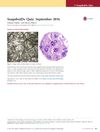 August 2016 in “Journal of Investigative Dermatology”
 This quiz based on a Journal of Investigative Dermatology article reports no new clinical results but serves as an educational tool for diagnosing scalp conditions, including scalp psoriasis and psoriatic alopecia.
 January 2014 in “Durham e-Theses (Durham University)”
 In this study, the activation of Notch1 signaling in keratinocytes was found to play a key role in recruiting immune cells and facilitating skin repair after injury.
January 2014 in “edoc (University of Basel)” This research suggests that fluoxymesterone, an anabolic steroid, may inhibit a key enzyme, potentially contributing to cardiovascular issues by affecting cortisol's activation of mineralocorticoid receptors.
 May 2012 in “CRC Press eBooks”
 Some patients on anti-TNF drugs experience a type of hair loss called TAIAPA.
April 2012 in “Informa Healthcare eBooks” Some drugs for inflammation may cause psoriasis-like hair loss.
 March 2004 in “Journal of The American Academy of Dermatology”
 This study found that the TrichoScan effectively measures hair growth changes, showing significant increases in hair counts and thickness in men with androgenetic alopecia after 6 months of using 5% minoxidil solution.
 72 citations
,
February 2011 in “The American Journal of Dermatopathology”
72 citations
,
February 2011 in “The American Journal of Dermatopathology” This study found that anti-TNF therapy-induced alopecia exhibits distinct clinical and histopathological features and can mimic psoriatic alopecia and alopecia areata, with some patients improving with topical treatment.
42 citations
,
March 2015 in “Anais Brasileiros de Dermatologia” This study reports two cases of alopecia associated with anti-TNF therapy, highlighting a new entity combining features of alopecia areata and psoriatic alopecia.
 41 citations
,
July 2015 in “Clinical and Experimental Dermatology”
41 citations
,
July 2015 in “Clinical and Experimental Dermatology” This review explores the connection between psoriasis and hair loss, noting that both the disease and its treatments can contribute to alopecia, and reports no new clinical results.