 24 citations
,
January 2013 in “Indian Journal of Dermatology, Venereology and Leprology”
24 citations
,
January 2013 in “Indian Journal of Dermatology, Venereology and Leprology” This review examines hormonal influences on acne development and available hormonal therapies but reports no new clinical results.
 21 citations
,
April 2010 in “Molecular Medicine Reports”
21 citations
,
April 2010 in “Molecular Medicine Reports” This review discusses zinc supplementation as a complementary therapy for chronic hepatitis C, noting its potential benefits in improving treatment outcomes and reducing side effects, but reports no new clinical results.
 13 citations
,
September 2019 in “Scientific Reports”
13 citations
,
September 2019 in “Scientific Reports” In this study, high levels of the protein Flii in mice were associated with worsened symptoms and inflammation in ulcerative colitis, suggesting Flii may inhibit mucosal healing.
 11 citations
,
May 2021 in “Journal of Medical Virology”
11 citations
,
May 2021 in “Journal of Medical Virology” This review discusses sex differences in immune response to respiratory viral infections, including SARS-CoV-2, and highlights that hormones like estrogen may provide females with better protection, but it reports no new results.
 10 citations
,
August 2014 in “PLoS ONE”
10 citations
,
August 2014 in “PLoS ONE” This study suggests that mammalian hair follicles may serve as a viable and non-invasive system for diagnosing traumatic brain injury, reflecting similar molecular responses observed in other tissues.
 7 citations
,
November 2020 in “Experimental Dermatology”
7 citations
,
November 2020 in “Experimental Dermatology” This article reviews skin regeneration and fibrosis, identifying key cellular and molecular players, and emphasizing the potential to manipulate the postwound environment to promote regeneration over fibrosis.
 7 citations
,
April 2012 in “Biomolecular concepts”
7 citations
,
April 2012 in “Biomolecular concepts” This article reviews the role of keratins in epithelial function and structure, discussing their involvement in growth control, organelle functions, and pathomechanisms of disorders, but reports no new clinical results.
 6 citations
,
November 2021 in “Frontiers in immunology”
6 citations
,
November 2021 in “Frontiers in immunology” This study suggests that STAT3 signaling in keratinocytes is crucial for maintaining skin homeostasis by regulating hair follicle-specific keratin genes, potentially impacting dermatitis development through microbe-triggered inflammatory responses.
 5 citations
,
October 2025 in “International Journal of Nanomedicine”
5 citations
,
October 2025 in “International Journal of Nanomedicine” This review discusses the role of traditional Chinese medicine and bioactive materials in chronic wound healing and reports no new clinical results.
 4 citations
,
December 2023 in “PubMed”
4 citations
,
December 2023 in “PubMed” This review discusses dietary interventions as a modifiable factor in managing hidradenitis suppurativa and reports no new clinical results, emphasizing the need for informed lifestyle choices.
 4 citations
,
November 2023 in “Frontiers in immunology”
4 citations
,
November 2023 in “Frontiers in immunology” In this narrative review, researchers outlined the role of T cells in the autoimmune pathogenesis of alopecia areata and highlighted ongoing research into therapeutic pathways, beyond current JAK inhibitors, aimed at developing new treatments for the disease.

research Acne
4 citations
,
January 2019 This analysis examines acne vulgaris using an integrative approach, highlighting its links with psychopathology, lifestyle, and diet, but reports no new results.
 3 citations
,
May 2023 in “Frontiers in immunology”
3 citations
,
May 2023 in “Frontiers in immunology” This study reviewed the role of inflammasomes in autoimmune skin diseases, highlighting their contribution to the pathogenesis of conditions such as vitiligo, alopecia areata, and psoriasis, and suggesting that targeting inflammasome dysregulation may offer new therapeutic options.
 3 citations
,
May 2023 in “Precision clinical medicine”
3 citations
,
May 2023 in “Precision clinical medicine” This study analyzed gene expression data to identify key genes involved in severe forms of alopecia areata, discovering four immune monitoring genes (LGR5, SHISA2, HOXC13, S100A3) with potential for early diagnosis and better understanding of the disease's biological mechanisms.
 2 citations
,
May 2025 in “Infection”
2 citations
,
May 2025 in “Infection” This source underscores the need for a multidisciplinary effort to raise awareness of Demodex and demodicosis, suggesting that prioritizing research, diagnostics, and treatment development could enhance global health outcomes and improve quality of life for affected individuals.
 2 citations
,
January 2011 in “Elsevier eBooks”
2 citations
,
January 2011 in “Elsevier eBooks” This book reviews the various types of acne and acneiform conditions, as well as their treatment options, with expert insights from multiple fields.
 1 citations
,
November 2025 in “Cell Death and Disease”
1 citations
,
November 2025 in “Cell Death and Disease” This review discusses the role of various genetic regulators in maintaining human mesenchymal stem cell stemness and highlights strategies for ex-vivo expansion, but reports no new clinical findings.
 1 citations
,
January 2025 in “OBM Geriatrics”
1 citations
,
January 2025 in “OBM Geriatrics” This study highlights the role of platelets in immune interactions and severe adenovirus infection, noting that activated platelets have a shorter lifespan. Results suggest potential for developing therapies targeting platelet senescence and immunologic mechanisms.
 1 citations
,
March 2024 in “Signal transduction and targeted therapy”
1 citations
,
March 2024 in “Signal transduction and targeted therapy” In this review, researchers explored the multifaceted role of NF-κB signaling in various biological processes and diseases, including its interactions with other pathways, and discussed possible therapeutic approaches targeting this pathway for treating conditions like cancer, autoimmune disorders, and COVID-19.
 1 citations
,
October 2023 in “Life science alliance”
1 citations
,
October 2023 in “Life science alliance” This study observed that pantethine, a vitamin B5 precursor, attenuates tumor growth in immunocompetent mice by enhancing antitumor immunity, but its effect is limited by immune cell exhaustion over time.
 1 citations
,
October 2023 in “Journal of Education Health and Sport”
1 citations
,
October 2023 in “Journal of Education Health and Sport” In this study, researchers reported that acne is a complex and chronic skin condition most commonly affecting individuals aged 11 to 30, with more severe cases observed more frequently in men and areas rich in sebaceous glands like the face, back, and chest.
 1 citations
,
August 2018 in “bioRxiv (Cold Spring Harbor Laboratory)”
1 citations
,
August 2018 in “bioRxiv (Cold Spring Harbor Laboratory)” This study reports that a novel gain-of-function mutation in TMEM173, combined with polymorphisms in TMEM173 and IFIH1, results in a distinct clinical phenotype with features of SAVI, including alopecia and photosensitivity.
 1 citations
,
January 2010 in “Serbian Journal of Dermatology and Venereology”
1 citations
,
January 2010 in “Serbian Journal of Dermatology and Venereology” This article reviews the multifaceted approach required for acne vulgaris treatment, emphasizing individualized combination therapies tailored to clinical severity and patient psychological profiles, but no new results are included.
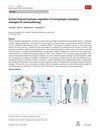
This review highlights that surface mechanical regulation can program macrophage behavior through specific mechanical cues on material surfaces, potentially advancing immunotherapies and regenerative medicine by enabling precise control over macrophage functions.
 February 2026 in “ImmunoTargets and Therapy”
 This study found that tumor immunotherapy, while effective against solid tumors, can disrupt the immune balance in hair follicles, causing follicular toxicity and alopecia, highlighting the need for targeted interventions to manage these adverse effects.
 January 2026 in “Al-Kunooze Scientific Journal”
 This study documented that dermatophytosis was highly prevalent in Basra's cats, particularly affecting males and cats under nine months, with lesions most frequent on ears, face, and abdomen.
 December 2025 in “Babcock University Medical Journal”
 This study found that in patients with Alopecia Areata, CD27 and IL-35 levels were significantly higher in those with bacterial infections, suggesting they may be useful as immunological biomarkers.
 December 2025 in “Nature Communications”
 This study demonstrated that skin organoids derived from human stem cells can model cutaneous tuberculosis, revealing that fibrosis development in Mycobacterium tuberculosis-infected organoids is linked to the PI3K-AKT and AP1 pathways in fibroblasts, and suggesting the potential for antifibrotic treatment evaluation.
 September 2025 in “Nano Biomedicine and Engineering”
 This review summarizes recent advances in nanomedicine-based therapies for psoriasis, highlighting their potential to provide targeted and sustained therapeutic effects by modulating key cellular components and signaling pathways involved in the disease, offering novel perspectives for future treatment development.
 July 2025 in “Scientific Reports”
 In this study, researchers identified six novel prognostic biomarkers for bladder cancer and developed a predictive model that effectively stratifies patients into high-risk and low-risk groups based on immune cell infiltration differences and gene expression.