January 2014 in “eScholarship (California Digital Library)” In this study, researchers observed that TLR3 and scavenger receptors play key roles in skin barrier repair following UVB damage, contributing to our understanding of cellular responses to skin injury.
 April 2015 in “Plastic and Reconstructive Surgery”
 This article is from the ASPS Education Network and does not report any new research findings.

This research observed that removing RNase L in mice enhances regenerative capacity through increased IL-36 and wound-induced hair neogenesis, highlighting RNase L as a gene that represses regeneration by moderating immune responses during viral infections.
 5 citations
,
March 2019 in “Experimental dermatology”
5 citations
,
March 2019 in “Experimental dermatology” In this study involving adult mice, the researchers identified that double-stranded RNA-mediated activation of toll-like receptor 3 stimulates wound-induced hair neogenesis, potentially reflecting mechanisms used in facial rejuvenation treatments.
 47 citations
,
June 2019 in “Nature Communications”
47 citations
,
June 2019 in “Nature Communications” This study found that self-noncoding dsRNA activates TLR3 to stimulate intrinsic retinoic acid synthesis, promoting new hair follicle formation in wounded mice and showing similar gene expression changes in humans treated with rejuvenation lasers.
April 2017 in “The journal of investigative dermatology/Journal of investigative dermatology” This study found that TLR3-mediated damage sensing can stimulate prostaglandin and Wnt pathways, potentially coordinating hair follicle regeneration in mice with large skin wounds.
 6 citations
,
January 2021 in “Frontiers in Immunology”
6 citations
,
January 2021 in “Frontiers in Immunology” This study found that deficiency in TLR3/TRIF signaling reduced inflammation and protected mice against postoperative ileus, suggesting potential for TLR3 antagonism as a preventive approach in humans.
 4 citations
,
October 2021 in “Journal of Cellular and Molecular Medicine”
4 citations
,
October 2021 in “Journal of Cellular and Molecular Medicine” This study observed that mature neutrophils and their extracellular traps inhibit wound-induced hair follicle neogenesis in mice, despite being stimulated by pro-regenerative cues.
 April 2018 in “The journal of investigative dermatology/Journal of investigative dermatology”
 This study identified a novel mechanism by which dsRNA-induced TLR3 activation and retinoic acid pathways contribute to new hair follicle formation after deep wounds in mice and suggested a similar potential in humans.
 February 2025 in “Journal of Clinical Investigation”
 This study found that RNase L acts as a regeneration repressor gene in mammals, as seen in Rnasel-/- mice which showed increased regenerative capacity and elevated Wound Induced Hair Neogenesis through enhanced IL-36α signaling, suggesting a tradeoff between regeneration and immune regulation.
 April 2015 in “Plastic and Reconstructive Surgery”
 This article discusses the role of the American Society of Plastic Surgeons in plastic and reconstructive surgery education but presents no new research findings.
 65 citations
,
May 2017 in “Advances in wound care”
65 citations
,
May 2017 in “Advances in wound care” This review discusses the role of Toll-like receptors in wound healing and highlights their potential therapeutic value but notes that their role in human wound healing and chronic wounds is not well understood.
April 2023 in “Journal of Investigative Dermatology” RNase L suppresses regeneration in mammals.
 April 2019 in “Journal of Investigative Dermatology”
 This study identifies a mechanism where dsRNA activates TLR3 to induce RA production, promoting hair follicle regeneration in mice and suggesting a potential role in human tissue regeneration.
 128 citations
,
August 2015 in “Cell Stem Cell”
128 citations
,
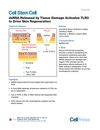
August 2015 in “Cell Stem Cell” The researchers reported that dsRNA from damaged skin activates TLR3, promoting hair follicle regeneration, while TLR3-deficient animals fail to initiate this process, suggesting potential therapeutic approaches for hair neogenesis.
 16 citations
,
January 2016 in “Journal of Investigative Dermatology”
16 citations
,
January 2016 in “Journal of Investigative Dermatology” This study found that IL-6 knockout mice exhibited increased wound-induced hair neogenesis compared to wild-type mice, likely due to enhanced STAT3 activation facilitated by compensatory cytokine activity.

This study found that activating Toll-like receptor 3 signaling in periodontal ligament stem cells may enhance their immunomodulatory properties, suggesting potential implications for future stem cell therapy applications.
 April 2016 in “The journal of investigative dermatology/Journal of investigative dermatology”
 In this study, Mpzl3-/- mice developed severe seborrhea-like dermatitis with skin inflammation, indicating MPZL3's role in the skin condition's development, independent of adaptive immunity.
 22 citations
,
May 2021 in “Nature Communications”
22 citations
,
May 2021 in “Nature Communications” This study found that in wound-induced hair neogenesis, African spiny mice and laboratory mice exhibit different morphogenetic field formation patterns related to tissue stiffness, suggesting evolutionary developmental biology advantages.
 28 citations
,
October 2019 in “Seminars in Cell & Developmental Biology”
28 citations
,
October 2019 in “Seminars in Cell & Developmental Biology” This article discusses the advances in understanding wound-induced hair follicle neogenesis (WIHN) and highlights the roles of specific signaling pathways and cellular plasticity, noting no clinical results but suggesting potential areas for further research.
55 citations
,
November 2010 in “Journal of Allergy and Clinical Immunology” This study found that the TLR3 L412F genetic variant is associated with severe viral infections, especially CMV, and immune dysfunction in a subgroup of chronic mucocutaneous candidiasis patients.
 9 citations
,
January 2018 in “Acta dermato-venereologica”
9 citations
,
January 2018 in “Acta dermato-venereologica” This study found that carbonic anhydrase II was significantly upregulated in human keratinocytes when treated with toll-like receptor 3 agonist and Th2 cytokines, suggesting its potential role in inflammatory skin conditions.
20 citations
,
July 2017 in “Journal of Investigative Dermatology” IL-1 receptor absence in mice leads to skin cysts and changes in immune response after UVB exposure.
 301 citations
,
February 2019 in “Nature Communications”
301 citations
,
February 2019 in “Nature Communications” In this study, researchers found that wound healing in mouse skin recruits diverse fibroblasts, including myeloid-derived cells, which contribute to regenerating adipocytes.
1 citations
,
December 2021 in “Development & Reproduction” This study found that FPR2 knockout mice experienced excessive hair loss and abnormal hair follicle structures, suggesting FPR2's protective role in hair regeneration through stem cell activity regulation.
 July 2020 in “bioRxiv (Cold Spring Harbor Laboratory)”
 This study found that although mature neutrophils and NETs are stimulated by a pro-regenerative cue, their presence actually hinders wound-induced hair follicle regeneration.
September 2017 in “Journal of Investigative Dermatology” This study suggests that activating the hexosamine pathway may enhance skin homeostasis, potentially increasing hair follicle stem cells and modifying extracellular matrix components like hyaluronic acid in vitro.
15 citations
,
May 2022 in “Journal of Investigative Dermatology” This study found that endothelial TLR2 is crucial for effective angiogenesis and timely wound healing, whereas TLR2 in hair follicle stem cells is not essential for skin regeneration.
 August 2024 in “Qucosa (Saxon State and University Library Dresden)”
 In this study on mice, researchers observed that dermal white adipose tissue (dWAT) plays a key role in regulating skin inflammation and tissue repair; however, reduced expression of certain cytokines in obese mice may hinder these processes, indicating potential metabolic disruptions in dWAT during inflammation.
 19 citations
,
November 2018 in “Experimental Dermatology”
19 citations
,
November 2018 in “Experimental Dermatology” This review explores the skin regeneration process in spiny mice and highlights differences from laboratory mice, focusing on potential molecular and immune system roles without reporting new experimental results.