3 citations
,
November 2024 in “Electrochimica Acta” A new, quick method accurately detects minoxidil in drugs and cosmetics.
 April 2016 in “Expert opinion on orphan drugs”
 This review explores current therapeutic options for frontal fibrosing alopecia, noting the use of finasteride, topical tacrolimus, hydroxychloroquine, and excimer laser in managing the condition, but reports no new clinical results.
August 2025 in “BMC Pharmacology and Toxicology” The LTF gene may help predict and manage nonspecific orbital inflammation.
4 citations
,
December 2023 in “Frontiers in Pharmacology” This study found that topical metformin was as effective as triple combination cream in reducing melasma severity, with minimal adverse events.
January 2024 in “Open MIND” This study will evaluate the potential of photobiomodulation, both alone and combined with melatonin supplementation, to promote hair regrowth in German Spitz dogs with alopecia X, by measuring hair follicle density and thickness over a 90-day period.
8 citations
,
June 2021 in “Frontiers in Medicine” This study reported that the combination of a 308-nm excimer lamp and 10% liquor carbonis detergens significantly improved scalp psoriasis symptoms compared to the excimer lamp alone, with more patients achieving 75% reduction in their Psoriasis Scalp Severity Index.
 19 citations
,
December 2016 in “The journal of pharmacology and experimental therapeutics/The Journal of pharmacology and experimental therapeutics”
19 citations
,
December 2016 in “The journal of pharmacology and experimental therapeutics/The Journal of pharmacology and experimental therapeutics” This study found that multiple ion channel modulators, used here at clinical concentrations, increased intracellular calcium release in prostate and breast cancer cell lines.
January 2016 in “Refubium (Universitätsbibliothek der Freien Universität Berlin)” In this study, the safety profile of the prodrug CAP7.1 was found to be similar to other topoisomerase inhibitors, with myelosuppression as the main dose-limiting toxicity.
 142 citations
,
August 2007 in “Journal of The American Academy of Dermatology”
142 citations
,
August 2007 in “Journal of The American Academy of Dermatology” This study found that a new 5% minoxidil foam formulation significantly increased hair counts and improved hair loss condition in men with androgenetic alopecia over 16 weeks compared to placebo.
 January 1983 in “Side effects of drugs annual”
 This chapter reviews adverse effects of anti-anginal and beta-blocker drugs, stating that starting a beta-blocker may temporarily affect driving ability, but it reports no new clinical findings.
 June 2026 in “Restorative Dermatology and Venereology and Cosmetology”
 This study found that a combination of the Tri-energy factor 5.5% booster and photodynamic therapy significantly improved hair density and reduced single follicular units in patients with androgenetic alopecia, compared to minoxidil or booster alone, supporting the inclusion of photodynamic therapy in comprehensive treatment.
 66 citations
,
January 2010 in “Journal of The American Academy of Dermatology”
66 citations
,
January 2010 in “Journal of The American Academy of Dermatology” This study reported that mycophenolate mofetil was effective in reducing signs and symptoms of active lichen planopilaris in 83% of patients who had failed multiple prior treatments.
In this study, the researchers identified that perturbing both AKT1 and MDM2 significantly reduces epithelial-mesenchymal transition in melanoma, proposing Cialis and Finasteride as potential therapeutic candidates with favorable properties for managing aggressive melanoma.
 18 citations
,
October 2005 in “International Journal of Pharmaceutics”
18 citations
,
October 2005 in “International Journal of Pharmaceutics” This study found that incorporating 0.5% TPGS into topical minoxidil solutions enhanced hair growth in mice, although increasing TPGS to 2% decreased effectiveness.
 6 citations
,
April 2022 in “Biomedicine & pharmacotherapy”
6 citations
,
April 2022 in “Biomedicine & pharmacotherapy” This review discusses the potential of using triads of repositioned medicines targeting multiple pathogenic mechanisms to prevent or delay retina degeneration, but reports no new results.
This observational study reviewed thyroid eye disease patients treated with teprotumumab at one center, reporting common side effects like fatigue and dry eye symptoms, with serious adverse events including two cases of blood clots and one pulmonary embolism.
 June 2017 in “Journal of The American Academy of Dermatology”
 The new treatment was safe and may effectively treat male pattern hair loss.
This study established an HPLC-MS method for measuring oxymatrine in human plasma and used it to examine the pharmacokinetics of its capsules.
 6 citations
,
January 2016 in “Journal of Clinical and Diagnostic Research”
6 citations
,
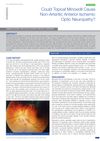
January 2016 in “Journal of Clinical and Diagnostic Research” This case report describes a non-arteritic anterior ischemic optic neuropathy that resolved after discontinuing topical 5% minoxidil treatment.
January 2022 in “Drugs of Today”  December 2018 in “Neuroradiology”
 MRI helps distinguish between pituitary adenomas and craniopharyngiomas, guides treatment for pediatric CNS tumors, and assesses rhinocerebral mucormycosis with a high mortality rate in transplanted patients.
 1 citations
,
January 2018 in “Eastern Journal Of Medicine”
1 citations
,
January 2018 in “Eastern Journal Of Medicine” In this case report, a 9-year-old girl using topical minoxidil for alopecia experienced a 6-second asystole with syncope, suggesting careful cardiac monitoring may be needed for minoxidil users.
 25 citations
,
December 2001 in “Expert Opinion on Pharmacotherapy”
25 citations
,
December 2001 in “Expert Opinion on Pharmacotherapy” This review discusses the therapeutic potential of potassium channel openers for various conditions, but notes that their clinical role is not yet fully established.
 39 citations
,
April 2001 in “Journal of The American Academy of Dermatology”
39 citations
,
April 2001 in “Journal of The American Academy of Dermatology” This article reviews the side effects of topical latanoprost therapy, particularly the hypertrichosis and pigmentation changes of eyelashes and nearby skin, and reports no new clinical results.
April 2023 in “International Journal of Pharmaceutics” In this study, melatonin-loaded Pickering emulsions stabilized by chitosan-dextran sulphate nanoparticles and enhanced with lecithin showed improved photostability, antioxidant activity, and follicular delivery in androgenic alopecia-affected rats, potentially rivaling commercial minoxidil for hair loss treatment.
September 2025 in “Headache The Journal of Head and Face Pain” In this critique, the authors argue that the American College of Physicians' recent guideline for migraine preventive therapy is based on a flawed analysis with low confidence levels and outdated data, failing to acknowledge newer migraine-specific therapies with stronger evidence and better tolerability.
 9 citations
,
May 2019 in “Vestnik dermatologii i venerologii”
9 citations
,
May 2019 in “Vestnik dermatologii i venerologii” This study demonstrated a method for delivering a photosensitizer, Ammi majus fructuum furocumarines, into hair follicles using calcium carbonate particles, followed by UVA irradiation, which led to significant pigment accumulation, indicating potential improvements for photochemical therapy.
2 citations
,
September 2022 in “Annals of Oncology” This study observed that MIRV improved gastrointestinal symptoms and other quality of life measures in patients with platinum-resistant ovarian cancer compared to chemotherapy.
 June 2025 in “Samarra Journal of Pure and Applied Science”
 This study developed a rapid and accurate spectrophotometric method using diazotized sulfanilic acid to measure minoxidil in both pharmaceutical formulations and pure form, demonstrating high precision and linearity within a concentration range of 5-40 μg/ml.
7 citations
,
September 2021 in “Antimicrobial Agents and Chemotherapy” This study found that olorofim demonstrated potent in vitro and in vivo antifungal activity against dermatophytes, resolving skin lesions in a guinea pig model similar to clotrimazole, suggesting it may be a promising treatment for dermatophytosis.