39 citations
,
October 2012 in “Headache The Journal of Head and Face Pain” This study reports cutaneous atrophy and alopecia in four patients following greater occipital nerve blockade with triamcinolone and lidocaine, suggesting that alternative steroids may reduce these side effects.
 March 2026 in “Critical Care Medicine”
 In this case study, treatment with methylene blue successfully improved blood pressure in a patient with refractory vasodilatory shock due to massive minoxidil ingestion, highlighting its potential as an adjunctive therapy.
201 citations
,
November 2002 in “Annals of internal medicine” This guideline discusses evidence-based recommendations for managing acute migraine attacks and preventing migraines, highlighting effective treatments such as NSAIDs and triptans but reports no new clinical findings.

This study observed that, after 90 hours of light exposure, Finasteride retained 57% of its concentration, whereas Diclofenac and Naproxen retained only 12% and 9%, respectively.
 8 citations
,
February 2019 in “Scientific Reports”
8 citations
,
February 2019 in “Scientific Reports” This article describes the immunofluorescence tomography method to achieve high-resolution 3-D reconstruction of epithelial tissues and reports no clinical results.
 1 citations
,
May 2022 in “Голова и шея.”
1 citations
,
May 2022 in “Голова и шея.” This study found that photobiomodulation after septoplasty reduced pain and inflammatory response, leading to less pronounced changes in autonomic nervous system activity compared to patients who did not receive this treatment.
 14 citations
,
January 2020 in “International Journal of Biological Sciences”
14 citations
,
January 2020 in “International Journal of Biological Sciences” This study explored the use of multiphoton microscopy to monitor changes in tumors and surrounding tissues in breast cancer patients undergoing neoadjuvant chemotherapy, finding it may effectively detect treatment response at cellular levels without using exogenous contrast agents.
 March 2026 in “Clinical Cosmetic and Investigational Dermatology”
 This research found that combining a 308-nm excimer laser with oral compound glycyrrhizin and topical 0.03% tacrolimus was more effective for treating pediatric facial and cervical vitiligo, resulting in faster and higher rates of repigmentation with minimal adverse effects compared to glycyrrhizin and tacrolimus alone.
June 2025 in “British Journal of Dermatology” This study compared oral tofacitinib and methotrexate in treating moderate-to-severe alopecia areata, finding that tofacitinib was more effective at reducing SALT scores and improving scalp hair assessment PRO scores, though both treatments reduced psychological distress similarly without serious adverse effects.
 53 citations
,
August 2019 in “Journal of The American Academy of Dermatology”
53 citations
,
August 2019 in “Journal of The American Academy of Dermatology” This study observed that low-dose oral minoxidil and topical minoxidil 5% solution both improved hair density in women with female-pattern hair loss, but oral minoxidil may offer advantages in reducing hair shedding.
 38 citations
,
October 2014 in “British journal of dermatology/British journal of dermatology, Supplement”
38 citations
,
October 2014 in “British journal of dermatology/British journal of dermatology, Supplement” The study found that daily use of bimatoprost ophthalmic solution 0.03% for one year was effective in improving eyelash growth and patient satisfaction in both idiopathic and chemotherapy-induced hypotrichosis, with no serious drug-related adverse events reported.
37 citations
,
January 1986 in “Carcinogenesis” This study found that TPA treatment transiently induces high levels of ODC in mouse epidermal cells, particularly around hair follicles, with localization reduced by retinoic acid or cycloheximide pretreatment.

This study evaluated the stability of multiple active ingredients in TrichoSol™ for use in alopecia treatments, finding varying stability durations at room temperature—up to 180 days for some ingredients—supporting its use as a compounding vehicle in personalized therapies.
December 2012 in “http://isrctn.org/>” 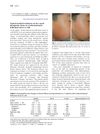 14 citations
,
July 2012 in “Journal of the American Academy of Dermatology”
14 citations
,
July 2012 in “Journal of the American Academy of Dermatology” This study found that topical tacalcitol improved roughness and scaling in erythromelanosis follicularis faciei et colli, although it was less effective for facial erythema.
January 2008 in “Linchuang pifuke zazhi” This study found that betamethasone increased tyrosinase activity and melanin content in amelanotic melanocytes from human hair follicles, suggesting a potential mechanism for glucocorticoid treatment in vitiligo.
 39 citations
,
January 2015 in “Journal of Electroanalytical Chemistry”
39 citations
,
January 2015 in “Journal of Electroanalytical Chemistry” In this study, a novel electrochemical sensor using a molecularly imprinted polymer was developed for the sensitive detection of minoxidil, successfully measuring its concentration in real samples.
 3 citations
,
September 2022 in “Veterinary Dermatology”
3 citations
,
September 2022 in “Veterinary Dermatology” This study found that 18 mg melatonin implants did not significantly prevent recurrence of canine flank alopecia compared to placebo in dogs, though the treatment was well-tolerated, with no evidence of improved efficacy.
 2 citations
,
February 2016 in “British Journal of Dermatology”
2 citations
,
February 2016 in “British Journal of Dermatology” This study found that topical bimatoprost significantly improved eyelash growth in individuals with idiopathic and chemotherapy-induced eyelash hypotrichosis compared to a vehicle treatment.
 July 2023 in “Annals of King Edward Medical University”
 This randomized clinical trial compared bimatoprost 0.03% solution and mometasone furoate 0.1% cream for treating alopecia areata in 60 patients, finding that mometasone furoate led to better hair regrowth, while both treatments showed significant effectiveness.

This protocol outlines a study to evaluate whether photobiomodulation, alone or with melatonin, promotes hair regrowth in dogs with Alopecia X, reporting no new results yet.
159 citations
,
July 2014 in “Molecular pharmaceutics” This study found that MPEG-dihexPLA micelles significantly improved the skin deposition of tacrolimus compared to a marketed ointment, suggesting better targeted delivery with reduced systemic absorption.
 February 2023 in “Frontiers in Bioengineering and Biotechnology”
 This review discusses the potential of optical techniques for diagnosing and treating oxidative stress-related hepatic ischemia-reperfusion injury, highlighting the need for non-invasive diagnostic methods and the anti-oxidative potential of optical therapies; it reports no new clinical results.

Minoxidil sulfate, delivered through iontophoresis, can be used to treat hair loss.
 9 citations
,
January 2020
9 citations
,
January 2020 This case series observed that macular changes from popper use can resolve completely after cessation, even in individuals with chronic use.
3 citations
,
November 2021 in “Frontiers in medicine” In this retrospective study at Hiroshima University, methotrexate effectively controlled ocular inflammation in Japanese patients with non-infectious uveitis over 6 to 24 months, but a high incidence of adverse effects indicates careful monitoring and dose adjustments are important.
June 2026 in “Khyber Journal Of Medical Sciences” This study found that among adults with severe alopecia areata, alopecia totalis, or alopecia universalis, oral tofacitinib was more effective than methotrexate in reducing hair loss over a 12-week period, though long-term safety and efficacy remain unestablished.
 September 2023 in “International Journal of Applied Pharmaceutics”
 This study found that a topical gel containing Minoxidil and Tofacitinib citrate showed promise for treating alopecia areata, with formulation F5 demonstrating effective drug release and stability in evaluations.
54 citations
,
September 2012 in “Acta ophthalmologica” This review highlights that various targeted cancer therapies are associated with specific ocular side-effects, emphasizing the importance of awareness among ophthalmologists for timely diagnosis and management.
 3 citations
,
January 2006 in “Eclética Química”
3 citations
,
January 2006 in “Eclética Química” This study developed three spectrophotometric methods to effectively measure finasteride in bulk and tablet forms, providing accurate results that align closely with labeled claims.