May 2020 in “The Journal of Pediatrics” Tinea capitis can be quickly diagnosed and treated using dermoscopy to prevent hair damage.
April 2020 in “Rice Research Repository (Rice University)” This study suggests that MultiDomain Peptide hydrogels may support wound healing in diabetic mice by accelerating closure and promoting tissue regeneration, though they did not inhibit bacterial growth in infected wounds as expected.
February 2020 in “Journal of Physics Conference Series” This study found that laser hair removal is optimal for light to moderate skin tones using 10-15 J/cm² at 755 nm and for dark skin with 4.5-10 J/cm² at 755-1064 nm.
January 2020 in “Archivio Istituzionale della Ricerca (Universita Degli Studi Di Milano)” This study found that Polycomb Repressive Complex 1 is crucial for maintaining stem cell identity across different lineages, but its loss results in varied transcriptional outcomes depending on the tissue context.

This study suggests that the exercise-induced cytokine IL-15 can improve wound healing in aged skin, along with previously reported benefits on skin structure and mitochondrial function.
 August 2019 in “Journal of Medical Histology”
 This review discusses the role of epithelial mesenchymal transition (EMT) in wound healing and tissue repair, highlighting its potential contributions to progenitor cell pools, but reports no new clinical findings.
 August 2019 in “Journal of Investigative Dermatology”
 This study found that tight junctions extend to the most superficial layer of the stratum granulosum in human skin, challenging previous claims of their limited presence in the epidermis.
August 2019 in “Wiedza Medyczna” This article discusses the importance of differential diagnosis and adequate treatment for tinea capitis, a common scalp infection in children, and reports no new results.
 April 2019 in “Journal of Medical Science And clinical Research”
 This study observed that grey patch is the most common variant of tinea capitis in northeastern India, with T. violaceum being the predominant fungal isolate.
 April 2019 in “Dermatology reports”
 This case study reported that scalp dermoscopy, or trichoscopy, provided a useful noninvasive method to evaluate and confirm hair regrowth in a child treated for tinea capitis.
 January 2019 in “Open access journal of mycology & mycological sciences”
 This article discusses tinea capitis, highlighting its causes, symptoms, diagnostic methods, and the importance of selecting treatment based on the causal agent for effective outcomes; it reports no new clinical results.
September 2018 in “Digital Access to Scholarship at Harvard (DASH) (Harvard University)” In this study, FN-based fiber scaffolds designed using Rotary Jet-Spinning were shown to enhance wound healing and reduce scar formation in a mouse model, suggesting potential for regenerating healthy skin structure.

This case study reports successful treatment of partial scalp alopecia secondary to a repaired occipital encephalocele using the tissue expansion technique.
 June 2018 in “The Medical Journal of Cairo University/The Medical Journal of Cairo University”
 This study found that dermoscopy is effective for distinguishing Tinea Capitis from Alopecia Areata by identifying unique trichoscopic features specific to each condition.

In this study, researchers found that adult tinea capitis in Korea shows unique epidemiological and clinical features compared to children, which may lead to misdiagnosis or delayed diagnosis.
April 2018 in “Journal of Investigative Dermatology” African spiny mice can regenerate skin and hair after wounds due to specific tissue mechanics.
February 2018 in “Archivio Istituzionale della Ricerca (Universita Degli Studi Di Milano)” This study concluded that macrophage iron retention due to Ferroportin inactivation hinders skin wound healing but does not affect liver damage or fibrogenesis in a mouse model.
January 2018 in “eScholarship (California Digital Library)” This study suggests that hair follicle stem cells have a unique metabolic profile that may play a critical role in their maintenance and response to cancer-related changes, potentially contributing to the "Warburg Effect.
This case report highlights the effective treatment of tinea capitis with griseofulvin in a young girl, even when previous antifungal treatments were used.
 June 2017 in “Çocuk Enfeksiyon Dergisi/Journal of Pediatric Infection”
 This report describes two cases of urticarial id reaction linked to tinea capitis profunda, highlighting a potential new etiology for this rare condition.
 June 2017 in “International Journal of Research in Dermatology”
 In this study, researchers observed that skin conditions in Timbi are influenced by occupation, literacy, and systemic diseases, with widespread improper steroid use contributing to complications.
April 2017 in “The journal of investigative dermatology/Journal of investigative dermatology” This study reports that incorporating Lef-1 transfected dermal papilla cells into human skin equivalents significantly promoted hair follicle differentiation and hair fiber growth, offering a potential advancement for managing skin loss.
December 2016 in “Indonesian Journal of Tropical and Infectious Disease/Indonesian Journal of Tropical an Infectious Disease” In this case report, a two-year-old girl with kerion type of tinea capitis successfully achieved clinical and mycologic cure with double pulse dose terbinafine and 2% ketoconazole shampoo over two months, with excellent tolerability and no side effects.
 December 2016 in “Journal of Pakistan Association of Dermatology”
 In this study, tissue expansion was identified as a safer initial procedure before hair transplantation for patients with large scalp defects, with the majority of participants having postburn scars and a mean expansion time of 33.6 days.
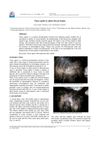
This report presents the first known case of tinea capitis caused by Microsporum canis in an adult female in the authors' locality, responsive to oral fluconazole treatment.
 April 2016 in “Journal of Investigative Dermatology”
 In this study, researchers demonstrated that using 3D spheroid formation and genetic modification significantly enhanced the hair-inducing capacity of human dermal papilla cells in engineered skin constructs.
August 2015 in “PubMed Central” This study suggests that epithelial-derived Pop-Up Keratinocytes (ePUKs) may be a promising cell source for regenerative medicine due to their specific phenotypic traits and their influence on wound healing.
 August 2015 in “MOJ proteomics & bioinformatics”
 This study suggests that epithelial-derived pop-up keratinocytes (ePUKs) may improve regenerative medicine applications due to their specific phenotype and increased expression of proteins involved in regulating cellular movement and wound healing.
 May 2015 in “Journal of The American Academy of Dermatology”
 Laser treatment is safe and can effectively treat toenail fungus, especially when combined with other treatments if no improvement is seen after about a year.
 January 2015 in “Farmatsevtychnyĭ zhurnal”
 This research discusses the development of a complex tincture for telogen effluvium using nettle, sage, and chestnut leaves, but provides no new clinical results.