 December 2022 in “Frontiers in Pharmacology”
 This study reported that Tianma Gouteng decoction improved hair follicle regeneration in mice and identified its potential mechanism, primarily involving the Wnt/β-catenin signaling pathway, through a combination of network pharmacology, molecular docking, and experimental validation.
November 2022 in “Indian Journal of Dermatology” This case report describes a 52-year-old woman with erythema annulare centrifugum after using topical luliconazole and oral itraconazole, suggesting a drug-induced reaction confirmed by a positive rechallenge test.
 October 2022 in “BMC genomics”
 This study investigated adenosine-to-inosine RNA editing in the hair follicle cycle of Tianzhu white yak, identifying numerous editing sites and suggesting their involvement in pathways related to hair growth.
October 2022 in “Hair Transplantation” This review discusses techniques for repairing large scalp defects, emphasizing the combination of older methods like scalp reduction and tissue expansion with modern hair restoration surgery to achieve satisfactory results, despite challenges like compromised scalp viability due to factors like trauma or radiation.
October 2022 in “Amplla Editora eBooks” Tilapia skin helps heal skin injuries faster and cheaper.
 October 2022 in “Gadua Journal of Pure and Allied Science”
 In this study, Trichophyton tonsurans and Microsporum canis were identified as the primary causes of tinea capitis, with terbinafine treatment showing the highest cure rate. Non-commercial kits surpassed real-time PCR commercial kits in specificity and sensitivity for diagnosis.
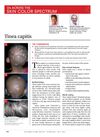 October 2022 in “The Journal of Family Practice”
 This article describes cases of tinea capitis in young Black and Latina children, highlighting the condition's diverse presentations such as erythema, scaling, and subtle signs like comma hairs, but reports no new clinical results.
 September 2022 in “bioRxiv (Cold Spring Harbor Laboratory)”
 In this study, researchers using live mice observed that oncogenic Kras mutation disrupts hair follicle architecture by sustaining ERK signal activation, which affects stem cell behavior and tissue integrity.
 July 2022 in “Berkala Ilmu Kesehatan Kulit dan Kelamin/Berkala ilmu kesehatan kulit dan kelamin (Periodical of dermatology and venerology)”
 This study reviewed medical records of tinea capitis patients at a clinic in Surabaya, finding that the condition predominantly affected young males and was often associated with contact with cats.
 July 2022 in “Journal of Investigative Dermatology”
 This study found that the KrasG12D mutation alters ERK signal dynamics in hair follicle stem cells, leading to tissue deformation, and suggests a collective effect of mutant cells is necessary for disruption.
 July 2022 in “Biomedicines”
 This study found that 4-aminopyridine significantly enhanced skin wound healing by accelerating wound closure, improving skin architecture, and promoting hair follicle neogenesis and tissue regeneration.
 July 2022 in “Research Square (Research Square)”
 This study reports that Huaier promotes hair growth and tissue regeneration in cancer recovery by activating the Hedgehog signaling pathway, potentially preventing recurrence and metastasis independently from SMO function.
 June 2022 in “Research Square (Research Square)”
 This study revealed that metformin, beyond its hypoglycemic use, may have potential reuse in treating obesity, cardio-cerebrovascular diseases, and more, including possible future applications for Alzheimer's and other conditions.
May 2022 in “Journal of Cutaneous Immunology and Allergy” This case report highlights that asymptomatic domestic cats can transmit Microsporum canis, leading to tinea capitis in humans, as seen in a four-year-old girl in the study.
 May 2022 in “Journal of Immunology”
 In this study, a TGF-β mimic molecule from Heligmosomoides polygyrus was observed to enhance wound healing in mice, with improved tissue regeneration and specific immune cell recruitment without increased scarring.
 March 2022 in “Berkala Ilmu Kesehatan Kulit dan Kelamin/Berkala ilmu kesehatan kulit dan kelamin (Periodical of dermatology and venerology)”
 This study found that nearly half of the tinea capitis patients at a Surabaya hospital had cat contact, with the most common symptoms being crust and hair loss.
March 2022 in “JAAD case reports” This case report highlights the importance of maintaining clinical suspicion for tinea incognito in patients with central centrifugal cicatricial alopecia who do not respond to typical corticosteroid treatments, as misdiagnosis can complicate treatment.
 March 2022 in “Benha Journal of Applied Sciences”
 This study suggests that the serum marker may play a role in the pathogenesis of tinea capitis and could serve as an independent risk factor for assessing vulnerability, activity, and severity of the condition.
 January 2022 in “Eduvest”
 This case report discusses the clinical features and management of tinea capitis, highlighting its occurrence in adults and the continued preference for griseofulvin treatment.
 January 2022 in “bioRxiv (Cold Spring Harbor Laboratory)”
 This study found that inhibiting the gp130 Y814 signaling module promotes tissue regeneration and may prevent pathological outcomes after injury in animal models.
 January 2022 in “International Journal of Research Publications”
 In this case report, an 8-year-old child with tinea capitis caused by Microsporum canis showed significant clinical and mycological improvement after a four-week course of oral griseofulvin, highlighting the importance of comprehensive diagnostic examinations to confirm the diagnosis and determine the best treatment.
 January 2022 in “Kafkas Universitesi Veteriner Fakultesi Dergisi”
 In this study, differences in protein expression related to twin lambing were identified in Tibetan sheep, providing insights into the reproductive performance and fertility improvement strategy for sheep in the Qinghai-Tibet Plateau.
This study found that the loss of papillary fibroblasts in the skin due to UV radiation is mainly caused by an uncontrolled inflammatory response, with T cells helping fibroblast survival.
November 2021 in “CRC Press eBooks” This article reviews the clinical challenges in diagnosing tinea capitis due to its varying symptoms and reports no new clinical findings, emphasizing the need for careful differential diagnosis.
 October 2021 in “Austin journal of biomedical engineering”
 In this study, researchers modified an acellular scaffold with different concentrations of eggshell membrane protein, finding that a 5% concentration effectively enhanced tissue regeneration in mice with excisional wounds, achieving complete healing within 14 days without causing immunogenicity or inflammation.
This study found that chronic UVR exposure in mice and humans leads to a permanent loss of papillary fibroblasts in the upper dermis, which is associated with changes in the extracellular matrix.
April 2021 in “Journal of Investigative Dermatology” A deep learning model was developed to help diagnose trichothiodystrophy by analyzing hair patterns.
April 2021 in “Cermin Dunia Kedokteran” This study reports improvement in tinea capitis symptoms in two siblings after two months of treatment with ketoconazole lotion and shampoo, following initial findings of M. canis and Rhodotorulla infections.
April 2021 in “Cermin Dunia Kedokteran” This report describes two cases of tinea capitis in young siblings, with cultures showing M. canis and Rhodotorulla, and notes improvement after treatment with ketoconazole lotion and shampoo for two months.
 January 2021 in “Advances in health sciences research/Advances in Health Sciences Research”
 This case report describes two siblings with gray patch tinea capitis, highlighting exposure to cats and inappropriate corticosteroid use as risk factors, and treatment with griseofulvin and terbinafine.