 October 2012 in “Advanced Materials Research”
 This study found that temperature significantly affects the mechanical properties of rabbit hair fibers, with increased tensile strain and decreased breaking strength in humid conditions.
July 2025 in “Journal of Investigative Dermatology” Androgens reduce THY1 in skin cells, leading to less fat, more fibrosis, and worse healing in males.
July 2026 in “Environmental Science & Technology” This study found that nanoplastics' aggregation behavior on human skin, influenced by factors like concentration, photoaging, and organic constituents, affects their penetration potential through sweat glands and hair follicles, highlighting potential dermal exposure risks.
December 2025 in “SKINdeep” This paper reviews existing studies on the role of environmental humidity in skin health, highlighting that low humidity can impair the skin's barrier function and trigger inflammatory responses, though the precise mechanisms remain to be fully explored.
43 citations
,
April 1996 in “Journal of Investigative Dermatology”  March 2010 in “International Journal of Cosmetic Science”
 This study found that oxidative treatment with peracetic acid dissociates some disulfide bonds in human hair fibers while maintaining the crystalline structure, suggesting different mechanisms stabilize different regions of intermediate filaments.
15 citations
,
December 2020 in “The Journal of General Physiology” This study found that acid regulation of the TRPV3 channel can inhibit its function from outside the cell while facilitating it from inside, providing insights into skin barrier and disorder mechanisms related to tissue acidosis.
2 citations
,
November 2022 in “bioRxiv (Cold Spring Harbor Laboratory)” This study found that metabolic adaptations in skin epithelial stem cells, specifically redox ratio recovery and glycolytic flux modulation, define competitive outcomes between wild-type and mutant cells in different oncogenic environments.
 15 citations
,
June 1964 in “Experimental Biology and Medicine”
15 citations
,
June 1964 in “Experimental Biology and Medicine” This study found that methotrexate treatment for 15 days suppressed tuberculin hypersensitivity in Strain 2 guinea pigs without causing lymphopenic or anti-inflammatory effects.
5 citations
,
July 1996 in “Journal of Cutaneous Medicine and Surgery” This study explains that while trichothiodystrophy and xeroderma pigmentosum share genetic defects, TTD patients primarily exhibit issues in transcription initiation, not the increased skin cancer risk seen in XP.
 5 citations
,
June 2015 in “Journal of dermatology”
5 citations
,
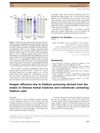
June 2015 in “Journal of dermatology” This letter to the editor describes a case of anagen effluvium due to thallium poisoning from Chinese herbal medicine and rodenticide but reports no new research findings.
2 citations
,
July 2023 in “Toxics” This study observed that high concentrations of rosemary and thyme extract caused thymic tissue damage, decreased IgM and IgG levels, and fluctuated IL-10 levels in chick embryos, with inflammation signs present despite potential benefits.
 66 citations
,
October 1984 in “Annual Review of Microbiology”
66 citations
,
October 1984 in “Annual Review of Microbiology” This article reviews historical and recent developments related to toxic shock syndrome (TSS), emphasizing the increase in cases among young women using tampons, and calls for new research tools but does not report new results.
5 citations
,
September 2023 in “Molecules” This review examines physical methods like electron paramagnetic resonance spectroscopy, Raman spectroscopy, and differential scanning calorimetry, highlighting their complementary capabilities in analyzing biomolecular structures and mycobacterial interactions with reactive oxygen species and antioxidants.
 49 citations
,
December 2009 in “Journal of Investigative Dermatology”
49 citations
,
December 2009 in “Journal of Investigative Dermatology” This review explores the complex relationship between thyroid hormones and skin, discussing potential mechanisms and known interactions but reports no new clinical results, emphasizing the need for further research.
 48 citations
,
November 1992 in “International Journal of Dermatology”
48 citations
,
November 1992 in “International Journal of Dermatology” This article discusses the history and terminology of toxic epidermal necrolysis but reports no new clinical results.
77 citations
,
September 2017 in “Journal of Investigative Dermatology” This study found that TRPV3 ion channels on human epidermal keratinocytes suppress cell proliferation, induce cell death, and trigger a proinflammatory response, suggesting a role in cutaneous inflammatory processes.
This chapter examines how toxins such as inorganic arsenic, dioxin, and bacterial toxins can disrupt the balance of keratinocyte stem cell regeneration and differentiation, affecting skin barrier maintenance.
 September 2017 in “Journal of Investigative Dermatology”
 This study found that infrared thermography might be a useful non-invasive tool to help diagnose frontal fibrosing alopecia by identifying active phases of the disease.
 9 citations
,
March 2011 in “Clinical and experimental dermatology”
9 citations
,
March 2011 in “Clinical and experimental dermatology” This paper discusses the concept of "coudability," a characteristic of alopecia areata, and provides a historical perspective, but it reports no new clinical results.
101 citations
,
July 1998 in “Journal of Investigative Dermatology” This study found that UV exposure in human skin induces IL-10 production by macrophages, while Langerhans cells are depleted and their IL-12 production is downregulated.
April 2019 in “Journal of the Endocrine Society” In this case study, the researchers reported that treating a woman with type B insulin resistance using rituximab, dexamethasone, and cyclophosphamide greatly reduced her insulin needs, but her hyperandrogenic state persisted, suggesting ovarian hyperthecosis.
 14 citations
,
August 2022 in “Lupus Science & Medicine”
14 citations
,
August 2022 in “Lupus Science & Medicine” This study found two patterns of Type 2 SLE symptoms: Intermittent symptoms resolving with Type 1 symptom remission and Persistent symptoms continuing regardless of Type 1 symptom activity.
11 citations
,
April 2022 in “Biophysical Journal” In this study, certain cysteine residues in Romney sheep wool fibers were labeled more often during stretching tests, particularly under wet conditions, suggesting variability in their disulfide bond contributions to fiber mechanics depending on hydration.
59 citations
,
September 2021 in “Journal of Allergy and Clinical Immunology” This study found IL-17/IL-36 signaling to be predominant in both endotypes of Netherton syndrome, with distinct molecular profiles between NS-ILC and NS-SE lesions, offering potential therapeutic targets.
1 citations
,
February 2025 in “Journal of Anatomy” This study observed that during the postnatal development of gray short-tailed opossums, skin transitions from facilitating gas exchange through a dense capillary network at birth to supporting thermoregulation, with significant changes in skin thickness and structure occurring by 35 days old.
 December 2025 in “Al-Iraqia Medical College Journal”
 This study explored the relationships between virus susceptibility to infection and several factors, finding that higher heat tolerance and larger virus size correlated positively with infection susceptibility, while high humidity and higher mutation rates correlated inversely among eight RNA viruses, including SARS-CoV-2 and influenza.
December 2011 in “Thorax” In this study, researchers reported that individuals from iodine-deficient regions have an increased risk of developing hypothyroidism from MDR-TB treatment regimens containing PAS and/or Prothionamide.
 176 citations
,
August 1981 in “JAMA”
176 citations
,
August 1981 in “JAMA” This study reported that toxic shock syndrome, originally noted in children, is now predominantly associated with menstruating women, with some experiencing recurrence and complications like vocal cord paralysis and impaired finger sensation.
 March 2026 in “Pharmaceutics”
 This review discusses therapeutic deep eutectic solvents as promising "green" solutions for enhancing drug solubility and delivery through the skin, reporting no new clinical results and highlighting future research directions.