 November 2022 in “IntechOpen eBooks”
 This book summarizes the synthesis of heterocycles using various methods, including green approaches, and discusses their applications, with no new research results presented.
13 citations
,
September 2017 in “Journal of Dermatological Science” Hydrogen peroxide in hair dye can cause hair loss.
1 citations
,
May 2024 in “Tạp chí Nghiên cứu Y học” In this study, researchers observed that extract from Eclipta prostrata significantly stimulated hair growth and increased hair length in Wistar rats, which had inhibited hair growth induced by cyclophosphamide, compared to the control model.
April 2020 in “Journal of the Endocrine Society” This study suggests that hair cortisol measurement could serve as an alternative diagnostic method for Cushing’s disease, showing acceptable concordance with urinary free cortisol despite differing evaluated periods.
 2 citations
,
January 2018 in “International Journal of ChemTech Research”
2 citations
,
January 2018 in “International Journal of ChemTech Research” This study used phytochemical screening and FTIR spectroscopy with PCA to reveal slight chemical differences between two varieties of Eclipta alba, providing a method for their effective discrimination.
 29 citations
,
June 2014 in “Drug delivery”
29 citations
,
June 2014 in “Drug delivery” This study reported that nanoemulsions significantly improved the skin permeability of thiocolchicoside compared to its aqueous solution, suggesting they are effective carriers for its transdermal delivery.
 December 2021 in “Bandung Conference Series. Pharmacy”
 This literature review found that combinations of certain herbal extracts with coconut oil, such as Hibiscus rosa sinensis and Centella asiatica, promoted hair growth in animals over 30 days, with varied results across rat and rabbit models.
 17 citations
,
August 2015 in “Journal of steroid biochemistry and molecular biology/The Journal of steroid biochemistry and molecular biology”
17 citations
,
August 2015 in “Journal of steroid biochemistry and molecular biology/The Journal of steroid biochemistry and molecular biology” This study concluded that the best approach for detecting Androsta-1,4,6-triene-3,17-dione administration in horses is monitoring the metabolites M1b or M4 in urine, detectable up to 77 hours post-administration.
 4 citations
,
January 1998 in “Heterocycles”
4 citations
,
January 1998 in “Heterocycles” Researchers made two new compounds that could be used for medicine.
12 citations
,
December 2003 in “Gene” This study characterized the Hoxc-13 gene from sheep wool follicles, noting its potential autoregulatory role and potential influence on skin function beyond hair keratin regulation.
1 citations
,
May 2018 in “Research & Reviews: Journal of Herbal Science” This paper presents diagnostic characteristics obtained from various analytical methods to support the pharmacognostic standardization of Lawsonia inermis L. leaf, commonly known as henna.
13 citations
,
November 2007 in “Journal of Structural Biology” Keratin heterodimers are preferred for their specific and structural advantages.
September 2025 in “International Journal of Cosmetic Science” This study found that a 0.5% cationic guar gum and 0.5% anionic surfactant formulation formed stable coacervates with improved adhesion and coverage on damaged hair, suggesting it may enhance the effectiveness of hair conditioning products compared to other ratios.
This study found low concordance between distal and proximal hair cortisol concentrations during early pregnancy, particularly when measured with different assay methods.
11 citations
,
January 1989 This case report describes two patients with trichothiodystrophy who exhibited a different pattern of hair protein composition changes, suggesting a subgroup of TTD characterized by partial loss of high-sulfur proteins without significant alteration in their amino acid composition.
164 citations
,
December 1984 in “Proceedings of the National Academy of Sciences” This study found that TCDD significantly reduced EGF receptor binding in various animal models, linked to toxic symptoms like weight loss and developmental delays, with receptor phosphorylation persisting several days.
 August 2011 in “Planta Medica”
 This study suggests that the hair growth-promoting effects of 4-O-methylhonokiol may be linked to its ability to modulate TGF-β-induced cell cycle arrest and oxidative stress in HaCaT cells.

This study aims to describe the trichoscopic pattern of chemotherapy-induced alopecia and its changes during different phases of chemotherapy.
January 2021 in “대한본초학회지(본초분과학회지)” This study found that essential oil from Coicis Semen increased cell proliferation and hair growth-related protein expression in human hair dermal papilla cells, suggesting potential for alopecia treatment.
 January 2024 in “International Journal of Cosmetic Science”
 This study found that 1,4-n-butylene dimaleate can restore the mechanical properties of reduced hair by reconnecting disulfide bonds and improving the hair's structural integrity using a thiol-Michael click reaction, compared to untreated reduced hair.
19 citations
,
June 2020 in “General and comparative endocrinology” This study found that hair cortisol concentration is a promising stress indicator in cattle but not in pigs, where external factors and lower cortisol response may interfere with its validity.
March 2021 in “Juniper Online Journal Material Science” In this study, L-cysteine treated with the Trivedi Effect® showed significantly increased isotopic abundance ratios, which may enhance its stability and shelf-life.
1 citations
,
September 2016 in “Brain Behavior and Immunity” Hair cortisol levels can indicate stress and are affected by washing frequency, not cosmetic treatments.
 108 citations
,
March 2011 in “Archives of Dermatology”
108 citations
,
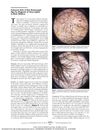
March 2011 in “Archives of Dermatology” Corkscrew hair may be a new sign for quickly diagnosing scalp fungus in black children.
 4 citations
,
August 2014 in “Journal of molecular structure”
4 citations
,
August 2014 in “Journal of molecular structure” In this study, the authors concluded that a hydrolyzed eggwhite protein treatment promoted the reconnection of disulfide bonds in excessively bleached hair, after reduction and oxidation processes in permanent waving.
 May 2024 in “International Journal of Science and Research Archive”
 This study found that a herbal hair oil prepared using raw herbs in coconut oil may effectively address dandruff and hair fall, attributed to its components like saponins and antioxidants that enhance hair health.
 April 2020 in “Journal of animal research”
 In this study, researchers identified hair follicle stem cells in the bulge region of canine hair follicles, suggesting potential applications for future translational research.

In preclinical studies, topical CUR61414 reduced Hh signaling and shrank BCCs in mice, but this study found no clinical efficacy in human superficial or nodular BCCs.
 7 citations
,
January 2014 in “Biological & pharmaceutical bulletin”
7 citations
,
January 2014 in “Biological & pharmaceutical bulletin” This study found that rice bran oil extracted by supercritical CO2 can be considered non-genotoxic based on in vitro and in vivo test results, despite some chromosomal aberrations observed under specific conditions.
This study observed that hydrophobic modifications of hair matrix proteins significantly alter the humidity-dependent glass transition temperature of human hair.