29 citations
,
December 2021 in “Biomedicines” This study found that exosomes from different mesenchymal stem cell sources had distinct effects on immune cell functions and varied microRNA expression profiles compared to their original cells.
15 citations
,
October 2024 in “Nutrients” In this study, consuming a healthy, plant-based diet was associated with reduced skin inflammation and improved overall skin health, while the potential benefits of probiotics, synbiotics, and postbiotics for skin inflammation and tissue regeneration require further investigation.
14 citations
,
July 2015 in “International Journal of Molecular Sciences” This study found that S-Methylmethionine sulfonium (SMMS) enhances cell survival and reduces damage from UVB irradiation in skin cells, suggesting its potential as a cosmetic ingredient for UV protection.
9 citations
,
April 2024 in “Heliyon” This review highlighted significant properties of probiotics that can promote hair growth and reduce dandruff, offering guidance for future research to scale these findings to pilot studies.
9 citations
,
June 2023 in “Cells” This review summarizes recent findings on how the dysregulated PI3K/Akt/mTOR pathway contributes to immune-mediated inflammatory skin disorders and discusses the potential of natural products, synthetic compounds, and biologic agents in their treatment. However, it emphasizes the need for further research to develop effective therapies.
8 citations
,
August 2025 in “Journal of Translational Medicine” This comprehensive review suggests that CD44 signaling plays a significant role in post-natal skin wound healing and scar formation, with potential for therapeutic approaches targeting CD44 to shift from fibrotic scarring towards regenerative healing, including wound regeneration and hair neogenesis.
 8 citations
,
July 2022 in “Biomedicines”
8 citations
,
July 2022 in “Biomedicines” This review discusses the role of autophagy in skin cells and its potential implications for treating immune-related skin diseases, reporting no new clinical results.
2 citations
,
September 2025 in “International Journal of Nanomedicine” This review discusses the roles of extracellular vesicles in skin health and disease and reports no clinical results; the authors highlight potential therapeutic uses and call for more research.
1 citations
,
August 2025 in “International Journal of Molecular Sciences” This narrative review suggests that nutraceutical insulin-sensitizing agents like myo-inositol, alpha-lipoic acid, and vitamins may improve glycemic control and reduce inflammation in insulin resistance-related skin disorders; however, more robust long-term trials are needed to confirm these findings and establish treatment regimens.
1 citations
,
July 2025 in “Barrier Immunity” This review synthesizes existing research on the multilayered defense system of the skin, highlighting how physical, chemical, immune, and microbial barriers work together to maintain skin health, with disruptions in one often leading to broader barrier dysfunctions.
1 citations
,
January 2023 in “Science Advances” This study found that bacterially induced metabolic changes in stem cells can enhance skin and hair follicle regeneration in both mice and humans, suggesting potential strategies for improving recovery after injury.
 August 2026 in “Frontiers in Medicine”
 This study suggests that low-dose IL-2 and IL-15 may help restore immune tolerance in alopecia areata by maintaining Treg cell function, presenting a potential new treatment strategy.
 May 2026 in “International Journal of Molecular Sciences”
 This review highlights emerging evidence that chemotherapy-induced alopecia may be driven by immune mechanisms similar to alopecia areata, involving hair follicle immune privilege collapse, and evaluates Janus kinase inhibitors as potential treatments, while cautioning about their immunosuppressive risks in cancer patients.
 February 2026 in “International Journal of Molecular Sciences”
 This review discusses the potential benefits of hyperthermia in cancer therapy, combined with natural compounds, to enhance treatment efficacy and reports no new clinical results.
February 2026 in “Molecular and Cellular Probes” This systematic review synthesizes evidence from the past 20 years to highlight the potential of exosome-based therapies from stem cells and plants in improving cutaneous repair, skin aging, and challenging dermatological conditions through mechanisms like immunomodulation and collagen remodeling.
 February 2026 in “International Journal of Molecular Sciences”
 This review explores the potential roles of extracellular vesicles in various medical fields, emphasizing their promise but noting the need for standardization and clinical testing before widespread application.
In this study, ritlecitinib treatment for 12 and 24 weeks downregulated immunity-related genes and upregulated hair keratin genes in patients with alopecia areata, correlating with scalp hair regrowth response.
 August 2024 in “International Journal of Molecular Sciences”
 The study investigated immune cell patterns around the hair follicle infundibulum in androgenetic alopecia, revealing significant differences in immune signatures between patients with AGA and control donors, specifically noting an enrichment of CD4 cells in the patient group.
April 2024 in “Molecules/Molecules online/Molecules annual” This review discusses the potential of P. polyphylla saponins to treat acne through antibacterial, anti-inflammatory, immunomodulatory, and antioxidant effects, noting that acne's complex pathogenesis makes this line of research promising for future studies.
61 citations
,
December 2021 in “Frontiers in Cell and Developmental Biology” This review discusses progress in targeted therapies for vitiligo, focusing on Janus kinase inhibitors and the potential of mesenchymal stem cells, but reports no new clinical results.
22 citations
,
August 2021 in “Frontiers in medicine” This study found that monocytes/macrophages with a pro-inflammatory M1-like phenotype may play a crucial role in the pathogenesis of hidradenitis suppurativa, suggesting potential therapeutic targets.
2 citations
,
January 2020 in “Evidence-based Complementary and Alternative Medicine” This study found that Hataedock may alleviate atopic dermatitis symptoms in mice by maintaining skin homeostasis and improving skin barrier formation through the endocannabinoid system.
 1 citations
,
January 2023 in “Metabolites”
1 citations
,
January 2023 in “Metabolites” This review discusses the relationship between gut microbiota and polycystic ovarian syndrome (PCOS), including its potential mechanisms and the role of alterations in microbiome composition on PCOS pathophysiology.
2 citations
,
January 2025 in “Allergy” This study found that alopecia areata patients in Central Europe with comorbid chronic inflammatory disorders, especially atopic dermatitis, bronchial asthma, or Hashimoto's thyroiditis, had an increased likelihood of experiencing early-onset, severe, or prolonged disease compared to those without such comorbidities.
 98 citations
,
December 2008 in “Journal of Investigative Dermatology”
98 citations
,
December 2008 in “Journal of Investigative Dermatology” This review discusses the possible impacts of prolactin on skin conditions like psoriasis, alopecia, and stress-related dermatoses, emphasizing the need for further research to explore its therapeutic potential.
 77 citations
,
June 2017 in “Advances in Therapy”
77 citations
,
June 2017 in “Advances in Therapy” This review discusses recent advances and ongoing clinical trials in novel therapeutics for alopecia areata, despite the lack of current FDA-approved treatments for severe cases, and reports no new results.
 2 citations
,
December 2011 in “Annales de Dermatologie et de Vénéréologie”
2 citations
,
December 2011 in “Annales de Dermatologie et de Vénéréologie” 2011 dermatological research found new skin aging markers, hair loss causes, skin defense mechanisms, and potential for new treatments.
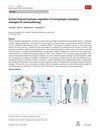
This review highlights that surface mechanical regulation can program macrophage behavior through specific mechanical cues on material surfaces, potentially advancing immunotherapies and regenerative medicine by enabling precise control over macrophage functions.
 January 2026 in “Nanoscale Advances”
 This review provides an overview of microneedle-assisted photomedicine, detailing diagnostic and therapeutic strategies, design principles, and challenges for translating this approach to skin disease management.

In this study, a pH-responsive microneedle patch was developed, showing potential in rat models for treating spinal cord injuries by reducing inflammation, promoting nerve regeneration, and supporting neurogenesis, which contributed to improved motor and neurological recovery.