 1 citations
,
May 2017 in “Journal of the American Academy of Dermatology”
1 citations
,
May 2017 in “Journal of the American Academy of Dermatology” Tofacitinib helped a teenager with severe hair loss grow hair back, but more research is needed.
7 citations
,
September 2024 in “PLANT PHYSIOLOGY” This study in Arabidopsis thaliana found that exposure to volatile compounds from Penicillium aurantiogriseum promotes root hair growth through signaling involving RALF22, ethylene, auxin, and photosynthesis, and that RALF22 plays a crucial role in the plants' response to these compounds.
 166 citations
,
April 2012 in “Journal of The American Academy of Dermatology”
166 citations
,
April 2012 in “Journal of The American Academy of Dermatology” This study reviewed clinical data from 60 patients with frontal fibrosing alopecia and found increasing prevalence and generally poor response to treatment, with the cause remaining unclear.
 January 2025 in “BMJ Case Reports”
 This case report describes a girl with familial adenomatous polyposis who exhibited heterosexual precocious puberty due to an adrenal tumor secreting cortisol and androgens; after her adrenalectomy, her hormone levels normalized and symptoms improved, illustrating the link between genetic syndromes and endocrine disorders.
January 2024 in “Updates in clinical dermatology” Frontal fibrosing alopecia is a scarring hair loss condition mainly affecting postmenopausal women, with unclear causes.

In this case study, a 36-year-old male with symptoms of keratosis pilaris atrophicans faciei and frontal fibrosing alopecia tested negative for a specific mutation, highlighting genetic testing's potential to improve diagnosis and treatment outcomes in these similar conditions.
 April 2018 in “The journal of investigative dermatology/Journal of investigative dermatology”
 This study found that treating human skin explants with TPA increased the number of certain melanocyte phenotypes in the interfollicular epidermis, suggesting that this ex vivo model can effectively replicate human skin's pharmacologic responses for studying potential treatments.
 339 citations
,
February 2014 in “Journal of The American Academy of Dermatology”
339 citations
,
February 2014 in “Journal of The American Academy of Dermatology” This study found that eyelash loss, facial papules, and body hair involvement were linked to severe frontal fibrosing alopecia, and antiandrogens were the most effective treatment.
44 citations
,
January 2023 in “New Phytologist” This study found that low temperature triggers root hair elongation in Arabidopsis thaliana through a FERONIA-ROP2-TORC signaling pathway, also activated by nitrogen deficiency.
 76 citations
,
May 2011 in “Cell death and differentiation”
76 citations
,
May 2011 in “Cell death and differentiation” This study found that the enzyme A20 helps regulate EDAR-induced NF-κB signaling in mice, preventing ectodermal abnormalities like disheveled hair and assuring proper skin and appendage development.
 August 2023 in “bioRxiv (Cold Spring Harbor Laboratory)”
 This study found that TLR2 is crucial for maintaining hair follicle health and regeneration, and its stimulation by the metabolite CEP may promote hair growth, while decreases in TLR2 and CEP in aging and obesity may hinder hair growth.
 49 citations
,
January 2003 in “Clinical and Experimental Dermatology”
49 citations
,
January 2003 in “Clinical and Experimental Dermatology” This report from the UK reviews the literature on post-menopausal frontal fibrosing alopecia and highlights its under-recognition and distinctive characteristics compared to lichen planopilaris, but does not provide new results.
 13 citations
,
January 2018 in “International Journal of Dermatology”
13 citations
,
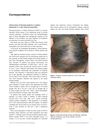
January 2018 in “International Journal of Dermatology” This clinical study on fibrosing alopecia in a pattern distribution among a Latin American population reports no new results but addresses this specific condition in its demographic context.
3 citations
,
January 2017 in “Acta Dermato Venereologica” This study found that a specific T-cell receptor motif associated with lipid-antigen stimulation may play a role in the pathogenesis of folliculotropic mycosis fungoides.
34 citations
,
July 2020 in “American journal of human genetics” This study identified mutations in the SREBF1 gene that impair SREBP1 function, potentially contributing to IFAP syndrome by affecting skin, hair, and eye development.
May 2015 in “Cancer research” This study found that persistent significant alopecia was a common side effect following FEC-docetaxel chemotherapy, with a 33.4% global incidence, highlighting the need for awareness and potential preventative measures like cooling caps during treatment.
 1 citations
,
January 2019 in “Acta dermato-venereologica”
1 citations
,
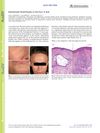
January 2019 in “Acta dermato-venereologica” The woman's skin and hair symptoms were confirmed as frontal fibrosing alopecia, and while facial papules are common in such cases, there's no effective local treatment, but systemic treatments can help.
July 2024 in “Journal of Controlled Release” In this study, researchers developed topical tofacitinib-loaded cationic lipid nanoparticles, which improved absorption and targeted hair follicles in an ex vivo pig ear model, showing promise in treating alopecia areata by reducing symptoms through the JAK/STAT pathway.
 24 citations
,
October 2018 in “JAAD Case Reports”
24 citations
,
October 2018 in “JAAD Case Reports” This paper reviews the challenges of treating alopecia areata affecting eyelashes and discusses the risks associated with traditional therapies; it reports no new clinical results.
 September 2022 in “Journal of the American Academy of Dermatology”
 This study observed that tofacitinib therapy over about 16 weeks had a positive effect in children with alopecia areata, reducing the SALT index significantly in some patients.
 May 2025 in “Journal of Pharmacy And Bioallied Sciences”
 In this study, oral tofacitinib significantly reduced alopecia severity in pediatric patients with moderate-to-severe alopecia areata over 24 weeks, with 42.2% achieving complete or near-complete hair regrowth, although further research is needed on long-term safety and relapse rates.
28 citations
,
December 2001 in “European Journal of Pharmacology” This study found that the compound M50054 inhibits apoptosis by blocking caspase-3 activation and may improve chemotherapy-induced alopecia and hepatitis symptoms.
This review discusses the potential of using Arabidopsis thaliana to express fusion protein TDP1-KGF-2, aiming to enhance the transdermal delivery of KGF-2 for hair growth applications, despite current challenges with production costs and efficacy.
 August 2026 in “International Journal of Developmental Neuroscience”
 In this report, researchers describe a 13-month-old with neurodevelopmental disorder NEDESBA, confirming a TRAPPC4 gene mutation as the cause after excluding biotinidase deficiency, highlighting the importance of molecular testing for accurate diagnosis in overlapping metabolic and genetic conditions.
June 2025 in “British Journal of Dermatology” This study found that both tofacitinib and methotrexate effectively reduced hair loss and psychological distress in patients with moderate-to-severe alopecia areata, but tofacitinib showed much greater efficacy. Both treatments had similar safety profiles, with no serious adverse effects reported.
 April 2023 in “Journal of Investigative Dermatology”
 This study reports distinctive clinical, trichoscopic, and histopathological features of fibrosing alopecia in a pattern distribution among Chinese patients, suggesting possible racial differences compared to previous studies primarily involving Caucasians.
 10 citations
,
March 2016 in “Journal of The American Academy of Dermatology”
10 citations
,
March 2016 in “Journal of The American Academy of Dermatology” This review discusses the potential usefulness and safety profile of oral antiandrogens for treating frontal fibrosing alopecia, noting possible benefits but acknowledges that finasteride's efficacy remains uncertain.
 28 citations
,
November 2008 in “Facial Plastic Surgery”
28 citations
,
November 2008 in “Facial Plastic Surgery” This article reviews the development of follicular unit transplantation for hair replacement, highlighting its ability to provide natural-looking results with minimal recovery time, but results depend heavily on the skill and planning of the practitioner.
 1 citations
,
April 2017 in “Journal of Investigative Dermatology”
1 citations
,
April 2017 in “Journal of Investigative Dermatology” This study found that oral tofacitinib led to variable hair regrowth in patients with resistant alopecia areata, implying that longer treatment durations may be needed to fully assess its effectiveness.
2 citations
,
January 2023 in “Skin Appendage Disorders” This study suggests a potential role for systematic scalp examinations in first-degree relatives of patients with pattern cicatricial alopecia.