 115 citations
,
January 2001 in “American journal of clinical dermatology”
115 citations
,
January 2001 in “American journal of clinical dermatology” This study found that eflornithine 15% cream reduced unwanted facial hair growth more effectively than a placebo in women with hirsutism, but hair growth returned to pretreatment levels within 8 weeks of stopping treatment.
 27 citations
,
September 2017 in “Archives of Dermatological Research”
27 citations
,
September 2017 in “Archives of Dermatological Research” In this study, topical tofacitinib significantly increased hair regrowth in mice compared to minoxidil or vehicle, potentially due to elevated VEGF levels and reduced inflammation.
12 citations
,
August 2016 in “Biomedical Chromatography” This study developed and validated an HPLC-UV method for accurately quantifying clobetasol propionate in skin and hair follicles, demonstrating its application in in vitro permeation experiments.
14 citations
,
June 2014 in “World Journal of Urology” This study found that the herbal combination PRO 160/120 significantly improved nocturnal voiding frequency in patients with moderate-to-severe LUTS/BPH compared to placebo, with similar effectiveness to tamsulosin and finasteride.
 February 2026 in “Frontiers in Immunology”
 In this study analyzing FDA data, researchers found that tralokinumab was associated with higher reports of conjunctivitis and keratitis compared to dupilumab, while dupilumab had more frequent injection site reactions, highlighting potential risks for clinical monitoring in atopic dermatitis treatments.
1 citations
,
March 2009 in “The Journal of Urology” This review discusses trials on therapies for benign prostatic hyperplasia and reports that combination treatment is more effective than monotherapy for symptom relief and slowing disease progression in men with moderate to severe symptoms and enlarged prostate glands.
5 citations
,
January 2011 in “Der Pharmacia Lettre” This study validated a precise and sensitive reverse phase high performance liquid chromatographic method for determining Finasteride and Tamsulosin concentrations in bulk and tablet forms, with satisfactory accuracy and reproducibility.
 July 2026 in “Journal of Drug Delivery and Therapeutics”
 This study evaluated Finasteride-loaded nanostructured lipid carriers for topical use in treating androgenetic alopecia and found that these carriers offer sustained drug release and may reduce systemic side effects compared to oral administration.
 January 2024 in “Saudi pharmaceutical journal”
 In this study, the researchers developed and optimized a bilayer tablet containing Tamsulosin and Finasteride, achieving sustained and immediate drug release with favorable release kinetics, including first-order and anomalous diffusion mechanisms, through in vitro testing.
34 citations
,
July 1993 in “PubMed” This article reviews the characteristics and uses of finasteride for benign prostatic hyperplasia, noting variable symptom improvement and ongoing investigation in other DHT-mediated conditions, and reports no new clinical results.

This study developed a topical dutasteride-loaded Insitu-emulgel for treating androgenetic alopecia, finding it effectively controls drug release, enhances skin penetration, and may improve patient compliance compared to traditional topical treatments, though further clinical research is underway.
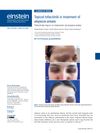 2 citations
,
January 2020 in “Einstein (São Paulo)”
2 citations
,
January 2020 in “Einstein (São Paulo)” This review discusses the potential of Janus kinase inhibitors as a promising new treatment for alopecia areata, suggesting they could become a first-line therapy in the future, but reports no new clinical results.
 3 citations
,
April 2016 in “Journal of Investigative Dermatology”
3 citations
,
April 2016 in “Journal of Investigative Dermatology” In this open-label trial, tofacitinib showed dramatic clinical responses in most patients with moderate-to-severe alopecia areata, supporting further research into JAK inhibitors for this condition.
8 citations
,
July 2020 in “Dermatologic Therapy” Tofacitinib may effectively treat folliculitis decalvans.
 August 2024 in “Journal of Clinical Medicine”
 This study evaluates the effectiveness of hydroxychloroquine in treating lichen planopilaris, suggesting varying success based on a real-life retrospective analysis.
 August 2020 in “Ugeskrift for Læger”
 This case report describes a 43-year-old male with alopecia totalis who successfully regrew all his hair after six months of treatment with tofacitinib, with no relapse at one year.
10 citations
,
December 2024 in “Allergy” This study found that tralokinumab effectively reduced the severity of moderate-to-severe atopic dermatitis over 28 weeks in adults, with significant improvements in clinical outcomes and biological markers, although 27.4% of patients discontinued treatment due to adverse events or ineffectiveness.
June 2008 in “Drugs & therapy perspectives” Dutasteride effectively treats benign prostatic hyperplasia, improving symptoms and quality of life.
 January 2026 in “Zenodo (CERN European Organization for Nuclear Research)”
 This study reports the discovery of LX-38, a novel non-steroidal drug candidate that may offer safer treatment for conditions like Benign Prostatic Hyperplasia by avoiding hormonal side effects associated with current therapies.
September 2025 in “Clinical and Experimental Rheumatology” May 2024 in “Indian Journal of Pharmacology” In this case report, an 11-year-old girl with alopecia totalis initially treated with minoxidil experienced hypertrichosis, which reversed upon stopping the medication; hair regrowth on the scalp was achieved with tofacitinib after minoxidil discontinuation.
 23 citations
,
November 2018 in “Journal of the European Academy of Dermatology and Venereology”
23 citations
,
November 2018 in “Journal of the European Academy of Dermatology and Venereology” This study observed that frontal fibrosing alopecia is increasingly diagnosed in Italian Caucasian females, often showing premenopausal onset and eyebrow alopecia as an early sign.
 47 citations
,
September 2013 in “Aaps Pharmscitech”
47 citations
,
September 2013 in “Aaps Pharmscitech” This study found that liquid crystalline nanoparticles formulated with Cremophor surfactants significantly enhanced skin permeation of finasteride compared to lower surfactant concentrations.
37 citations
,
January 2000 in “International Journal of Pharmaceutics” In a study using human scalp skin grafts on SCID mice, topical flutamide and finasteride significantly improved hair growth in male-pattern baldness compared to placebo, with flutamide showing superior results to finasteride.
 42 citations
,
November 2018 in “Archives of dermatological research”
42 citations
,
November 2018 in “Archives of dermatological research” Apremilast was not effective in treating moderate-to-severe alopecia areata.
 January 2025 in “International Journal of Drug Delivery Technology”
 In this study, researchers developed a reliable HPLC method to simultaneously estimate Finasteride and Tadalafil in marketed formulations, showing precise, linear results with confirmed degradation susceptibility under certain stress conditions.
 3 citations
,
June 2005 in “Ophthalmology Clinics of North America”
3 citations
,
June 2005 in “Ophthalmology Clinics of North America” Follicular unit transplantation treats hair loss and restores eyebrows with short recovery and natural results.
 7 citations
,
May 2013 in “PubMed”
7 citations
,
May 2013 in “PubMed” In this randomized, placebo-controlled study, the tested cosmetic ingredient containing Trifolium pratense flower extract and a biomimetic peptide increased anagen hair and improved the anagen/telogen ratio over four months in individuals with recessing hair.
July 2026 in “Journal of the American Academy of Dermatology”  2 citations
,
July 2020 in “Giornale italiano di dermatologia e venereologia”
2 citations
,
July 2020 in “Giornale italiano di dermatologia e venereologia” A woman with frontal fibrosing alopecia experienced unusual hair growth after using a specific topical lotion.