 December 2023 in “Journal of Ayub Medical College Abbottabad”
 In this study, Ritlecitinib was reported as a newly approved treatment for alopecia areata that can be used in patients aged 12 and older; after 24 weeks, it resulted in 80% or more scalp hair coverage in treated patients compared to a placebo.
January 2025 in “International Journal of Pharmaceutics” In this study, gelatin-coated transferosomes were developed to deliver tofacitinib specifically to hair follicles, resulting in 80% hair regrowth in alopecia areata patients with recalcitrant lesions after 12 weeks of treatment.
10 citations
,
August 2022 in “JAAD Case Reports” This research abstract describes alopecia areata as an autoimmune disease causing hair loss due to an inflammatory response mediated by the JAK/STAT signaling pathway. The condition, which affects young people disproportionately, lacks a cure and entails significant psychosocial challenges, despite varied treatment attempts.
 September 2013 in “Neurodegenerative disease management”
 This review discusses teriflunomide as a disease-modifying therapy for multiple sclerosis and highlights its effectiveness and safety in clinical trials, but reports no new clinical results.
 2 citations
,
April 2017 in “Journal of Investigative Dermatology”
2 citations
,
April 2017 in “Journal of Investigative Dermatology” In this study, tofacitinib treatment led to significant hair regrowth in 60% of patients with moderate-to-severe alopecia areata, suggesting potential for JAK inhibitors in treating this condition.
 October 2024 in “Asian Journal of Pharmaceutical and Clinical Research”
 This study at Gajra Raja Medical College found that topical methotrexate with tretinoin was more effective but not significantly better than betamethasone with tretinoin for treating alopecia areata over six months, with similar safety profiles between the treatments.
 2 citations
,
November 2021 in “ACG Case Reports Journal”
2 citations
,
November 2021 in “ACG Case Reports Journal” This case study reports that tofacitinib effectively treated alopecia areata in a patient with Crohn's disease and maintained her Crohn's disease management.
 September 2022 in “Journal of the American Academy of Dermatology”
 This study observed that tofacitinib therapy over about 16 weeks had a positive effect in children with alopecia areata, reducing the SALT index significantly in some patients.
 22 citations
,
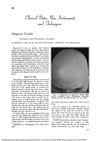
March 1963 in “Archives of dermatology”
22 citations
,
March 1963 in “Archives of dermatology” This case report describes hair regrowth in a patient with alopecia totalis using fluocinolone acetonide cream applied under thin plastic films.
 33 citations
,
January 2009 in “Contraception”
33 citations
,
January 2009 in “Contraception” This review summarizes the use of chlormadinone acetate for hormone replacement therapy and contraception, highlighting its anti-androgenic effects, contraceptive efficacy, and clinical tolerability, without offering new clinical results.
 5 citations
,
January 2022 in “Dermatology Reports”
5 citations
,
January 2022 in “Dermatology Reports” This report describes a case where the JAK inhibitor tofacitinib led to hair regrowth in a patient with alopecia totalis but also worsened facial acne, highlighting a unique adverse effect.
 9 citations
,
October 2021 in “International Journal of Dermatology”
9 citations
,
October 2021 in “International Journal of Dermatology” This study found that tofacitinib effectively induced hair regrowth in 62.2% of severe alopecia areata patients in Saudi Arabia after six months, with higher baseline Severity of Alopecia Tool scores and past steroid use linked to reduced response.
 October 2022 in “Journal of Armed Forces Medical College, Bangladesh”
 In this clinical trial, Tofacitinib effectively promoted hair regrowth in patients with alopecia areata, alopecia totalis, and alopecia universalis, with 75.6% experiencing no side effects, making it a promising treatment option according to the study.
 July 2022 in “SKIN The Journal of Cutaneous Medicine”
 This case report presents the first successful treatment of acne keloidalis nuchae with a combination of halobetasol 0.01% and tazarotene 0.045% lotion.
 October 2024 in “International Journal of Medical Arts”
 This study found that both intralesional pentoxifylline and intralesional corticosteroids improved hair regrowth in patients with localized alopecia areata, but intralesional corticosteroids were more effective, achieving 100% hair regrowth compared to 60% with pentoxifylline.
 March 2026 in “Journal of Pakistan Association of Dermatologists”
 In this quasi-experimental study, 24-week tofacitinib treatment significantly improved hair regrowth in South Asian patients with alopecia areata, but a high relapse rate post-withdrawal signals the need for continuous treatment strategies.
7 citations
,
September 2024 in “The Journal of Dermatology” This study evaluated the effectiveness and safety of ritlecitinib in patients aged 12 or older with alopecia totalis or universalis, finding higher hair regrowth response rates compared to placebo at 24 weeks, with continued improvement and acceptable safety through 48 weeks.
 August 2019 in “Reactions Weekly”
 Daclizumab may cause psoriasis-like skin problems in multiple sclerosis patients.
 August 2021 in “Revista Colombiana de Reumatología/Revista Colombiana de Reumatologia”
 This case study reported that a 24-year-old patient with severe, treatment-resistant alopecia areata experienced excellent clinical improvement after one month of treatment with tofacitinib, a JAK inhibitor.
10 citations
,
December 2024 in “Allergy” This study found that tralokinumab effectively reduced the severity of moderate-to-severe atopic dermatitis over 28 weeks in adults, with significant improvements in clinical outcomes and biological markers, although 27.4% of patients discontinued treatment due to adverse events or ineffectiveness.
 October 2021 in “Dermatology Reports”
 This study describes a case where a patient with alopecia totalis treated with the JAK inhibitor tofacitinib showed hair regrowth but experienced worsened facial acne.
 November 2024 in “Journal of the European Academy of Dermatology and Venereology”
 In this pilot study, cryotherapy using a device that precisely controls cooling duration improved hair regrowth for patchy alopecia areata when applied for 20 seconds with two freeze-thaw cycles, similar to standard triamcinolone acetonide injections, but not when applied for 10 seconds.
Baricitinib may reactivate trichilemmal cysts in people with a history of these cysts.
 July 2025 in “Journal of Cosmetic Dermatology”
 In this clinical study involving individuals with localized alopecia areata, TrA injections were found to significantly outperform MTX, leading to better hair regrowth and higher patient satisfaction, though both treatments had similar mild side effects.
This case study reports that a pediatric patient with recalcitrant alopecia areata was treated using a 308 nm excimer lamp and topical tofacitinib 2% gel.
January 2023 in “JOURNAL OF CLINICAL AND DIAGNOSTIC RESEARCH” In this study, intralesional triamcinolone acetonide 10 mg/mL combined with topical betamethasone dipropionate 0.05% lotion was found to be more effective for treating alopecia areata than either treatment alone.
 60 citations
,
June 1997 in “Drugs & Aging”
60 citations
,
June 1997 in “Drugs & Aging” Mitoxantrone with a corticosteroid helps manage symptoms for some advanced prostate cancer patients but doesn't extend life.
 January 2025 in “International Journal of Dermatology Venereology and Leprosy Sciences”
 This study found that oral tofacitinib significantly reduced alopecia severity and improved quality of life over 12 months for children with moderate to severe alopecia areata, though the authors recommend more research due to the small sample size and absence of a control group.
January 2022 in “Drugs of Today” Topical corticosteroids are effective for skin conditions but can have side effects.