1 citations
,
May 2024 in “Journal of Pakistan Association of Dermatologists” This study found that topical calcipotriol was significantly more effective than topical tacrolimus in promoting hair growth for alopecia areata patients, demonstrating 67% efficacy compared to 33% efficacy with tacrolimus over a 6-month period.
1 citations
,
February 2025 in “Pediatric Dermatology” This study found that oral tofacitinib achieved significant hair regrowth in children with moderate to severe alopecia areata, with 72.2% reaching a 75% improvement and 52.8% achieving complete regrowth, though some patients did not respond and further research is needed on the treatment's long-term effects.
 73 citations
,
March 2014 in “Journal of The American Academy of Dermatology”
73 citations
,
March 2014 in “Journal of The American Academy of Dermatology” Most dermatologic medications are safe during pregnancy and breastfeeding, but some should be avoided due to potential risks.
October 2024 in “Journal of Pakistan Association of Dermatologists” This study reports that a 21-year-old male with alopecia totalis responded positively to the JAK inhibitor tofacitinib, achieving complete hair regrowth after six months of treatment without significant side effects, though further research is needed to evaluate long-term efficacy.
April 2025 in “The Journal of Dermatology” This study provides initial insights into the use of JAK inhibitors for CTCL, reporting some cases of symptom improvement, but highlights the need for further research on their association with CTCL development and safety.
 4 citations
,
September 2018 in “The Journal of Dermatology”
4 citations
,
September 2018 in “The Journal of Dermatology” This article is a letter to the editor discussing potential therapeutic synergy between a wig-fixing device and tofacitinib for treating alopecia areata but reports no new clinical results.
38 citations
,
September 2017 in “Journal of zoo and wildlife medicine” This study describes the successful management of Andean bear alopecia syndrome in three female bears using oclacitinib, leading to rapid pruritus resolution and fur regrowth without adverse effects.
 April 2016 in “Journal of the American Academy of Dermatology”
 This study found that in a tertiary academic institution, nearly 1 in 5 dermatology consults were for drug-related skin reactions, with antibiotics frequently identified as the culprits.
January 2026 in “PubMed Central” This study found that clobetasol propionate 0.05% was more effective than topical metformin 30% in treating localized alopecia areata, even though both treatments were generally well-tolerated and showed similar effects overall.
 2 citations
,
January 2020 in “Einstein (São Paulo)”
2 citations
,
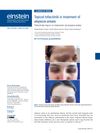
January 2020 in “Einstein (São Paulo)” This review discusses the potential of Janus kinase inhibitors as a promising new treatment for alopecia areata, suggesting they could become a first-line therapy in the future, but reports no new clinical results.
1 citations
,
January 1987 in “Veterinary Dermatology” The study reported that topical 0.1% tacrolimus improved proliferative and necrotizing otitis externa in cats, with complete lesion resolution in some cases.
 5 citations
,
June 2019 in “British Journal of Dermatology”
5 citations
,
June 2019 in “British Journal of Dermatology” No results are provided in this article as it lacks an available abstract, making it unclear what effects apremilast and tofacitinib have in a humanized mouse model of alopecia areata.
3 citations
,
January 2025 in “Journal of Cutaneous Medicine and Surgery” Many patients with alopecia areata relapse after stopping tofacitinib.
July 2024 in “Reactions Weekly”  10 citations
,
April 2020 in “Dermatology and therapy”
10 citations
,
April 2020 in “Dermatology and therapy” In this study of 35 patients with scalp alopecia areata, calcipotriol ointment led to faster and greater hair regrowth than clobetasol, though differences were not statistically significant.
226 citations
,
February 1999 in “British Journal of Dermatology” This study reported that a treatment regimen of oral rifampicin and clindamycin for 10 weeks effectively managed folliculitis decalvans, with most patients experiencing no recurrence after one or multiple courses.
5 citations
,
June 2005 in “Journal of Clinical Oncology” This study found that paclitaxel poliglumex induces significantly less and milder alopecia compared with standard taxanes in ovarian and breast cancer patients.
August 2019 in “Journal of the American Academy of Dermatology” Tofacitinib may help hair regrowth in alopecia areata, but more research is needed.
 March 2020 in “Section 5: Patient safety and quality assurance”
 This study found that tofacitinib and baricitinib had an acceptable adverse reaction profile when used to treat rheumatoid arthritis, with similar side effects to those described in their technical data sheets.
 May 2025 in “Journal of Pharmacy And Bioallied Sciences”
 In this study, oral tofacitinib significantly reduced alopecia severity in pediatric patients with moderate-to-severe alopecia areata over 24 weeks, with 42.2% achieving complete or near-complete hair regrowth, although further research is needed on long-term safety and relapse rates.
 24 citations
,
January 2018 in “International Journal of Trichology”
24 citations
,
January 2018 in “International Journal of Trichology” This study found that oral tofacitinib was effective in promoting hair regrowth in patients with alopecia universalis, although further controlled studies are recommended to confirm its safety and efficacy.
July 2025 in “International Journal of Trichology” This study found that intralesional methotrexate and triamcinolone acetonide were significantly more effective than Vitamin D3 for hair regrowth in patients with alopecia areata.
 1 citations
,
July 2022 in “The journal of investigative dermatology/Journal of investigative dermatology”
1 citations
,
July 2022 in “The journal of investigative dermatology/Journal of investigative dermatology” In this open-label trial, Tofacitinib was well tolerated and improved IFN and cytokine scores, as well as overall skin pathology, in individuals with Down syndrome and immune skin conditions.
 39 citations
,
January 2019 in “Journal of the American Academy of Dermatology”
39 citations
,
January 2019 in “Journal of the American Academy of Dermatology” In this study, three children with severe alopecia treated with systemic tofacitinib showed significant hair regrowth, suggesting it may be a potential option for those unresponsive to conventional therapy.
15 citations
,
June 1961 in “Archives of Dermatology” This report details observations from four patients with alopecia areata who received intralesional triamcinolone injections to assess its effectiveness for promoting hair regrowth in localized areas.
7 citations
,
October 2012 in “PubMed” This study found that intralesional triamcinolone was more effective than topical anthralin in promoting hair regrowth in alopecia areata patients, but it also had a higher relapse rate.
 July 1994 in “Annals of Pharmacotherapy”
 Cromolyn sodium's effectiveness for treating asthma in children under 2 is unclear, possibly more beneficial for older children, and further research is needed.
 13 citations
,
November 2012 in “Journal of The European Academy of Dermatology and Venereology”
13 citations
,
November 2012 in “Journal of The European Academy of Dermatology and Venereology” This study found that topical clobetasol propionate cream provided a modest improvement in hair regrowth for alopecia areata patients, though those with atopy had higher relapse rates after treatment completion.
September 2025 in “Annals of African Medicine”