 November 2023 in “The journal of investigative dermatology/Journal of investigative dermatology”
 This study highlighted the significance of integrating single-cell RNA sequencing with spatial transcriptomics for improving cell-type identification in human skin, emphasizing the need for a comprehensive cell atlas.
 January 2024 in “Lecture notes in networks and systems”
 In this study, a system was developed utilizing advanced image processing to analyze hair and scalp conditions, aiding professionals in diagnosing diseases like alopecia and monitoring treatment by extracting and comparing key parameters from microscopic images.
In this study, researchers developed a mathematical model of outer hair cell hair bundles that replicates experimental responses to mechanical stimuli, providing insights into the stimulus-dependent adaptation mechanisms and the functional significance of their three-row stereocilia configuration in mammalian hearing.
 January 2023 in “International journal of biological sciences”
 This study found that ATP synthases and the mitochondrial gene COX2 play a key role in determining the size of skin appendages in hedgehogs and mice by influencing energy metabolism and cell proliferation.
 9 citations
,
March 2018 in “Actas Dermo-Sifiliográficas”
9 citations
,
March 2018 in “Actas Dermo-Sifiliográficas” This study found that the Spanish version of the Hair Specific Skindex 29 (HSS29) is a reliable and valid tool for assessing the quality of life impact of female androgenetic alopecia.
 November 2022 in “The journal of investigative dermatology/Journal of investigative dermatology”
 This study generated a transcriptomic map of human hair follicles, identifying compartment-specific gene expression profiles that can aid in developing targeted therapies for hair follicle disorders.
 April 2026 in “Human Genome Variation”
 In this study, researchers identified a recurrent MBTPS2 splice-site variant as a mutational hotspot in IFAP syndrome across diverse families, with phenotype severity suggesting the influence of additional modifiers.
 October 2023 in “Psychiatry research. Case reports”
 In this study, researchers observed that twins with a novel de novo nonsense variant in HRAS exhibited distinctive features, including neuropsychiatric symptoms, potentially indicating a wider clinical spectrum for conditions known as RASopathies.
 17 citations
,
December 2002 in “Biochemical and biophysical research communications”
17 citations
,
December 2002 in “Biochemical and biophysical research communications” This study reports on the biochemical characteristics of S100A3 protein in human hair cuticle, notably finding its N-terminal methionine is acetylated and has a slightly lower isoelectric point compared to the recombinant version.
 October 2000 in “Pediatrics in Review”
 This report describes a case in which poststreptococcal reactive arthritis in a girl was effectively treated with naproxen, and highlights the importance of considering nongroup A Streptococcus in similar presentations.
 6 citations
,
December 2018 in “Australasian Journal of Dermatology”
6 citations
,
December 2018 in “Australasian Journal of Dermatology” This study found a strong correlation between the Sinclair Scale and cumulative hair thickness density, allowing the estimation of the Sinclair Scale from trichoscopy-derived statistics.
 13 citations
,
January 2020 in “Scientific Reports”
13 citations
,
January 2020 in “Scientific Reports” This study found distinct differences in protein expression and wound healing pathways between Acomys cahirinus and Mus musculus, highlighting potential targets for reducing fibrotic response in mammals.
July 2025 in “International Journal of Cosmetic Science” In this study, researchers developed a new 6-point scale for evaluating heat damage to hair from straighteners, finding a strong correlation between technical damage measurements and human perception of hair damage.
March 2016 in “Journal of Pharmacological Sciences” This discussion reviews the shift in pharmaceutical strategy towards evidence-based and structure-guided drug development, highlighting ongoing challenges and efforts in computer-aided drug design without presenting new clinical results.
4350 citations
,
May 2012 in “Arthritis & Rheumatism” This study found that the new SLICC classification criteria for systemic lupus erythematosus were more sensitive and resulted in fewer misclassifications than the current ACR criteria, although they had lower specificity.
September 2017 in “Journal of Investigative Dermatology” QMSI effectively maps and quantifies drug distribution in skin tissues.
June 2025 in “Rapid Communications in Mass Spectrometry”  10 citations
,
October 2016 in “Journal of Biomolecular NMR”
10 citations
,
October 2016 in “Journal of Biomolecular NMR” This study reported that using 2D solid-state NMR techniques on extensively labeled mouse fur improves resolution in detecting chemical shifts and secondary structure features, potentially aiding the analysis of the effects of commercial or therapeutic treatments on specific amino acids.
 19 citations
,
November 1971 in “Clinica Chimica Acta”
19 citations
,
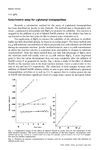
November 1971 in “Clinica Chimica Acta” In this study, the researchers found that the absence of the NFI-C transcription factor delayed the hair growth cycle in mice by affecting key gene expressions and signaling pathways.
46 citations
,
April 1987 in “Brain Research” This study suggests that hair-follicle afferent axons can be presynaptically inhibited by boutons containing the enzyme glutamic acid decarboxylase, which is linked to the synthesis of γ-aminobutyric acid.
13 citations
,
November 2017 in “Neurotoxicity research/Neurotoxicity resarch” This study found that sodium metabisulfite activates sodium channels and increases cellular excitability and excitotoxicity in both cardiomyocyte and neuron models, which exacerbates seizures and neuronal damage in rats.
 4 citations
,
November 2023 in “ArXiv.org”
4 citations
,
November 2023 in “ArXiv.org” This study demonstrates that a proposed multi-stage framework improves the accuracy and faithfulness of drug-related responses generated by language models, compared to traditional methods.
 July 2024 in “Medical alphabet”
 This study found that the SBN system effectively evaluates and describes the severity and clinical variant of alopecia areata using a standardized scale, aiding in patient management and disease course prediction.
June 2023 in “bioRxiv (Cold Spring Harbor Laboratory)” In this study, researchers used a reporter mouse model to identify and characterize distinct subtypes of dopaminergic neurons in the gut's enteric nervous system, revealing novel populations with potential implications for understanding their roles and vulnerabilities in disease.
1 citations
,
January 2007 in “中国科学通报:英文版” Women's hair has more sulfur, and black hair has more calcium than white hair.
January 2026 in “Open Science Framework” May 2024 in “Asian Journal of Medicine and Health” This study explored the relationship between BMI percentiles and clinical severity in pediatric patients with different hemoglobin genotypes, finding significant BMI differences and associations with pain frequency, particularly noting that patients with HbSS experienced more pain than those with HbSC.
This study concluded that removing alopecia and mucous membrane components from the CLASI-A score limits the ability to capture crucial clinical information about cutaneous lupus erythematosus activity, recommending their retention.
December 2021 in “OPAL (Open@LaTrobe) (La Trobe University)” This study found that knocking out the Hars2 gene in mouse cochlear hair cells led to mitochondrial dysfunction and ROS stress, resulting in progressive hearing loss and differential effects on inner and outer hair cells.
November 2025 in “Journal of Clinical Practice and Medical Research” This study analyzed techniques to create the popular "sun-kissed" hair look on dark-to-medium blonde (Level 5–6) tones, concluding that a 2–3 level differential, targeted placement across three cranial zones, and acidic glossing are essential for optimal results.