 28 citations
,
March 2014 in “International Journal of Nanomedicine”
28 citations
,
March 2014 in “International Journal of Nanomedicine” This study developed lipid nanoparticles for delivering minoxidil and finasteride to the dermis and hair follicles, showing stability and a desired prolonged release, though with low skin penetration levels.
 12 citations
,
April 2025 in “Discover Pharmaceutical Sciences”
12 citations
,
April 2025 in “Discover Pharmaceutical Sciences” This review examines microneedle patches for drug delivery, detailing their designs, materials, manufacturing methods, and potential advantages, but reports no new clinical results.
 4 citations
,
May 2021 in “Molecules”
4 citations
,
May 2021 in “Molecules” This study suggests that analyzing hair samples with a liquid chromatography-mass spectrometric assay may offer a reliable method to measure average quarterly vitamin D levels, potentially complementing blood tests.

This study reported that pentoxifylline-loaded liposomes, optimized using a statistical design method, achieved a maximum encapsulation efficiency of 84.23% and a controlled 72-hour drug release, potentially improving therapeutic delivery of the drug with limited bioavailability.
 December 2023 in “Azerbaijan Pharmaceutical and Pharmacotherapy J”
 This study formulated a minoxidil-loaded submicron emulsion-based topical gel, which demonstrated effective in vitro release, ex vivo permeation, and stability, suggesting it may offer a targeted treatment approach for alopecia compared to traditional methods.
 February 2023 in “International Journal of Multimedia Computing”
 In this study, improved hidden Markov algorithms based on Bayesian methods enhanced the resolution and segmentation accuracy of low-dose CT images significantly more than naive Bayesian methods.
 December 2024 in “Mağallaẗ ʻulūm al-rāfidayn”
 In this study, zinc oxide nanoparticles were synthesized using a sustainable method from the Lepidium sativum L. plant, and incorporating these nanoparticles into Sunblock Lotion significantly increased its sun protection factor.
 23 citations
,
January 2017 in “Journal of Oleo Science”
23 citations
,
January 2017 in “Journal of Oleo Science” This review discusses the use of supercritical carbon dioxide for extracting rice bran oil, noting its advantages over conventional methods for preserving nutrients and antioxidants, but provides no new experimental results.
 20 citations
,
October 2018 in “Aesthetic Plastic Surgery”
20 citations
,
October 2018 in “Aesthetic Plastic Surgery” This review discusses the potential mechanisms of platelet-rich plasma in facial rejuvenation and reports no new clinical results, indicating a theoretical basis for its use in tissue regeneration.
 18 citations
,
February 2015 in “Acta Crystallographica Section D: Structural Biology”
18 citations
,
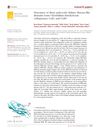
February 2015 in “Acta Crystallographica Section D: Structural Biology” This study reports that Ca 2+ binding alters the dynamics and surface properties of PKD-like domains in Clostridium histolyticum collagenases, enhancing their stability and potentially aiding in collagen-targeting vehicle development.
 10 citations
,
May 2020 in “Journal of proteome research”
10 citations
,
May 2020 in “Journal of proteome research” This study found that hair proteome profiling and genetically variant peptide identification in hairs remained effective after an explosive blast, indicating potential for forensic human identification despite damage.
 8 citations
,
April 2020 in “European Journal of Nutrition”
8 citations
,
April 2020 in “European Journal of Nutrition” This study found that newborn hair caffeine content reflects maternal caffeine intake during the third trimester, providing a potential method for assessing fetal caffeine exposure.
 7 citations
,
July 2018 in “Journal of Functional Biomaterials”
7 citations
,
July 2018 in “Journal of Functional Biomaterials” This study evaluated a new anti-baldness product, IPSTiC patch hair, designed to treat androgenetic alopecia, and reported that it effectively inhibits NO radical and 5α-reductase activity while maintaining safety and stability, suggesting its potential for topical use.
 2 citations
,
March 2025 in “International Journal of Advanced Science and Engineering”
2 citations
,
March 2025 in “International Journal of Advanced Science and Engineering” This review highlights that nanoemulsions, especially those with droplet sizes under 200 nm, show promise in pharmaceuticals and cosmetics by improving drug stability, bioavailability, and reducing side effects, with potential applications in CNS diseases, cancer treatments, and skincare products.

This study successfully established a functionally stable immortalized sheep granulosa cell line (GCs-SV40T-GFP) that can passaged up to 50 generations, maintaining morphological stability and estradiol secretion, offering a valuable model for research into animal reproductive function and hormone regulation.
 January 2023 in “Han'gug mi'saengmul saengmyeong gong haghoeji/Han-guk misaengmul saengmyeong gonghak hoeji”
 This study found that a mixed extract of N. jatamansi, O. basilicum, and C. sativus, particularly when extracted via steaming and ultrasonic methods, increased antioxidant content, stimulated melanin production for black hair, and promoted hair growth in mouse models, while maintaining high cell viability.
 March 2026 in “Frontiers in Medicine”
 This study reported that two male patients with diffuse unpatterned alopecia exhibited donor-area involvement in both the vertex and occiput, challenging the assumption of occipital stability for hair transplantation, and showed partial improvement following treatment with oral finasteride and topical minoxidil.
 112 citations
,
November 2023 in “Nano-Micro Letters”
112 citations
,
November 2023 in “Nano-Micro Letters” This review discusses the developments over the past five years in nanozyme-based theranostics for tumor therapy, including their classification, design, and synergistic strategies. It also outlines the challenges and prospects of using nanozymes to enhance selectivity, biosafety, repeatability, and stability in therapeutic applications.
 July 2026 in “International Journal of Aquatic Research and Environmental Studies”
 In this experimental study, researchers developed and optimized metformin-loaded mucoadhesive microspheres for sustained anti-hyperglycemic and anticancer activity, demonstrating high entrapment efficiency, enhanced α-amylase and α-glucosidase inhibition, improved cytotoxicity against breast cancer cells, and promising stability.
20 citations
,
February 2022 in “Pharmaceutics” This study found that idebenone-loaded nanoparticles (IB@NPs) improved stability, antioxidant activity, and wound healing capacity in vitro, suggesting potential applications in cosmetic and pharmaceutical fields.
3 citations
,
December 2020 in “Pharmaceutical Sciences and Research” This study found that using 70% ethanol as a solvent for extracting unsoaked Leucaena leucocephala seeds produces a high extract yield while managing mimosine levels, indicating potential for nutraceutical use.
 January 2024 in “Collagen and leather”
 This study observed that using an environmentally friendly bovine milk permeate effectively and cleanly removes wool from sheepskins without harming the skin, and results in smoother leather compared to traditional chemical methods.
January 2026 in “Molecules” In this study, the novel thiol-Michael click perming molecule, MA2-CySS, achieved repeatable perming with reduced oxidative damage, preserving hair keratin's structure while maintaining efficiency comparable to traditional oxidative methods.
 10 citations
,
December 2014 in “Journal of Pharmaceutical and Biomedical Analysis”
10 citations
,
December 2014 in “Journal of Pharmaceutical and Biomedical Analysis” Finasteride's polymorphic form affects capsule quality and drug effect, requiring strict control.
67 citations
,
June 2019 in “Proceedings of the National Academy of Sciences” This study introduces a method for long-term expansion of adult mouse epidermal stem cells in vitro using an organoid culture system that maintains the basal-apical organization.
June 2026 in “Virtual and Physical Prototyping” This study introduced a high-viscosity epoxy photoresist to enhance the fabrication of complex microstructures with monolithic integration and mechanical stability, enabling advancements in two-photon 3D printing for creating functional micro-mechanical devices.
June 2026 in “ACS Applied Polymer Materials” This study reports a method for fabricating biofunctional polymer fibers by using DNA-programmable cell-free protein synthesis integrated through solution blow spinning, enabling in situ protein production and potential applications in respirators, sampling swabs, and other advanced materials.
28 citations
,
November 2020 in “Polymers” This study found that crosslinking buffalo gelatin with different methods can modify its properties and potential as a skin substitute, though double-crosslinking may increase immunogenicity slightly.
2 citations
,
March 2025 in “Industrial Crops and Products” This study found that peach kernel oil extracted via supercritical fluid extraction had higher quality and antioxidant properties than oil obtained by other methods, effectively protecting human hair follicle keratinocytes from oxidative damage.
May 2025 in “Nonlinear Analysis Real World Applications” Reducing CD8+ T cell growth can stabilize alopecia areata.