 23 citations
,
January 2001 in “Chemical & Pharmaceutical Bulletin”
23 citations
,
January 2001 in “Chemical & Pharmaceutical Bulletin” This study found that several synthesized pregnane derivatives exhibited significant inhibitory effects on testosterone conversion to dihydrotestosterone and reduced related androgenic parameters in multiple pharmacological models.
 20 citations
,
December 2003 in “Journal of Cosmetic and Laser Therapy”
20 citations
,
December 2003 in “Journal of Cosmetic and Laser Therapy” This study found that an 800-nm diode laser was effective for reducing pigmented hair and extending hair plucking intervals, with most patients tolerating the procedure well without anesthetics.
 19 citations
,
June 1999 in “Steroids”
19 citations
,
June 1999 in “Steroids” This study found that compound 10 inhibited testosterone conversion to DHT in hamster flank organs and seminal vesicles, whereas compound 11's inhibitory effect varied with dose, linked to halogen electronegativity differences.
 18 citations
,
January 2002 in “Chemical & pharmaceutical bulletin/Chemical and pharmaceutical bulletin”
18 citations
,
January 2002 in “Chemical & pharmaceutical bulletin/Chemical and pharmaceutical bulletin” This study found that several new pregnane derivatives, especially steroids 16 and 19, demonstrated higher antiandrogenic activity on male hamster models than the commonly used finasteride.
 17 citations
,
January 2021 in “Dermatology and Therapy”
17 citations
,
January 2021 in “Dermatology and Therapy” This review discusses laser-assisted drug delivery for enhancing topical treatment efficacy in various dermatological and medical applications but reports no new clinical results, emphasizing the need for further research to optimize its use.
 17 citations
,
January 1996 in “Aesthetic Plastic Surgery”
17 citations
,
January 1996 in “Aesthetic Plastic Surgery” This study suggests that the tumescent technique effectively provides anesthesia and reduces bleeding during hair micrografting, eliminating the need for multiple needle injections or nerve blocks.
 16 citations
,
February 2018 in “Journal of Cosmetic Dermatology”
16 citations
,
February 2018 in “Journal of Cosmetic Dermatology” This study observed that carboxytherapy significantly improved clinical and dermoscopic measures in patients with alopecia areata and androgenetic alopecia compared to placebo, though some benefits regressed during follow-up.
 16 citations
,
October 2003 in “Journal of applied polymer science”
16 citations
,
October 2003 in “Journal of applied polymer science” This study found that chemically modifying hair with 2-iminothiorane hydrochloride improved the permanence of hair setting without damaging the hair by increasing disulfide bonds.
 16 citations
,
January 1980 in “Planta Medica”
16 citations
,
January 1980 in “Planta Medica” This study found that alcoholic extracts of Cinchona succirubra, Dictamnus dasycarpus, Brassica juncea, and Sophora flavescens promoted hair growth in 5-week-old mice.
 15 citations
,
May 2015 in “Photomedicine and Laser Surgery”
15 citations
,
May 2015 in “Photomedicine and Laser Surgery” This review assesses low-level laser therapy in plastic surgery and reports that it may improve flap survival and burn scars, but lacks efficacy for venous ulcers, alopecia, and skin aging.
 15 citations
,
December 2007 in “Dermatologic Therapy”
15 citations
,
December 2007 in “Dermatologic Therapy” This review discusses past hair transplantation techniques for androgenic alopecia and current research to improve results, but it reports no new clinical outcomes.
 15 citations
,
January 1999 in “Archives of Facial Plastic Surgery”
15 citations
,
January 1999 in “Archives of Facial Plastic Surgery” This article reviews advancements in hair transplantation techniques focused on achieving a natural appearance efficiently and reports no new clinical results.
 14 citations
,
October 2016 in “Psychoneuroendocrinology”
14 citations
,
October 2016 in “Psychoneuroendocrinology” This study identified significant changes in the expression of nine proteins in the nucleus accumbens of rats treated with finasteride, suggesting potential novel targets for its neuropsychiatric effects.
 13 citations
,
March 2017 in “Genomics”
13 citations
,
March 2017 in “Genomics” This study reported that pathways related to apoptosis, cell proliferation, and WNT signaling might be key drivers of hair loss in androgenetic alopecia, guiding potential targets for therapy development.
 12 citations
,
May 2019 in “Aesthetic Surgery Journal”
12 citations
,
May 2019 in “Aesthetic Surgery Journal” This review highlights new treatment options for hair restoration, including platelet-rich plasma and stem cell therapy, which have shown efficacy in increasing hair count and density for androgenetic alopecia and alopecia areata, but presents no original clinical data.
 11 citations
,
March 2021 in “Dermatology and therapy”
11 citations
,
March 2021 in “Dermatology and therapy” This study developed the Alopecia Areata Patient Priority Outcome (AAPPO), a new tool designed to measure and capture the symptoms and impacts of alopecia areata that matter most to patients.
 9 citations
,
January 2015 in “Current problems in dermatology”
9 citations
,
January 2015 in “Current problems in dermatology” This review discusses partial longitudinal-follicular unit transplantation (PL-FUT) for hair loss and notes its potential to multiply hair follicles while preserving donor areas, but reports no new clinical results.
 9 citations
,
January 2003 in “Organic Eprints (International Centre for Research in Organic Food Systems, and Research Institute of Organic Agriculture)”
9 citations
,
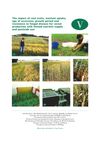
January 2003 in “Organic Eprints (International Centre for Research in Organic Food Systems, and Research Institute of Organic Agriculture)” This research observed that while organic farming systems in Southern Norway showed decreased phosphorus over time and variable nitrogen retention, the mulching of plant material could enhance vegetable yields, suggesting a need for innovative nutrient management strategies in organic farming.
 7 citations
,
January 2019 in “Pharmaceutical Biology”
7 citations
,
January 2019 in “Pharmaceutical Biology” This study suggests that Eclipta prostrata may promote hair growth in mice and human dermal papilla cells through regulating FGF-7 and mTOR signaling.
 7 citations
,
January 2015 in “Biological & Pharmaceutical Bulletin”
7 citations
,
January 2015 in “Biological & Pharmaceutical Bulletin” This study found that a 16-week dermal application of rice bran extract significantly increased hair density and diameter in male androgenic alopecia patients without causing adverse reactions.
 7 citations
,
September 2014 in “Beni-Suef University Journal of Basic and Applied Sciences”
7 citations
,
September 2014 in “Beni-Suef University Journal of Basic and Applied Sciences” This study found that ethanolic and petroleum ether extracts of Cuscuta reflexa, as well as an isolate from these extracts, improved hair growth and follicle characteristics in androgen-induced alopecia in rats.
 5 citations
,
August 2025 in “Drug Delivery and Translational Research”
5 citations
,
August 2025 in “Drug Delivery and Translational Research” This review discusses lipid-polymer hybrid nanoparticles for dermatological applications, outlining their structural and formulation advancements, but reports no new clinical results and calls for further research on their therapeutic potential.
 5 citations
,
January 2017 in “Skin appendage disorders”
5 citations
,
January 2017 in “Skin appendage disorders” In this case report, the authors linked acute psoriasiform contact dermatitis of the forehead and scalp to a low-laser light cap, identifying DMDE in the fabric as a likely cause.
 5 citations
,
April 2005 in “Journal of applied polymer science”
5 citations
,
April 2005 in “Journal of applied polymer science” This study demonstrated that urea significantly accelerates the diffusion of poly(ethylene imine) into bleached human hair by increasing the diffusion coefficient twofold.
 4 citations
,
April 2021 in “Journal of Cosmetic Dermatology”
4 citations
,
April 2021 in “Journal of Cosmetic Dermatology” This study found that both intradermal injection and derma roller techniques for QR678Neo® hair regrowth therapy improved androgenetic alopecia symptoms, with intradermal injections showing non-significantly better video-microscopic outcomes but more pain and erythema associated with derma rollers.
 4 citations
,
March 2019 in “Acta Chromatographica”
4 citations
,
March 2019 in “Acta Chromatographica” This study developed two sensitive chromatographic methods for determining finasteride and tamsulosin hydrochloride in pharmaceutical forms, validated against International Conference on Harmonisation guidelines.
 4 citations
,
April 1999 in “Dermatologic Clinics”
4 citations
,
April 1999 in “Dermatologic Clinics” This study found that the long-pulsed ruby laser effectively delays hair growth and has the potential for permanent hair removal with minimal pain and side effects, offering an advantage over traditional hair removal methods.
 4 citations
,
January 1982 in “Endocrinologia Japonica”
4 citations
,
January 1982 in “Endocrinologia Japonica” This study found that castration increased 5 alpha-reductase activity in the sebaceous glands of male hamsters, but administering testosterone propionate or 5 alpha-dihydrotestosterone inhibited this effect.
 3 citations
,
January 2015 in “Nasza Dermatologia Online”
3 citations
,
January 2015 in “Nasza Dermatologia Online” This review discusses the pathomechanism and pathology of alopecia areata, its classifications, and associated diseases, but reports no new clinical results, highlighting the importance for current and future treatment considerations.
 2 citations
,
April 2023 in “Pharmacognosy Journal”
2 citations
,
April 2023 in “Pharmacognosy Journal” This study found that bio fabricated herbal silver nanoparticles from Blumea lacera extracts demonstrated significant antibacterial activity against Staphylococcus aureus and Escherichia coli, and notable anti-inflammatory effects, though their antioxidant capacity was insignificant compared to the extract.