December 1987 in “Pediatric Dermatology” This article describes a previously unreported hair anomaly associated with facio-genito-popliteal syndrome and does not present new clinical results.
 November 2025 in “Saudi Journal of Medical and Pharmaceutical Sciences”
 In this study, researchers developed and tested hair gels using pectin from mango and coconut oil as a potential natural treatment for traction alopecia in black women, reporting stability in some formulations and rheological properties that may support their use in innovative phytocosmetics.
5 citations
,
November 2024 in “Frontiers in Nutrition” In this randomized controlled trial, oral intake of the probiotic Latilactobacillus curvatus LB-P9 significantly improved hair luster, elasticity, and participant satisfaction in individuals with mild to moderate hair damage compared to placebo, without significant adverse effects reported.
 September 2013 in “Science”
 This study found that single-crystal magnesium samples smaller than 100 nm exhibited increased plastic deformation due to greater activation of nonbasal planes as local flow stresses approached 2 GPa.
 8 citations
,
March 2018 in “Expert Review of Respiratory Medicine”
8 citations
,
March 2018 in “Expert Review of Respiratory Medicine” This article reviews the potential of inhalation therapy to restore pulmonary elastin fibers in COPD patients and highlights the need for studies to test its feasibility; it reports no new research findings.
April 2011 in “HAL (Le Centre pour la Communication Scientifique Directe)” This study suggests that polymersomes decorated with chitosan improve the transdermal delivery of finasteride, providing an alternative drug delivery system with higher drug retention in the skin.
 May 2017 in “Journal of The American Academy of Dermatology”
 An intact skin barrier is crucial to prevent infection in cases of tether-induced tenosynovitis.
7 citations
,
January 2024 in “Regenerative Biomaterials” This study developed a multifunctional core-shell fiber dressing that preserves platelet-rich plasma for 180 days, facilitating sustained growth factor release and improved wound healing.
39 citations
,
November 2005 in “The journal of investigative dermatology/Journal of investigative dermatology” The study concluded that fatty acid transport protein 4 in epidermal keratinocytes is crucial for maintaining normal skin structure, as its deficiency led to hyperkeratosis and epidermal barrier disruption in mice.
 September 2024 in “Likarska sprava”
 In this study, researchers provided an in-depth analysis of potential complications in hair transplant patients and discussed existing methods to reduce these complications and improve treatment and prevention strategies in trichology and plastic surgery.
This study found that integrating machine learning enhances the predictive accuracy of forensic DNA phenotyping from low template DNA, achieving high accuracy for traits like eye color, although challenges remain for admixed populations and complex traits.
54 citations
,
January 1984 in “Molecular and Cellular Biochemistry”  11 citations
,
August 2010 in “Pediatric dermatology”
11 citations
,
August 2010 in “Pediatric dermatology” This report details two cases of Lichen spinulosus in the submental area, treated effectively and safely with topical tacalcitol cream.
7 citations
,
January 2022 in “Bioengineering” This study found that a lipid-based nanoparticle formulation with oleic acid for delivering dutasteride showed lower skin permeation compared to a formulation without oleic acid, indicating its potential for targeted dermal delivery.
 July 1976 in “Archives of Dermatology”
 This article explores whether juxta-clavicular beaded and cutis punctata linearis colli are the same condition, finding both similarities and differences, but reports no new definitive findings.
July 2024 in “LA Referencia (Red Federada de Repositorios Institucionales de Publicaciones Científicas)” This review highlights encouraging findings on platelet-rich plasma's effectiveness in improving skin texture, firmness, and elasticity in aesthetic procedures but emphasizes the need for more standardized protocols and robust clinical trials.
 80 citations
,
June 2008 in “Biomaterials”
80 citations
,
June 2008 in “Biomaterials” This study found that poly(ethylene-co-vinyl alcohol) membranes support the self-assembly of dermal papilla cells into compact spheroidal microtissues capable of inducing new hair follicles, suggesting potential for large-scale production for hair follicle regeneration.
 1 citations
,
January 2020 in “Skin appendage disorders”
1 citations
,
January 2020 in “Skin appendage disorders” This case study documents the co-existence of trichorhinophalangeal syndrome and loose anagen syndrome in a patient, highlighting a previously unreported association between the two conditions.
 61 citations
,
June 2010 in “European Journal of Pharmaceutics and Biopharmaceutics”
61 citations
,
June 2010 in “European Journal of Pharmaceutics and Biopharmaceutics” This study found that liposomes coated with cationic polymers, chitosan and Eudragit EPO, showed improved physicochemical stability and enhanced skin diffusion of aciclovir and minoxidil compared to uncoated liposomes.

In this study, researchers developed an environmentally friendly hair coating from casein proteins and tannic acid, enhancing the tensile strength of virgin Asian hair by approximately 21% compared to untreated hair, while maintaining elasticity.
 1 citations
,
June 2017 in “Skin”
1 citations
,
June 2017 in “Skin” This study is the first to report that apremilast may be effective in treating refractory lichen planopilaris and frontal fibrosing alopecia, though some patients experienced adverse effects leading to discontinuation.
 July 2026 in “bioRxiv (Cold Spring Harbor Laboratory)”
 This study identified a new FAK isoform, FAKΔe4, which is regulated by ECM stiffness and affects cell migration, invasion, and mechanosensing in human-derived data and engineered models.
 April 2016 in “Journal of Investigative Dermatology”
 This study found that administering botulinum toxin A via Flex-PADs to mouse footpads inhibited sweating similarly to traditional injections, suggesting a promising patient-friendly delivery method for hyperhidrosis treatment.
November 2024 in “DELOS Desarrollo Local Sostenible” In this study, researchers observed that Thunbergia grandiflora and Russelia equisetiformis exhibited mutual aid by altering their phenotypic characteristics to facilitate intertwining, suggesting a form of solidarity without apparent external threats.
1 citations
,
December 2024 in “Archives of Iranian Medicine” This study found that tofacitinib significantly improved disease activity in most patients with LPP, though further research is needed to refine protocols, understand response predictors, and address gender-specific adverse effects.
 14 citations
,
July 2012 in “Journal of the American Academy of Dermatology”
14 citations
,
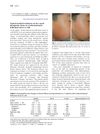
July 2012 in “Journal of the American Academy of Dermatology” This study found that topical tacalcitol improved roughness and scaling in erythromelanosis follicularis faciei et colli, although it was less effective for facial erythema.
1 citations
,
December 2025 in “Journal of Investigative Dermatology” Photocrosslinkable biomaterials can improve wound healing by controlling mechanical environments.
18 citations
,
September 2021 in “Colloids and surfaces. B, Biointerfaces” This study explored the development of polymeric nanoparticles for topical spironolactone delivery, finding that larger nanoparticles (180 nm) enhanced drug targeting to hair follicles significantly more than smaller ones or non-nanoparticle formulations, offering promise for safer acne and alopecia treatments.
 April 2025 in “Pharmaceuticals”
 This study found that novel thiol-reactive cross-linking agents, particularly APA, significantly improved the tensile strength and elasticity of human hair fibers by effectively regenerating disulfide bridges, with potential applications for advanced hair repair treatments in the cosmetic industry.
7 citations
,
August 2021 in “Pharmaceutics” This study explored the use of dexamethasone-loaded polymer hybrid nanoparticles in a xanthan gum hydrogel for treating alopecia areata, finding that freeze drying with sucrose influenced particle size, release, and permeation, but had no impact on cytotoxicity or anti-inflammatory efficacy in human keratinocytes.