 4 citations
,
October 2020 in “JAAD Case Reports”
4 citations
,
October 2020 in “JAAD Case Reports” This article discusses the potential use of platelet-rich plasma as a treatment for vitiligo, but reports no new clinical results; further investigation is needed.
 4 citations
,
October 2019 in “Skin appendage disorders”
4 citations
,
October 2019 in “Skin appendage disorders” This study found that autologous activated PRP injections significantly increased hair density in patients with androgenetic alopecia, with patients reporting high satisfaction and few side effects.
 4 citations
,
November 2016 in “Dermatologic Therapy”
4 citations
,
November 2016 in “Dermatologic Therapy” Topical tretinoin may increase beard hair density.
 4 citations
,
April 2016 in “Journal of The American Academy of Dermatology”
4 citations
,
April 2016 in “Journal of The American Academy of Dermatology” Microneedling with platelet-rich plasma can improve different types of hair loss.
4 citations
,
January 2012 This study found no significant difference in burn healing between rats treated with carboxytherapy and a control group.
 3 citations
,
May 2018 in “European Journal of Dermatology”
3 citations
,
May 2018 in “European Journal of Dermatology” Photodynamic therapy may not work for erythroplasia of Queyrat and could lead to invasive squamous cell carcinoma.
3 citations
,
June 2025 in “Journal of Cosmetic Dermatology” Using combined fat and growth factors can effectively treat hair loss after facial fillers.
3 citations
,
August 2021 in “Journal of Cosmetic Dermatology” This study found that non-ablative Er:YAG laser treatment, alone or combined with other therapies, effectively improved hair quality and reduced AGA grade in patients, with high satisfaction reported and no adverse reactions.
 3 citations
,
May 2019 in “International journal of research in dermatology”
3 citations
,
May 2019 in “International journal of research in dermatology” This study found that platelet rich plasma was effective in treating alopecia areata, with 65% of patients responding well to treatment.
 3 citations
,
January 2018
3 citations
,
January 2018 This study formulated an amla oil preparation according to Iranian traditional medicine and found it to have proper physicochemical and microbial quality, suggesting potential for hair loss treatment pending clinical trials.
3 citations
,
October 2013 in “Photodermatology Photoimmunology & Photomedicine” This study observed that combining targeted UVA phototherapy with topical 8-methoxypsoralen showed cosmetically acceptable hair regrowth in patients with patchy alopecia areata.
 2 citations
,
June 1997 in “The American Journal of Cosmetic Surgery”
2 citations
,
June 1997 in “The American Journal of Cosmetic Surgery” This review examines the factors contributing to the success or failure of the hair transplant megasession technique and reports no new clinical results.
2 citations
,
August 2022 in “Frontiers in Immunology” This study reported significant hair regeneration in a 3-year-old with severe alopecia areata after six months of treatment with microneedling and compound betamethasone.
 2 citations
,
January 2022 in “Lasers in Medical Science”
2 citations
,
January 2022 in “Lasers in Medical Science” This pilot study reported significant improvement in hair restoration and patient satisfaction with the use of fractional carbon dioxide laser followed by platelet-rich plasma, showing greater hair density increases using higher laser pulse energy settings in individuals with androgenetic alopecia.
 2 citations
,
June 2019 in “Serbian Journal of Dermatology and Venereology/Serbian Journal of Dermatology and Venerology”
2 citations
,
June 2019 in “Serbian Journal of Dermatology and Venereology/Serbian Journal of Dermatology and Venerology” This study reported remarkable improvement in three patients with treatment-resistant alopecia areata after receiving autologous platelet-rich plasma injections, suggesting the potential for this approach and a need for further randomized, placebo-controlled trials.
2 citations
,
September 2018 in “Walailak Journal of Science and Technology (WJST)” This study found that Thuja orientalis fruits have higher monoterpene, flavonoid, phenolic content, and antioxidant activity than leaves, suggesting potential value for the pharmaceutical industry.
 2 citations
,
January 2018 in “Journal of clinical & experimental dermatology research”
2 citations
,
January 2018 in “Journal of clinical & experimental dermatology research” This study suggests that AT-ASCs significantly improve terminal and intermediate hair counts and hair caliber in androgenetic alopecia more than PRP, though with more side effects like headache and erythema.
2 citations
,
May 2015 in “International Journal of Scientific Reports” In this observational study, 95% of androgenetic alopecia patients treated with neonatal mesenchymal stem cells through mesotherapy showed mild to moderate improvement in hair growth and reduction in hair loss.
 1 citations
,
January 1998 in “Seminars in Plastic Surgery”
1 citations
,
January 1998 in “Seminars in Plastic Surgery” Hair transplantation using micro- and minigraft megasessions is safe, effective, and provides natural results with high patient satisfaction.
1 citations
,
May 2025 in “Archives of Dermatological Research” This study found that microinfusion of 0.5% minoxidil in the scalp led to a significant reduction in diastolic blood pressure, indicating systemic absorption, while the control group experienced a rise in systolic pressure possibly due to procedural pain.
1 citations
,
July 2024 in “Journal of lasers in medical sciences” This case study reports that treating a female patient with facial partial unilateral lentiginosis using a 532-nm Nd:YAG fractional picosecond laser resulted in significant improvement in pigmentation without notable side effects, indicating it may be an effective and well-tolerated treatment option.
 1 citations
,
May 2024 in “AYUSHDHARA”
1 citations
,
May 2024 in “AYUSHDHARA” This case report details a patient with alopecia areata treated with wet cupping and Ayurvedic Rasayan therapy, observing complete hair regrowth in two bald patches after a month of treatment.
1 citations
,
February 2024 in “Aesthetic Surgery Journal” This study found that laser hair removal results in females were not influenced by hormonal fluctuations during different menstrual cycle phases, although pain tolerance was slightly lower during menstruation without reaching statistical significance.
1 citations
,
January 2024 in “Surgical & Cosmetic Dermatology” In this study, complete recovery from folliculitis dissecans was observed after intradermal botulinum toxin A injections, with the effect attributed to the host response rather than direct bacterial action.
1 citations
,
January 2022 in “Journal of veterinary diagnostic investigation” This case report documented a novel presentation of a canine viral plaque appearing as a solitary exophytic keratin-filled mass, highlighting the need to differentiate it from a hair follicle tumor.
1 citations
,
December 2021 in “Journal of Cosmetic Dermatology” This study observed that COVID-19 is associated with accelerated androgenetic alopecia, and platelet-rich plasma treatment showed improvement in hair loss after infection.
1 citations
,
October 2021 in “QJM: An International Journal of Medicine” This study found that platelet-rich plasma prepared using a double-spin method may be more effective for treating female pattern hair loss than single-spin PRP, although VEGF concentration was unaffected by either preparation method.
1 citations
,
July 2021 in “Journal of Central South University. Medical sciences” This study investigates how exercise relates to the severity of androgenic alopecia and aims to guide patients in selecting appropriate exercise types and amounts, but reports no new clinical results.
 1 citations
,
November 2020 in “Journal of Cosmetic Dermatology”
1 citations
,
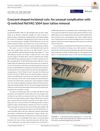
November 2020 in “Journal of Cosmetic Dermatology” This letter to the editor discusses an unusual complication, crescent-shaped incisional cuts, observed with Q-switched Nd:YAG 1064 laser tattoo removal and reports no new clinical results.
 1 citations
,
November 2018 in “International research journal of pharmacy”
1 citations
,
November 2018 in “International research journal of pharmacy” This study found that PRP therapy was effective and safe for treating androgenic alopecia, promoting 30% hair growth and showing antimicrobial activity against certain bacteria in affected patients.