 December 2025 in “Philippine Journal of Internal Medicine”
 This case report describes a 45-year-old woman with an SLE-SSc overlap syndrome who experienced significant improvement in symptoms after tailored immunosuppressive therapy including prednisone and mycophenolate mofetil.
This study suggests that pseudopelade may be an autonomous disease based on its distinctive clinical and histopathological features not present in other scarring alopecias.
 July 2011 in “British Journal of Dermatology”
 Dermatologists give better information on pathology forms, hypersensitivity vasculitis is a common skin issue, misdiagnoses can occur, and various skin conditions are linked to loss of elastin or genetic factors.
64 citations
,
June 2009 in “Photomedicine and Laser Surgery” This study found that monochromatic excimer light achieved complete remission in over 50% of plaque psoriasis cases and various levels of improvement in other skin conditions, including vitiligo and mycosis fungoides.
3 citations
,
September 2018 in “JAAD case reports” This case report discusses a rare occurrence of systemic sclerosis with lupus erythematosus panniculitis in a Japanese patient and highlights hydroxychloroquine as a potential treatment, noting a dramatic improvement.
 April 2022 in “Australasian Journal of Dermatology”
 This case report describes a rare presentation of recurrent plaque psoriasis on the penile shaft, which was controlled with systemic therapy after topical treatments failed.
1 citations
,
January 2024 in “Clinical Cosmetic and Investigational Dermatology” This case report discusses a 58-year-old female diagnosed with oral lichen sclerosus, an extremely rare form of the disorder, which improved following treatment with topical and intralesional corticosteroids, highlighting the importance of recognizing this rare condition in the oral mucosa.

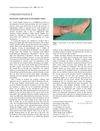
In this case report, a 59-year-old woman experienced burning sensations and developed atrophic, hypopigmented, ivory papules and plaques on her palms and soles over three years, which worsened after walking for extended periods.
 12 citations
,
July 1957 in “Journal of Investigative Dermatology”
12 citations
,
July 1957 in “Journal of Investigative Dermatology” This historical observation found that parathyroid extract treatment in newborn rats led to a condition resembling scleroderma, characterized by skin hardening, calcium deposition, and possible necrosis.
10 citations
,
April 2020 in “Journal of Mind and Medical Sciences” Excimer laser therapy can be an alternative for treating superficial morphea when topical steroids don't work.
 2 citations
,
January 2019
2 citations
,
January 2019 This review discusses autoimmune skin disorders, including lupus erythematosus and scleroderma, and their common treatments, reporting no new clinical results.
 January 2011 in “Journal of The American Academy of Dermatology”
 Two patients had a rare combination of red skin spots and white scaly skin lesions not on the genitals.
 40 citations
,
March 1984 in “Acta dermato-venereologica”
40 citations
,
March 1984 in “Acta dermato-venereologica” This study concluded that etretinate showed only moderate effects in treating lichen sclerosus and localized scleroderma, with some patients experiencing clearing but others having no resolution or lesion progression.
 284 citations
,
November 1999 in “Neurology”
284 citations
,
November 1999 in “Neurology” This article discusses the side effects of interferon beta therapy for MS, including flu-like symptoms and autoimmune reactions, and provides guidance on their management but does not report new clinical findings.
 37 citations
,
May 2004 in “Multiple Sclerosis Journal”
37 citations
,
May 2004 in “Multiple Sclerosis Journal” This article highlights adverse skin reactions due to injectable therapies for MS, noting that while generally mild, some cases can progress to serious lesions requiring medical intervention.
 18 citations
,
March 2006 in “Expert Review of Neurotherapeutics”
18 citations
,
March 2006 in “Expert Review of Neurotherapeutics” This review outlines strategies for preventing, identifying, and managing complications related to current MS therapies and reports no new clinical results, emphasizing the growing complexity in MS treatment regimens.
 10 citations
,
June 2020 in “Journal of Cosmetic Dermatology”
10 citations
,
June 2020 in “Journal of Cosmetic Dermatology” This study found a high prevalence of genital Lichen sclerosus and autoimmune comorbidities in patients with frontal fibrosing alopecia, suggesting a possible shared autoimmune process.
 9 citations
,
July 2010 in “British Journal of Dermatology”
9 citations
,
July 2010 in “British Journal of Dermatology” This article reports on lentiginosis observed within plaques of linear atrophoderma of Moulin and discusses its potential classification as a twin-spotting phenomenon but provides no new clinical research results.
 July 2023 in “Journal of skin and stem cell”
 In this study conducted at Baqiyatullah Hospital, it was found that interferon beta (IFNβ) treatment in multiple sclerosis patients commonly led to skin complications, with injection site erythema being most frequent, and also increased hair loss severity.
 45 citations
,
July 2002 in “The Neurologist”
45 citations
,
July 2002 in “The Neurologist” This article reviews the challenges of using disease-modifying therapy for multiple sclerosis and offers strategies to improve treatment adherence and manage adverse effects, but reports no new clinical findings.
 2 citations
,
July 2022 in “Dermatology Reports”
2 citations
,
July 2022 in “Dermatology Reports” This case study describes a 23-year-old woman with erosive pustular dermatosis of the scalp who later developed multiple sclerosis, suggesting a possible shared immunological etiology involving neutrophil hyperactivation.
 March 2015 in “Polish Journal of Public Health”
 This study found that capillaroscopic patterns varied among patients with systemic scleroderma, psoriasis, psoriatic arthritis, and alopecia, suggesting potential microcirculation disturbances; however, no correlations were observed with serum angiogenic markers.
 September 2024 in “Journal of the American Academy of Dermatology”
 In this case report, a 53-year-old woman with Little-Graham-Piccardi-Lassueur-Syndrome responded well to a treatment regimen of hydroxychloroquine, methotrexate, and other therapies, effectively halting the progression of this rare dermatosis characterized by alopecia and hyperkeratotic eruptions.
 36 citations
,
March 2011 in “Nature Communications”
36 citations
,
March 2011 in “Nature Communications” This study found that TSC2-null fibroblast cells from TSC skin hamartomas can induce hair follicle formation and hamartomatous changes in keratinocytes, with active mTOR signaling observable in a mouse xenograft model.
 May 2015 in “Journal of The American Academy of Dermatology”
 A woman with Parry-Romberg syndrome developed new curly hair on one side of her scalp, a condition not previously linked to the syndrome.

This article reviews the spectrum of connective tissue disorders and discusses the role of autoantibodies, particularly in lupus erythematosus, but reports no new findings.
 May 2002 in “British Journal of Dermatology”
 A pregnant woman's skin condition improved after giving birth, possibly due to high estrogen levels during pregnancy.
 19 citations
,
March 2013 in “Journal of Cutaneous Pathology”
19 citations
,
March 2013 in “Journal of Cutaneous Pathology” This case report describes a 26-year-old female with linear morphea and unique alopecia characterized by atrophic follicular remnants, resembling telogen follicles but indicating permanent alopecia, unlike typical findings in morphea-related alopecia.
 6 citations
,
July 2015 in “International Journal of Dermatology”
6 citations
,
July 2015 in “International Journal of Dermatology” This study observed that multiple familial trichoepitheliomas commonly presented with a cribriform histopathological tumor pattern, differentiating them from solitary trichoepitheliomas.
This case report details a child with a specific TNFAIP3 mutation manifesting as a severe SLE/SS phenotype, expanding the known phenotype for this genetic variant.