319 citations
,
November 2005 in “Proceedings of the National Academy of Sciences” This study suggests that hair follicle stem cells from transgenic mice can improve nerve regeneration and function, highlighting their potential as an autologous source for regenerative medicine.
 130 citations
,
September 2018 in “Cell Reports”
130 citations
,
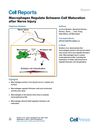
September 2018 in “Cell Reports” This study found that macrophages play a crucial role in nerve regeneration by regulating Schwann cell dynamics and remyelination, with Gas6 identified as a key factor in this process.
44 citations
,
January 2015 in “Development” This study reports that human epidermal neural crest stem cells from hair follicles can be quickly differentiated into highly pure human Schwann cells without genetic manipulation, suggesting their potential for therapeutic applications.
 5 citations
,
January 2023 in “Cell proliferation”
5 citations
,
January 2023 in “Cell proliferation” This study reported that supplementing rat hair follicle stem cells with chick embryo extract enhanced their migration and proliferation, possibly promoting differentiation toward Schwann cells.
1 citations
,
January 2025 in “Burns & Trauma” This study found that targeting the molecule Midkine may reduce pain and itching in keloid patients by inhibiting specific Schwann cell activities contributing to these symptoms.
 June 2020 in “bioRxiv (Cold Spring Harbor Laboratory)”
 This study found that overexpression of β-catenin in bipotent Schwann-cell precursors promotes melanocyte development in limb areas by inducing MITF and repressing FoxD3, especially during a specific developmental timeframe.
January 2007 in “The FASEB journal” In this study, keratin hydrogels derived from human hair were found to significantly enhance nerve regeneration in a mouse model, acting effectively as scaffolds by influencing Schwann cell behavior.
July 2025 in “Journal of Investigative Dermatology” Schwann cell and M2 macrophage interactions contribute to keloid growth by increasing matrix deposition.
June 2025 in “Proceedings of the National Academy of Sciences” In this study, a mouse model with a PIK3CA gain-of-function mutation in Schwann cells revealed unique communication with neighboring cells and a glycolytic shift in peripheral nerves, and early alpelisib treatment significantly improved symptoms, though efficacy declined with delayed administration due to limited drug penetration.
April 2009 in “The FASEB Journal” This study demonstrated that a keratin gel promotes nerve regeneration across critical defects in rabbit models, showing improved nerve conduction and muscle action potential compared to control treatments.
 May 2006 in “Frontiers in Neuroendocrinology”
 This study found that patients with androgenic alopecia had altered neuroactive steroid levels and depression symptoms after stopping finasteride treatment, suggesting lingering neuropsychiatric effects.
36 citations
,
September 2009 in “Molecular Neurobiology” 133 citations
,
June 2016 in “Nature Neuroscience” Zeb2 is crucial for nerve repair by controlling Schwann cell function.
144 citations
,
June 2008 in “Cell Cycle” This study found that in mice, transplanting hair follicle stem cells promoted recovery from spinal cord injury, as these cells largely differentiated into Schwann cells aiding nerve repair.
121 citations
,
June 2009 in “Journal of Cellular Biochemistry” In this study, human hair follicle pluripotent stem cells transplanted into severed mouse sciatic nerves differentiated into Schwann cells and supported nerve regeneration, offering a promising alternative to embryonic or iPS cells for regenerative medicine.
 106 citations
,
September 2010 in “Stem cells”
106 citations
,
September 2010 in “Stem cells” This study found that skin-derived precursor cells in mice can originate from both neural crest and somite lineages but show functional similarities regardless of their developmental origins.
105 citations
,
May 2013 in “Biomaterials” In this study, the researchers found that a keratin hydrogel filler in nerve conduits led to earlier Schwann cell migration and improved cellular behaviors compared to other fillers in a rat sciatic nerve model.
 66 citations
,
March 2019 in “Cellular and Molecular Life Sciences”
66 citations
,
March 2019 in “Cellular and Molecular Life Sciences” This review discusses melanocyte development, emphasizing the plasticity of melanoblasts and the role of both intrinsic and extracellular signals in their differentiation and migration, with no new clinical results reported.
57 citations
,
November 2011 in “The Journal of Dermatology” This study found that transplanting human hair follicle pluripotent stem cells can promote the recovery of sciatic nerve function in a mouse model of nerve impingement.
 37 citations
,
January 2009 in “The Journal of Dermatology”
37 citations
,
January 2009 in “The Journal of Dermatology” In this study, hair follicle stem cells from ND-GFP transgenic mice were observed to be pluripotent, effectively repairing peripheral nerve and spinal cord injuries in mouse models.
 33 citations
,
October 2010 in “Journal of Dermatological Science”
33 citations
,
October 2010 in “Journal of Dermatological Science” This study suggests that human and mouse hair follicle stem cells may support nerve repair and provide a practical source of stem cells for neurological therapies.
 21 citations
,
December 2016 in “PLOS ONE”
21 citations
,
December 2016 in “PLOS ONE” This study developed a new protocol to efficiently produce skin dermal stem cells from human induced pluripotent stem cells, which may aid in treating various skin disorders.
11 citations
,
September 2019 in “The journal of investigative dermatology/Journal of investigative dermatology” This study identified a distinct CD49fhigh mesenchymal stem cell subpopulation in the dermis that supports hair follicle development and maintenance via Notch signaling activation.
3 citations
,
May 2013 in “International journal of molecular sciences” This review discusses the biological characteristics and potential of epidermal stem cells in orthopedic regenerative medicine but reports no new experimental findings.
 1 citations
,
January 2018 in “Elsevier eBooks”
1 citations
,
January 2018 in “Elsevier eBooks” This review examines the diversity and role of stem cells in the adult dermis, noting a lack of precise understanding about their hierarchy and relationship to dermal fibroblast subpopulations, and reports no new results.
 1 citations
,
January 2008 in “Springer eBooks”
1 citations
,
January 2008 in “Springer eBooks” This study found that hair follicle stem cells are multipotent and can enhance nerve regeneration and function in mice, showing potential as an accessible source for treating peripheral nerve injuries.

In this study, upper-bulge epidermal stem cells in mouse hair follicles were shown to play a role in forming tactile sensory units by creating an extracellular matrix that supports nerve interactions.
September 2016 in “Journal of dermatological science” This study found that hair-follicle-associated-pluripotent (HAP) stem cells can be cryopreserved for future use in nerve and spinal cord repair, with human trials being planned.
309 citations
,
October 2007 in “Biomaterials” This study found that a biomaterial gel made from human hair keratins facilitated nerve regeneration in an animal model, potentially matching the effectiveness of traditional autografts.
106 citations
,
February 2014 in “eLife” This study concluded that terminal Schwann cells are essential for the maintenance and regeneration of mechanosensory lanceolate complexes at hair follicles in adult mice.