 15 citations
,
October 2016 in “Steroids”
15 citations
,
October 2016 in “Steroids” This study developed and validated a label-free assay using LC-MS to screen for S5αR inhibitors, identifying Thai herbal extracts, Impatiens balsamina L. and Curcuma longa L., as promising sources.

This study found that teak leaf extract can be effective in promoting hair growth in males with androgenic alopecia; however, significant variability in steroid 5-alpha reductase inhibitory activity among samples from different geographic origins means quality control is important for consistent therapeutic potential.
 72 citations
,
January 2011 in “Current Pharmaceutical Design”
72 citations
,
January 2011 in “Current Pharmaceutical Design” This review discusses the potential role of steroid 5α-reductase inhibitors in treating neuropsychiatric disorders related to dopaminergic hyperreactivity but reports no new clinical results.
 11 citations
,
December 2018 in “Assay and Drug Development Technologies”
11 citations
,
December 2018 in “Assay and Drug Development Technologies” This review highlights the challenges in screening for steroid 5 alpha-reductase inhibitors and discusses significant variability in the effectiveness of finasteride and dutasteride, calling for standardized testing methods to develop safer, more specific inhibitors from herbal preparations.
 35 citations
,
April 2012 in “Journal of Clinical Psychopharmacology”
35 citations
,
April 2012 in “Journal of Clinical Psychopharmacology” Finasteride reduces gambling symptoms in Parkinson's patients.
 3 citations
,
March 2005 in “The Journal of urology/The journal of urology”
3 citations
,
March 2005 in “The Journal of urology/The journal of urology” This letter to the editor addresses corrections related to an earlier study on the effect of the dual 5α-reductase inhibitor dutasteride on markers of tumor regression in prostate cancer, but reports no new findings.
 88 citations
,
August 2019 in “Nature communications”
88 citations
,
August 2019 in “Nature communications” In this study, researchers identified a specific T cell receptor associated with carbamazepine-induced severe cutaneous adverse reactions, demonstrating its potential for therapeutic development in patients with the HLA-B*15:02 genotype.
 59 citations
,
June 2023 in “Nature Aging”
59 citations
,
June 2023 in “Nature Aging” This study observed that in aged mouse skin, there was an increase in IL-17-expressing T helper cells, γδ T cells, and innate lymphoid cells, and blocking IL-17 signaling reduced skin inflammation and delayed age-related changes, suggesting it as a potential target to mitigate skin aging.
 18 citations
,
December 2016 in “Phytomedicine”
18 citations
,
December 2016 in “Phytomedicine” In this study, applying 1% or 5% Curcuma aeruginosa essential oil lotion to the underarm for 10 weeks significantly slowed hair growth and brightened skin in young women, with no adverse effects reported.
 15 citations
,
November 2022 in “Cell Death and Disease”
15 citations
,
November 2022 in “Cell Death and Disease” In this study, the researchers identified CEP135 as a biomarker linked to poor sarcoma survival and suggested PLK1 as a potential therapeutic target for sarcoma patients with high CEP135 expression.
 12 citations
,
March 2017 in “Medicinal Chemistry Research”
12 citations
,
March 2017 in “Medicinal Chemistry Research” This study found that certain curcumin analogs derived from natural plant sources exhibit anti-androgen activity by inhibiting steroid 5-alpha reductase, identifying key structural features for their potency and safety in treating androgen-related conditions.
 11 citations
,
March 2014 in “Journal of The European Academy of Dermatology and Venereology”
11 citations
,
March 2014 in “Journal of The European Academy of Dermatology and Venereology” In this study, researchers found that androgen receptor gene polymorphism is associated with higher androgenetic alopecia grades and PSA levels in men with benign prostatic hyperplasia, but not with prostate cancer.
 8 citations
,
October 2021 in “Indian Journal of Plastic Surgery/Indian journal of plastic surgery”
8 citations
,
October 2021 in “Indian Journal of Plastic Surgery/Indian journal of plastic surgery” This study reviewed data from 2,896 hair transplant patients over 10 years, identifying sterile folliculitis, vasovagal shock, facial edema, and other minor complications, with no life-threatening issues reported. Detailed counseling and thorough medical history assessments are recommended to minimize risks.
 5 citations
,
January 2018 in “Skin Pharmacology and Physiology”
5 citations
,
January 2018 in “Skin Pharmacology and Physiology” This study found that a high sesquiterpene C. aeruginosa extract significantly reduced axillary hair growth in women compared to placebo with no apparent adverse effects.
 2 citations
,
January 2024 in “Journal of Pharmacognosy and Phytochemistry”
2 citations
,
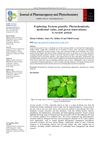
January 2024 in “Journal of Pharmacognosy and Phytochemistry” The study highlights Teak's (Tectona grandis) diverse applications beyond high-quality timber, emphasizing its bioactive compounds' pharmacological potential in cancer treatment and other uses across traditional medicine, cosmetics, and biodiesel production.
 November 2025 in “Clinical Cosmetic and Investigational Dermatology”
 This study found that a combination of five medicinal plants traditionally used in Chinese medicine significantly improved skin repair and delayed aging markers in laboratory models, suggesting synergistic anti-aging effects over individual ingredients.
 October 2025 in “Open Repository of the University of Porto (University of Porto)”
 This report details a six-month pharmacy internship in Portugal, where the author engaged in hospital and community pharmacy settings, and discusses scientific topics including obesity medication risks and alopecia treatment options. Results and conclusions are not explicitly reported.

This study found that additive discourse markers were the most frequently used type in a sampled news article from The Jakarta Post.
 August 2022 in “International journal of research in pharmacy and chemistry”
 This review summarizes the chemical composition and pharmacological properties of Teak (Tectona grandis) but presents no new research findings, emphasizing its use in traditional medicine and therapeutic potentials.
28 citations
,
November 2004 in “Endocrinology” This study by Gao et al. reports that two nonsteroidal selective androgen receptor modulators, S1 and S4, demonstrated tissue-selective actions in rats, suppressing prostate growth while maintaining muscle growth without altering hormone levels.
129 citations
,
January 2004 in “Journal of medicinal chemistry” This study synthesized nonsteroidal ligands as second-generation androgen receptor agonists and identified three compounds with significant anabolic activity and moderate to minimal androgenic activity in vivo.
March 2008 in “The Knowledge Bank (The Ohio State University)” This study found that AR-007 degrades faster and has a stronger association with hsp70 than AR-014, suggesting it is less stable when bound to the androgen receptor.
 March 2024 in “Journal of Evidence-Based Integrative Medicine”
 This study found that a hair tonic containing 1% teak leaf extract significantly increased hair growth and user satisfaction in men with androgenic alopecia after 24 weeks, without causing adverse effects, and was comparable to the standard treatment, minoxidil.
January 2002 in “映像情報メディア学会技術報告” This study found that 60% of examined prostate tumors had new somatic substitutions in the SRD5A2 gene, affecting enzyme activity and potentially influencing prostate cancer progression.
1 citations
,
March 2007 in “DOAJ (DOAJ: Directory of Open Access Journals)” This study reported that appendices disorders, primarily acne and androgenic alopecia, were the most common skin diseases among patients in Sari, Mazandaran, North of Iran.
1 citations
,
January 2022 in “Food & Function” This study found that fruit extracts from certain Egyptian Sabal species demonstrated significant anti-androgenic activity and potential therapeutic effects against benign prostatic hyperplasia in rat models and cell lines.
 1 citations
,
November 1995 in “Postgraduate medical journal”
1 citations
,
November 1995 in “Postgraduate medical journal” This article presents a case of 5-alpha-reductase deficiency in a Saudi individual, reporting no new research findings.
January 2008 in “OhioLink ETD Center (Ohio Library and Information Network)” This study found evidence of structurally and functionally distinct AR-SARM protein complexes, which may contribute to understanding how SARMs achieve tissue-selective effects.
5 citations
,
January 2018 in “Interdisciplinary sciences: computational life sciences” Accurate protein modeling can help develop new treatments for prostate cancer and other diseases.
January 2014 in “theses.fr (ABES)” In this research, Sertoli cell line model ST38c demonstrated that the androgen receptor regulates hormone pathways through specific coregulators, suggesting roles for SRC-2 and HBO1 in testicular development and androgen responsiveness.