In this study, Sox13 was identified as a novel marker for early hair follicle development and differentiation in mice, though it appears to be dispensable for overall epidermal and adnexal development.
13 citations
,
January 2018 in “Advances in experimental medicine and biology”  6 citations
,
January 2015 in “Biochemical Society Transactions”
6 citations
,
January 2015 in “Biochemical Society Transactions” This review discusses the role of Ysc84/SH3yl1 proteins in linking actin regulation to membrane morphology changes but reports no new experimental results.
 20 citations
,
April 2011 in “British Journal of Dermatology”
20 citations
,
April 2011 in “British Journal of Dermatology” Reflectance confocal microscopy can tell apart white dots on the scalp as either sweat gland ducts or hair follicle openings.
July 2024 in “Journal of Investigative Dermatology” 27 citations
,
April 2004 in “Biochemical and Biophysical Research Communications” In this study, two novel clusters of keratin-associated protein genes on human chromosome 11 were analyzed, suggesting their products are crucial for hair formation due to preferential expression in hair roots.
This study suggests that exogenous retinoic acid can alter the morphogenesis pathway of developing skin appendages when applied during the placodal stage, leading to changes like feather formation in atypical regions of chick embryos.
 January 2025 in “Dermatology Reports”
 This case report describes a 61-year-old Italian man with a rare, localized variant of junctional epidermolysis bullosa linked to the R795X mutation in the COL17A1 gene, highlighting the importance of precise diagnosis for effective management of rare genetic disorders.
37 citations
,
October 2006 in “Archives of Biochemistry and Biophysics” This study describes a patient with hereditary vitamin D resistant rickets (HVDRR) who, despite having a truncated vitamin D receptor, did not exhibit typical hair or skin abnormalities, suggesting possible compensation via interactions with other proteins.
 31 citations
,
November 2016 in “Cell Reports”
31 citations
,
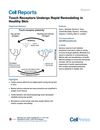
November 2016 in “Cell Reports” This study reveals that somatosensory neurons in mouse skin exhibit structural plasticity during hair-follicle regeneration, which may temporarily impair the reliability of encoding gentle touch.
June 2025 in “OPAL (Open@LaTrobe) (La Trobe University)” This study investigated the effects of a recombinant human collagen complex on hair growth, finding it enhanced survival and function of hair follicle stem cells and promoted hair growth in rat models, suggesting its potential for hair loss prevention and hair health maintenance.
11 citations
,
January 2005 in “Brazilian Journal of Medical and Biological Research” This study found no qualitative skin differences during development between mutant hairless USP mice and BALB/c mice, except for enlarged cysts in the hairless strain.
10 citations
,
September 2021 in “The FASEB Journal” This study found that ACKR2 plays a crucial role in reducing inflammatory skin fibrosis and promoting inflammation resolution through IFN‐β production, limiting tissue scarring.
19 citations
,
February 2016 in “Journal of Biological Chemistry” In this study, researchers observed that knocking out KCNQ3 in mice increased firing frequencies in response to stimuli, particularly at slow mechanical indentation velocities, indicating a role in mechanosensory neuron sensitivity.
20 citations
,
January 2017 in “Experimental Dermatology” In this study, deleting the Igf1 receptor in specific skin cells of mice affected hair follicle cycling but not overall skin health, suggesting Igf1r's role in hair cycle regulation through Bmp-4 activation.
10 citations
,
January 2010 in “International journal of trichology” This study found that keratin-associated proteins form part of the developing exocuticle and a-layer in hair fiber cuticle cells, while cornified envelope proteins were absent.
November 2025 in “OPAL (Open@LaTrobe) (La Trobe University)” In this study, researchers conducted additional IHC staining on equine skin sections and found that collagen type III primarily labels the extracellular matrix, while anti-PDGFR-antibody staining highlights cells with long-shaped processes mainly arranged around hair follicles.
 April 2026 in “Experimental & Molecular Medicine”
 This study used integrated single-cell chromatin and transcriptomic analyses in developing mouse skin to uncover gene networks involved in skin lineage specification and identified Mef2c+ upper fibroblasts as potential precursors to certain muscle-like structures, with cross-species findings in human skin.
 January 2023 in “Methods in molecular biology”
 This article reviews methods for examining the localization and activity of ROP GTPase, cortical microtubule organization, and F-actin dynamics in plant cell models, but reports no new experimental results.
 April 2017 in “The journal of investigative dermatology/Journal of investigative dermatology”
 This study suggests a connection between the unfolded protein response and upregulation of NKG2D ligands in stressed hair follicles, highlighting a potential role of PRDX5 in alopecia areata pathogenesis.
125 citations
,
August 1992 in “Development” This study found that implanting isolated adult rat dermal papillae into ear cuts led to the emergence of unusually large vibrissa-type hair follicles, demonstrating their capacity to induce specific hair fiber characteristics.
July 2021 in “Zurich Open Repository and Archive (University of Zurich)” This study provided new insights into the complex and heterogeneous architecture of keratin filaments, revealing their dynamic and flexible structure through cryo-electron microscopy analysis.
 1 citations
,
July 2009 in “Journal of dermatology”
1 citations
,
July 2009 in “Journal of dermatology” This case report describes a 29-year-old Japanese man with follicular mucinosis, suggesting nestin-positive, multipotent hair follicle stem cells may be involved in reticular epithelial degeneration of the outer root sheath.
475 citations
,
October 2006 in “Proceedings of the National Academy of Sciences” This study suggests that folliculin, mutated in Birt–Hogg–Dubé syndrome, and its partner FNIP1 may play a role in energy and nutrient sensing through the AMPK and mTOR pathways.
44 citations
,
April 1979 in “Journal of Ultrastructure Research” 4 citations
,
February 2013 in “PubMed” In this study, the antibody A3 identified quiescent post-progenitor epithelial and mesenchymal cells in developing rat hair follicles, suggesting it may help track the differentiation of these cells.
1 citations
,
January 2005 in “Experimental Dermatology” This study found that α-MSH may suppress IFN-γ-driven upregulation of ICAM-1 in human dermal fibroblasts, suggesting potential roles for melanocortins in inflammatory skin disorders beyond collagen synthesis effects.
 February 2023 in “Research Square (Research Square)”
 This study reports that a new mouse model with a CARD14 mutation successfully mimics key human PRP symptoms, and anti-IL-17A antibody significantly reduces these symptoms.
2 citations
,
July 2018 in “Chinese Journal of Dermatology” This study reported that imaging characteristics of sebaceous nevus vary significantly by age group, revealing dynamic developmental changes that can be effectively identified through dermoscopy and reflectance confocal microscopy, offering noninvasive diagnostic potential.