January 2022 in “SSRN Electronic Journal” This study found that lncRNA RP11-818024.3 transfection promoted hair growth in AGA mice and increased cellular proliferation in vitro, potentially involving the FGF2 and PI3K-Akt pathways.
14 citations
,
May 2016 in “International Journal of Molecular Sciences” This study showed that knocking out the Ppp2ca gene in the epidermis of mice led to significant hair loss and disrupted hair follicle morphogenesis and regeneration.
7 citations
,
May 2025 in “Journal of Biomedical Science” This study found that KRT6A expression increases after epidermal barrier disruption, worsening skin inflammation in disease conditions, and suggests that targeting KRT6A could offer a new treatment approach for inflammatory skin diseases linked to epidermal dysfunction.
1 citations
,
September 2023 in “Journal of the American Academy of Dermatology” In this study, patients with alopecia areata who didn't initially respond to ritlecitinib at Week 24 showed improved response rates by Week 48, with up to 34% achieving better hair regrowth outcomes.
 38 citations
,
July 2019 in “Nature Communications”
38 citations
,
July 2019 in “Nature Communications” This study found that Par3 plays a crucial role in maintaining epidermal homeostasis by regulating Rho/actomyosin contractility and ensuring mitotic accuracy, with potential implications for other self-renewing epithelia.
July 2025 in “Journal of Investigative Dermatology” April 2025 in “Our Dermatology Online” This article presents a case of a seventeen-year-old female with dermatopathia pigmentosa reticularis and emphasizes the importance of distinguishing its clinical features from other similar disorders, supported by dermoscopic and histopathological findings.
 February 2025 in “PubMed”
 In this study, researchers evaluated CS12192, a selective JAK3 inhibitor, in an alopecia areata mouse model and found it reversed hair growth inhibition comparably to baricitinib, with better safety and similar immune-modulating mechanisms.
 9 citations
,
May 2012 in “PLOS ONE”
9 citations
,
May 2012 in “PLOS ONE” This study found that integrin-linked kinase is crucial for various epidermal functions, including differentiation and barrier formation, and also plays a previously unreported role in melanocyte development and function.
 September 2016 in “Journal of Dermatological Science”
 This study found that epidermal-specific deletion of aPKCλ in mice disrupted hair follicle stem cell quiescence and regeneration, leading to abnormal hair cycling and skin changes.
 9 citations
,
February 2018 in “The Journal of Dermatology”
9 citations
,
February 2018 in “The Journal of Dermatology” This study identified a novel splice site mutation in the LIPH gene associated with autosomal recessive woolly hair, contributing to understanding the genetic basis of this condition.
 February 2019 in “bioRxiv (Cold Spring Harbor Laboratory)”
 This study found that Prss53-mutated rabbits exhibited curved hair and skeletal dyskinesia, suggesting a link between Prss53 loss and these traits, potentially involving disrupted calcium metabolism.
 4 citations
,
January 2021 in “Journal of Clinical Medical Research”
4 citations
,
January 2021 in “Journal of Clinical Medical Research” This review provides an in-depth analysis of the structure and function of c-kit activation, and its role in both normal physiological and pathological conditions, with no new research findings reported.
88 citations
,
December 2003 in “Journal of Biological Chemistry” This study identified epiprofin as a highly tissue-specific nuclear protein that promotes cell proliferation, mainly expressed in the developing teeth, hair follicles, and limbs of embryonic mice.
 May 2026 in “Nature Communications”
 This study observed that the loss of H3K9me3, via the ablation of Suv39h1, Suv39h2, and Setdb1 in embryonic mouse epidermis, disrupts skin development processes such as keratinocyte differentiation and hair follicle formation, highlighting H3K9me3's crucial role in epidermal morphogenesis.
 February 2024 in “Journal of Investigative Dermatology”
 In this study, the deletion of NIPP1 in keratinocytes led to chronic skin inflammation and epidermal changes in mice, with early cell-cycle arrest and premature senescence observed, potentially contributing to reduced mutagen sensitivity.
 2 citations
,
June 2024 in “Frontiers in Plant Science”
2 citations
,
June 2024 in “Frontiers in Plant Science” This study found that RALF peptides, through liquid-liquid phase separation, form condensates with pectin and other proteins, playing a pivotal role in plant development and stress response regulation.
10 citations
,
August 1998 in “Journal of Investigative Dermatology”  7 citations
,
January 2016 in “Laboratory Investigation”
7 citations
,
January 2016 in “Laboratory Investigation” TR3 is mainly found in hair follicle stem cells and may be involved in hair loss.
 10 citations
,
February 2008 in “Photochemistry and photobiology”
10 citations
,
February 2008 in “Photochemistry and photobiology” This study suggests that the vitamin D receptor and hairless gene may directly regulate each other via a transcriptional mechanism, potentially explaining phenotypic similarities between atrichia and VDRRIIa rickets.
28 citations
,
February 2010 in “Experimental Dermatology” This study concluded that the frizzy mutation in mice is linked to a T to A transversion in Prss8 and is orthologous to the 'hairless' mutation in rats.
 April 2016 in “Journal of Investigative Dermatology”
 This study suggests that dsRNA may enhance KRT9 expression in palm and sole skin through β-catenin signaling, potentially linking mechanical damage to specific skin features and certain skin conditions.
This study found that activation of delta-opioid receptors in keratinocytes may delay the expression of the PER2 gene, suggesting a possible link to cancer development through circadian rhythm disruption.
24 citations
,
June 2015 in “Journal of Investigative Dermatology” This study observed that epidermal-specific deletion of aPKCλ in mice disrupts hair follicle stem cell quiescence, leading to altered hair follicle cycling and skin anomalies.
 123 citations
,
November 2012 in “Stem cells”
123 citations
,
November 2012 in “Stem cells” This study reports that miR-302 promotes pluripotency by inhibiting NR2F2 and indirectly regulating OCT4 in stem cells, enhancing reprogramming efficiency when added to traditional factors.
24 citations
,
February 2002 in “The journal of investigative dermatology/Journal of investigative dermatology” In this study, researchers identified two new keratin-associated proteins, hKAP1.6 and hKAP1.7, in human hair follicles, contributing to understanding hair fiber differentiation.
35 citations
,
October 2002 in “Biochemical and Biophysical Research Communications” This study reports that K7 expression patterns observed in mice are similar to those in humans, revealing previously unreported expression in the gastrointestinal tract, tongue, and various "hard" epithelial tissues.
57 citations
,
January 1987 in “Journal of Biological Chemistry” This study identified and sequenced several keratin cDNA clones showing distinct expression patterns in mouse epithelia, with in situ hybridization highlighting differences in keratin distribution between normal and hyperproliferative tissues.
 128 citations
,
August 2015 in “Cell Stem Cell”
128 citations
,
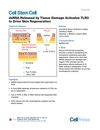
August 2015 in “Cell Stem Cell” The researchers reported that dsRNA from damaged skin activates TLR3, promoting hair follicle regeneration, while TLR3-deficient animals fail to initiate this process, suggesting potential therapeutic approaches for hair neogenesis.
25 citations
,
September 2005 in “Journal of the American Academy of Dermatology” This study reported that Rapp-Hodgkin syndrome, AEC syndrome, and EEC syndrome are likely part of a single genetic disorder spectrum linked to mutations in the TP63 gene.