 3 citations
,
January 2021 in “Journal of Bioscience and Bioengineering”
3 citations
,
January 2021 in “Journal of Bioscience and Bioengineering” In this study, researchers found that sweet potato shochu oil promotes hair growth in both human follicle dermal papilla cells and C3H mice. The oil contains components like ethyl palmitate, ethyl linoleate, and ethyl α-linolenate, which were key contributors to its hair growth-inducing effects.
 May 2026 in “Discover Chemistry.”
 This review presents recent advancements in bio-degradable polymers made through green chemistry, highlighting eco-friendly raw materials and methods, while also identifying challenges and future research areas to enhance their sustainability and commercial viability.
 3 citations
,
January 2024 in “Materials advances”
3 citations
,
January 2024 in “Materials advances” This article reviews the properties of cellulose nanocrystals for sustainable development but presents no new experimental results.
 2 citations
,
January 2015 in “Elsevier eBooks”
2 citations
,
January 2015 in “Elsevier eBooks” The document says biodegradable cosmetics and packaging are better for the environment and user experience.
 70 citations
,
August 2020 in “Nanomaterials”
70 citations
,
August 2020 in “Nanomaterials” This review discusses the development of electrospun nanofibrous scaffolds for promoting angiogenesis in tissue engineering but notes that their clinical application beyond bone and skin repair is still limited.
 1 citations
,
October 2022 in “International Journal for Research in Applied Science and Engineering Technology”
1 citations
,
October 2022 in “International Journal for Research in Applied Science and Engineering Technology” This review discusses the diverse applications of algae in non-energy sectors, including pharmaceuticals, food ingredients, pigments, and cosmetics, and reports no new experimental results.
 January 2016 in “Research Explorer (The University of Manchester)”
 Activating the Eda/Edar pathway improves wound healing by enhancing hair follicle growth.
 1 citations
,
January 2026 in “Frontiers in Bioengineering and Biotechnology”
1 citations
,
January 2026 in “Frontiers in Bioengineering and Biotechnology” This review discusses various nanocarriers for gene and genome editing therapies, highlighting that ionizable lipid nanoparticles show advanced delivery performance, while emerging polymer-based and exosome-inspired carriers are rapidly advancing for targeted applications.
 5 citations
,
August 2018
5 citations
,
August 2018 This paper highlights the growing scientific interest in plant extracts for cosmetics due to their potential benefits, including antioxidant, antimicrobial, and protective properties, while emphasizing the need for quality and safety assessment to mitigate possible adverse reactions.
 1 citations
,
December 2022 in “Parasitologists United Journal”
1 citations
,
December 2022 in “Parasitologists United Journal” This study observed that M. domestica larva-derived chitosan and gut extracts enhanced wound healing and collagen deposition in both immunocompetent and immunosuppressed mice, indicating potential benefits for combined therapy.
 1 citations
,
December 2018 in “IntechOpen eBooks”
1 citations
,
December 2018 in “IntechOpen eBooks” This review discusses the potential of using human hair proteomics for non-invasive diagnostic and forensic applications but reports no new results; the authors highlight areas needing further research.
 March 2025 in “GSC Biological and Pharmaceutical Sciences”
 In this review, the authors examined the potential benefits of using wood tar in dermatology and cosmetics in Sub-Saharan Africa, based on its historical application in skin care and its worldwide usage.
 January 2021 in “Middle East journal of applied sciences”
 This article discusses the widespread issue of zinc deficiency affecting plant, animal, and human health, and reports no new clinical results; the authors emphasize the need for adequate zinc availability in agriculture and nutrition.
 December 2019 in “University of Malaya Students Repository”
 This study found that Soxhlet extraction is more effective at removing the toxin mimosine from Leucaena leucocephala, and mimosine shows promise as a biodiesel additive due to its antioxidative properties.
 193 citations
,
February 2015 in “Nature Communications”
193 citations
,
February 2015 in “Nature Communications” Fungi-produced compounds can change plant root growth.
 96 citations
,
September 2017 in “Analytica Chimica Acta”
96 citations
,
September 2017 in “Analytica Chimica Acta” This review discusses the growing use of scalp hair for elemental analysis in various fields and highlights advancements in analysis techniques, including the future potential of laser ablation ICP-MS, but reports no new clinical results.
 34 citations
,
March 2020 in “BMC plant biology”
34 citations
,
March 2020 in “BMC plant biology” This study found that cotreatment with graphene oxide and indole-3-acetic acid significantly inhibited root development in Brassica napus, with the inhibition increasing as indole-3-acetic acid concentration rose.
 30 citations
,
June 2017 in “Talanta”
30 citations
,
June 2017 in “Talanta” This review discusses the critical parameters for MALDI IMS sample preparation in skin analysis and highlights its applications in wound healing, neoplasia, and infection research, but reports no new clinical results.
 6 citations
,
February 2023 in “Plant and Soil”
6 citations
,
February 2023 in “Plant and Soil” This study found that volatile organic compounds from Bacillus subtilis strain WM13-24 enhanced root development in Arabidopsis and its host plant through auxin signaling.
 5 citations
,
March 2023 in “bioRxiv (Cold Spring Harbor Laboratory)”
5 citations
,
March 2023 in “bioRxiv (Cold Spring Harbor Laboratory)” This study found that Piezo2 channels are primarily located on sensory axon membranes in mechanosensory end organs, supporting a model where mechanical stimuli activate Aβ RA-LTMR neurons via axon protrusions.
 4 citations
,
October 2022 in “Frontiers in public health”
4 citations
,
October 2022 in “Frontiers in public health” In this study on C57BL/6 mice, researchers found that cadmium chloride exposure led to metabolic disruption, accelerated skin aging, and impaired hair regeneration, with more severe effects observed at higher doses.
 4 citations
,
November 2016 in “Pediatric Clinics of North America”
4 citations
,
November 2016 in “Pediatric Clinics of North America” This article discusses the diagnostic and therapeutic approach for immune-mediated central nervous system diseases but reports no new clinical findings.
 3 citations
,
September 2020 in “Journal of Threatened Taxa”
3 citations
,
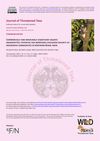
September 2020 in “Journal of Threatened Taxa” This paper highlights the distribution and potential economic and medicinal values of aquatic macrophytes in northern Bihar's wetlands, emphasizing their importance to local livelihoods and the risks of habitat degradation.
 2 citations
,
May 2018 in “Expert opinion on orphan drugs”
2 citations
,
May 2018 in “Expert opinion on orphan drugs” This review discusses Omenn syndrome, a form of severe combined immunodeficiency, highlighting its immunopathology and genetic defects without presenting new clinical results.
 2 citations
,
January 2015 in “Springer eBooks”
2 citations
,
January 2015 in “Springer eBooks” Environmental factors and exposure to toxins may contribute to male infertility by affecting sperm and hormone function.
 April 2026 in “Cellular and Molecular Immunology”
 In a conditional knockout mouse model, this study found that loss of the transcription elongation factor SPT6 in basal keratinocytes led to psoriasis-like skin inflammation and delayed wound healing, suggesting SPT6 plays a crucial role in maintaining epidermal immune quiescence by suppressing proinflammatory NF-κB signaling.
 February 2026 in “Chinese Medicine”
 Natural products might help treat hair greying.
 November 2025 in “Frontiers in Veterinary Science”
 In this study, zinc supplementation at 2.00 g/camel/day improved hair growth in lactating camels but did not affect milk production, while for calves, doses of 0.50–0.75 g/camel/day enhanced growth and hair development.
 May 2024 in “bioRxiv (Cold Spring Harbor Laboratory)”
 This study found that hair with lower levels of keratin associated proteins reduced the foreign body response in mouse subcutaneous implant tests compared to hair with higher keratin levels.
 September 2023 in “HAL (Le Centre pour la Communication Scientifique Directe)”
 In this study, peptide-based nanoparticles were successfully used to deliver the CRISPR-Cas9 system into cancer cells, effectively targeting and editing KRAS mutations, suggesting promising therapeutic potential for cancer treatment.