 December 2024 in “Frontiers in Pediatrics”
 This case report details the first use of baricitinib in a pediatric patient with immune thrombocytopenia and alopecia areata, showing successful treatment with increased platelet counts.
14 citations
,
October 2015 in “Neurochemistry International” This study found that letrozole, an aromatase inhibitor, reduced the incidence and severity of PTZ-induced kindling seizures in mice, potentially due to its effects on 17β-estradiol and neurosteroid synthesis.
Ritlecitinib significantly regrows scalp hair in people with alopecia areata.
 February 2025 in “Prospects in Pharmaceutical Sciences”
 This source reports that clascoterone cream, a topical androgen receptor inhibitor, has shown effectiveness in treating facial acne vulgaris in patients 12 and older, with clinical trials indicating a favorable safety profile compared to systemic treatments, and potential for broader dermatological applications.
 November 2025 in “SKIN The Journal of Cutaneous Medicine”
 In this study on adolescents with severe alopecia areata, baricitinib treatment showed effective scalp, eyebrow, and eyelash regrowth after 52 weeks, benefiting both responders and partial or non-responders, potentially reducing the psychosocial impact of the disease.
49 citations
,
October 1988 in “The Journal of Clinical Endocrinology & Metabolism” This study found that low doses of leuprolide effectively suppressed serum estradiol and LH response, while higher doses were needed to suppress testosterone and reduce hair growth in hirsute women.
April 2025 in “La Prensa Medica” This study found that oral contraceptives, particularly those combining ethinyl estradiol with progestins like drospirenone and cyproterone acetate, are effective in treating androgen-related skin conditions such as acne, hirsutism, and androgenetic alopecia by reducing excess androgens and sebum production.
 August 2024 in “Medicine”
 This study found that medroxyprogesterone acetate and ethinyl estradiol with drospirenone were the most frequently prescribed medications for PCOS, with some patients experiencing drug changes or discontinuation due to side effects or therapeutic failure.
6 citations
,
August 2024 in “Biomacromolecules” This study introduces a novel in vitro model for clubfoot fibrosis to enable high-throughput drug screening and found that while the model increased collagen deposition, the antifibrotic drug minoxidil effectively inhibited the expression of collagen cross-linking enzymes.
 6 citations
,
May 2023 in “Drugs”
6 citations
,
May 2023 in “Drugs” This study reports that baricitinib was more effective than placebo in promoting hair growth in adults with severe alopecia areata after 36 weeks of treatment in clinical trials.
January 2026 in “Updates in clinical dermatology” January 1975 in “NJEA Review” This Phase II study found that BAY 43-9006, given at 400 mg orally twice daily, led to stable disease in 30% and tumor reduction in 40% of renal cell carcinoma patients.
 19 citations
,
January 2011 in “Obstetrics and gynecology international”
19 citations
,
January 2011 in “Obstetrics and gynecology international” The researchers reported that red clover extract supplementation in postmenopausal women improved subjective assessments of scalp hair, skin, libido, mood, sleep, and tiredness compared to placebo.
 January 2011 in “Kazan medical journal”
 This study found that both finasteride and combined oral contraceptives with drospirenone improved reproductive health markers in women with polycystic ovary syndrome without metabolic abnormalities, with each having specific strengths.
35 citations
,
July 2008 in “International Journal of Gynecology & Obstetrics” This study found that medroxyprogesterone acetate treatment in women with PCOS reduced hyperandrogenism-related hormonal levels and improved skin conditions without affecting lipid or carbohydrate metabolism.
 September 2024 in “Polish Journal of Public Health”
 The researchers reported finding 53 therapeutic and skincare products for hirsutism and hypertrichosis in Polish pharmacies and drugstores, identifying dienogest and cyproterone acetate as common active ingredients for hirsutism. They noted promising new treatments include eflornithine, acyclovir, licorice, and vitamin D.
 11 citations
,
April 2017 in “The European Journal of Contraception & Reproductive Health Care”
11 citations
,
April 2017 in “The European Journal of Contraception & Reproductive Health Care” This review highlights that Cyproterone acetate combined with ethinylestradiol is highly effective for treating severe acne and hirsutism in women with hyperandrogenism, and it also provides benefits for cycle control and mood improvement, according to the analysis of 78 studies.
March 2026 in “The Journal of Dermatology” This study found that ritlecitinib 50 mg is cost-effective compared to no treatment for patients in Japan with alopecia areata and significant scalp hair loss, demonstrating an incremental cost-effectiveness ratio below the country's cost-effectiveness threshold.
November 2025 in “Journal of Clinical Medicine” The researchers reported that baricitinib treatment for at least 52 weeks reduced severe alopecia areata severity and improved psychological well-being and quality of life in study participants.
 1 citations
,
July 2025 in “SKIN The Journal of Cutaneous Medicine”
1 citations
,
July 2025 in “SKIN The Journal of Cutaneous Medicine” In this study, ritlecitinib 50-mg showed clinically meaningful efficacy, with improvements in the Severity of Alopecia Tool score observed in patients with alopecia areata over a 3-year period, demonstrating long-term benefit in both clinician- and patient-reported outcomes.
 January 2026 in “Zenodo (CERN European Organization for Nuclear Research)”
 This study found that Adapalene, Diosmin, and Azelastine have potential as multi-target drugs against Onchocerca volvulus and its endosymbiont, which might offer new therapeutic options for treating river blindness, but further research is needed to confirm their effectiveness.
June 2025 in “Medicine theory and practice” This study compared the effectiveness of combined oral contraceptives and antiandrogens for treating women with polycystic ovarian syndrome in late reproductive age.
12 citations
,
December 2021 in “Fundamental Research” This study found that (-)-blebbistatin significantly inhibited liver fibrosis in mouse models by reducing tissue stiffness and myofibroblast activation, indicating potential for developing broad-spectrum antifibrotic drugs.
1 citations
,
September 2023 in “Journal of the American Academy of Dermatology” In this study, patients with alopecia areata who didn't initially respond to ritlecitinib at Week 24 showed improved response rates by Week 48, with up to 34% achieving better hair regrowth outcomes.
 July 2017 in “Nursing2023”
 Actemra is approved for a specific artery condition, HIV treatment adherence has improved, women may pay more for a hair loss product, and incorrect dosing of blood thinners can be risky.
![Benzo[c]quinolizin-3-ones: A Novel Class of Potent and Selective Nonsteroidal Inhibitors of Human Steroid 5α-Reductase 1](/images/assets/ff6e6cbe-cb9c-4d11-87ef-671d28ffd4fa/small/15506.jpg) 28 citations
,
September 2000 in “Journal of Medicinal Chemistry”
28 citations
,
September 2000 in “Journal of Medicinal Chemistry” This study identified novel compounds as selective inhibitors of the type 1 isoenzyme of 5α-reductase, displaying promising potential for treating DHT-dependent disorders such as acne and androgenic alopecia.
 13 citations
,
August 2007 in “Bioorganic & medicinal chemistry letters”
13 citations
,
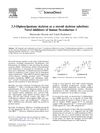
August 2007 in “Bioorganic & medicinal chemistry letters” This study developed a new competitive 5alpha-reductase inhibitor with an IC(50) of 0.84 microM using a novel chemical structure.
 25 citations
,
September 2018 in “Scientific Reports”
25 citations
,
September 2018 in “Scientific Reports” This study found that morroniside enhanced hair follicle growth and transition through the Wnt/β-catenin signaling pathway in a mouse model, suggesting its potential as a treatment for hair loss.
September 2025 in “Bioengineering” In this study, the researchers developed a deep learning framework to pre-emptively screen for adverse drug effects, showing strong predictive performance, including for increased bleeding risks with edoxaban compared to other anticoagulants.
2 citations
,
December 2013 in “Cancer research” In this study, GTx-027, a selective androgen receptor modulator, significantly inhibited tumor growth in certain breast cancer models and showed good tolerance in a Phase II trial with postmenopausal women.