 April 2016 in “The journal of investigative dermatology/Journal of investigative dermatology”
 The researchers reported that disrupting the RPGRIP1L gene in mice impaired desmosome function, causing skin blistering, and their findings suggest that PKCβII inhibition could help treat pemphigus.
 March 2014 in “Journal of The American Academy of Dermatology”
 The document lists various dermatology topics, treatments, and diagnostic methods.
 September 2005 in “Clinics in Plastic Surgery”
 This article discusses multiple aspects of complex regional pain syndrome, including its diagnosis, pathogenesis, and treatment, but reports no new scientific findings.
 July 2026 in “Frontiers in Immunology”
 This review summarizes recent findings on the role of lactylation, a novel post-translational modification, in skin diseases, suggesting its potential as a therapeutic target by linking metabolism, epigenetic regulation, and inflammatory processes.
 June 2026 in “International Science Journal”
 This study reviewed recent advances in regenerative technologies for aesthetic and reconstructive medicine and found that adipose-derived stem cells and platelet-rich plasma are well-established for tissue repair due to their safety and effectiveness, while emerging technologies like exosome-based therapies hold future potential.
 June 2026 in “International Journal on Science and Technology”
 This source redefines anti-aging medicine as "precision healthspan pharmacology," suggesting that rather than just treating diseases or accepting aging, pharmacology should focus on expanding functional capacity across various health domains, while emphasizing the importance of fundamental physiological and psychosocial health factors.
 June 2026 in “Frontiers in Cell and Developmental Biology”
 In this review, researchers examined how needle gauge and length impact the viability of human stem cells during injections, emphasizing the balance between minimizing tissue trauma and preserving cell viability to optimize clinical protocols.
 April 2026 in “DiRROS repository (University of Maribor)”
 This review discusses the therapeutic potential and challenges of using extracellular vesicles derived from mesenchymal stem cells, concluding that they may have a comparable therapeutic potential to the original cells despite current challenges in their application and production.
 March 2026 in “Konuralp Tıp Dergisi”
 This study found that participants with normal hemoglobin but low ferritin experienced significantly more symptoms like restless leg syndrome, dizziness, and shortness of breath compared to those with normal ferritin.
 March 2026 in “BioScience Trends”
 This review explores how various skin cell types contribute to photoaging driven by UV radiation, detailing their interactions and molecular mechanisms like oxidative stress and ECM degradation, ultimately offering insights for future anti-photoaging strategies.
 March 2026 in “Voprosy dermatologii i venerologii/Dermatologiâ ža̋ne veneralogiâ ma̋selelerì”
 In this article, the authors describe a successfully treated case of a newborn with ichthyosis using a neonatal protocol involving an incubator with controlled temperature and humidity, sepsis prevention, eye protection, and emollient care without keratolytics during the early neonatal period.
 March 2026 in “Voprosy dermatologii i venerologii/Dermatologiâ ža̋ne veneralogiâ ma̋selelerì”
 This study discusses how polynucleotide-based cosmetic products can improve aging skin in patients with particular morphotypes by restoring cellular metabolism, enhancing microcirculation, and promoting intracellular matrix remodeling, offering potential benefits for reversing chrono- and photo-aging and aiding tissue recovery after cosmetic or surgical procedures.
 March 2026 in “Voprosy dermatologii i venerologii/Dermatologiâ ža̋ne veneralogiâ ma̋selelerì”
 This study highlights the underexplored allergenic potential of Trichophyton rubrum, a dermatophyte, which can trigger IgE-mediated allergic reactions and a Th2 immune response shift, underscoring the need for its inclusion in diagnostic panels and further research for treating chronic mycoses and related allergies.
 March 2026 in “Перспективи та інновації науки”
 This study reported that visceral massage improved skin elasticity and metabolic indicators such as glucose and lipid levels, suggesting its potential as a non-invasive method for enhancing skin health and systemic metabolism.
 March 2026 in “Folia Histochemica et Cytobiologica”
 This review highlights LTBP1 as a critical integrator in disease processes, showing its dual role in cancer progression and suppression, its pathological influence in fibrosis, and its contribution to various disorders, suggesting its potential as a biomarker and therapeutic target.
This source provides medical information intended solely for licensed professionals and emphasizes that it is not a substitute for medical advice, diagnosis, or treatment decisions, which remain the responsibility of treating physicians.
 February 2026 in “Frontiers in Pharmacology”
 This review suggests a shift toward genetically informed treatments for male pattern hair loss by integrating genetic insights and pharmacogenetic markers into therapeutic decision-making.
This study found that Ca²⁺ signaling and peptidylarginine deiminase enzymes play a crucial role in activating neural stem cells in response to injury in zebrafish, suggesting potential therapeutic targets for CNS injuries and cancer.
 November 2025 in “Archives of Dermatological Research”
 This study found that Limelight (CB-EVs) exosomes significantly promoted hair elongation ex vivo without cytotoxicity, suggesting potential as a safe and effective hair growth therapy.
 October 2025 in “International Journal of Clinical Trials”
 This article highlights India's suitability as a strategic location for dermatology clinical trials due to its diverse patient population and cost-effective environment, offering insights on optimizing trials through advanced diagnostics, regulatory compliance, and ethical governance to attract global sponsors.
This review explores psychodermatology and platelet-rich plasma as complementary approaches for enhancing patient-centered care in dermatology, reporting no new results but highlighting their potential to improve outcomes and quality of life.
 September 2025 in “Drug Design Development and Therapy”
 This study suggests that while platelet-rich products show promise in treating dermatological conditions like chronic wounds and skin aging, there is still a need for standardized methodologies and extensive trials to confirm their long-term clinical benefits.
This study tested a novel cryo-carboxy dispensing device for treating androgenetic alopecia in six volunteers and found an unexpectedly rapid and positive response, with significant hair regrowth observed by day 90, prompting early conclusion of the trial.
 January 2025 in “Dialnet (Universidad de la Rioja)”
 In this multicenter study, adipose-derived stem cell-enriched fat grafting achieved higher satisfaction and better clinical outcomes compared to platelet-rich plasma and hyaluronic acid filler in aesthetic interventions.
 August 2024 in “Scholars Journal of Applied Medical Sciences”
 This study found that combining platelet-rich plasma therapy with minoxidil significantly improved hair growth and hair follicle cell proliferation in men with androgenetic alopecia compared to either treatment alone.
 July 2024 in “Journal Of Stem Cell Research”
 In this review, the authors highlight the crucial role of mesenchymal stem cells in dermatologic therapies, noting their potential to enhance skin structure and appearance through regenerative mechanisms like inflammation induction, angiogenesis, and recruitment of tissue-specific progenitors.
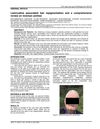
This review reports the first known case of hair repigmentation associated with lamivudine use and examines mechanisms related to drug-induced hair repigmentation, suggesting potential therapeutic strategies for reversing hair graying.
 June 2021 in “Journal of emerging technologies and innovative research”
 This article reviews the potential hair-protective effects of Onion and Aloe vera against damage from hair dyes but reports no new experimental results.
 January 2018 in “Elsevier eBooks”
 This chapter reviews various in vitro and laboratory animal models for studying potential therapies for alopecia and reports no new results.
 January 2017 in “Journal of clinical & experimental dermatology research”
 This study found that patients with telogen effluvium had significantly lower serum ferritin levels compared to healthy controls, suggesting a relationship between telogen effluvium and decreased iron stores.