 2 citations
,
January 2012 in “Hair therapy & transplantation”
2 citations
,
January 2012 in “Hair therapy & transplantation” This study observed that DDAIP-HCl enhanced the permeation of minoxidil through human cadaver skin, suggesting potential for improved treatment efficacy in male pattern hair loss.
46 citations
,
May 2021 in “Stem Cell Research & Therapy” This study found that strontium ranelate promotes cartilage regeneration in rats by enhancing chondrogenic differentiation of bone mesenchymal stem cells while inhibiting the Wnt/β-catenin signaling pathway.
1 citations
,
September 2023 in “Journal of the American Academy of Dermatology” Mini pulse corticosteroid therapy with oral dexamethasone is effective and has fewer side effects for treating extensive alopecia areata.
 July 2023 in “Clinical, cosmetic and investigational dermatology”
 In this study, reflectance confocal microscopy was used to diagnose periorificial dermatitis, revealing specific skin changes such as hair follicle dilatation, increased vascular density, and inflammation, which help distinguish it from similar conditions.
2 citations
,
June 2024 in “Dermatology” This study found that patients receiving active ritlecitinib doses reported greater satisfaction with hair growth compared to placebo, with high agreement observed between clinician evaluations of scalp hair improvement and patient satisfaction through week 48.
21 citations
,
September 2019 in “International Journal of Nanomedicine” RADA16-I can effectively deliver and release mangiferin, improving its solubility and bioavailability.
November 2024 in “Journal of Investigative Dermatology”  February 2013 in “Journal of The American Academy of Dermatology”
 Using hair loss drugs finasteride and dutasteride may cause sexual side effects.
 October 2023 in “Scientific Reports”
 In this study, gene therapy using a VDR-expressing adenoviral vector promoted hair growth in Vdr-KO rats, suggesting its potential for treating alopecia associated with type II rickets.
October 2014 in “The journal of investigative dermatology/Journal of investigative dermatology” This review discusses the formation and goals of the Pediatric Dermatology Research Alliance (PeDRA) but reports no new clinical results; it emphasizes collaborative research to advance treatment options for pediatric skin disorders.
 March 2021 in “Research Square (Research Square)”
 This study found that strontium ranelate may promote cartilage regeneration by enhancing chondrogenic differentiation and inhibiting the Wnt/β-catenin signaling pathway in rat models of cartilage defects.
June 2026 in “JAAD Case Reports”  61 citations
,
April 2014 in “Radiation Research”
61 citations
,
April 2014 in “Radiation Research” This study observed that topically applied RTA 408 reduced the severity of radiation-induced dermatitis in mice, with the highest dose significantly reducing and alleviating skin damage and associated inflammation.
 128 citations
,
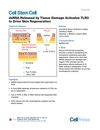
August 2015 in “Cell Stem Cell”
128 citations
,
August 2015 in “Cell Stem Cell” The researchers reported that dsRNA from damaged skin activates TLR3, promoting hair follicle regeneration, while TLR3-deficient animals fail to initiate this process, suggesting potential therapeutic approaches for hair neogenesis.
September 2025 in “JID Innovations” This study suggests that macrophages, particularly CD206+ macrophages, play a crucial role in squaric acid dibutylester-induced hair growth in alopecia areata treatment.
April 2023 in “Journal of Investigative Dermatology” RNase L suppresses regeneration in mammals.
1 citations
,
August 2024 in “British Journal of Dermatology” This study found that after 15 months of treatment with ritlecitinib, patients with alopecia areata and less than 95% initial hair loss experienced significant hair regrowth, though those with more extensive hair loss showed more variable improvement.
 17 citations
,
August 2012 in “Journal of Medical Genetics”
17 citations
,
August 2012 in “Journal of Medical Genetics” This article reviews the genetic mutations associated with hypohidrotic ectodermal dysplasia and reports no new clinical results; the authors highlight the roles of EDA gene isoforms and related receptors.
7 citations
,
October 2024 in “Journal of the American Academy of Dermatology” This source reported that patients who initially responded to ritlecitinib treatment showed sustained hair regrowth through week 48, with up to one-third of those not meeting target efficacy at week 24 also achieving a response with continued treatment.
 May 2025 in “The Journal of Rheumatology”
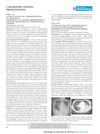
 This case report highlights a rare instance of diffuse alveolar hemorrhage in a patient with catastrophic antiphospholipid syndrome, emphasizing the importance of early recognition and multidisciplinary management.
 October 2024 in “Frontiers in Pharmacology”
 The correction does not change the conclusion that 2-deoxy-D-ribose helps hair regrowth.
 December 2025 in “Cureus”
 In this retrospective cohort study, researchers found that patients with androgenetic alopecia using 5α-reductase inhibitors had a significantly higher risk of developing dry eye disease compared to those not using these medications.
 July 2021 in “International journal of dermatology, venereology and leprosy sciences”
 This study found that diphenylcyclopropenone (DPCP) was more effective and better tolerated than dinitrochlorobenzene (DNCB) in promoting hair regrowth in patients with alopecia areata.
14 citations
,
June 1982 in “Archives of Dermatology” This letter to the editor shares concerns about possible systemic effects from topical dinitrochlorobenzene therapy in a 25-year-old man treating alopecia areata.
1 citations
,
April 2023 in “Scientific Reports” This study reported that newly developed RADA16-I peptide hybrids, with active motifs like GHK and KGHK, demonstrated improved wound healing in a mouse skin injury model without cytotoxicity, suggesting they might be effective scaffolds for tissue engineering and regeneration.

In this retrospective case series, therapeutic responses to immunomodulatory and incretin-based therapies for Dercum's disease showed considerable individual variation, suggesting these treatments might be exploratory options when surgery isn't feasible, though further controlled studies are needed for definitive conclusions.
July 2023 in “Media Dermato Venereologica Indonesiana” This case study highlights that RDEB-mitis can be misdiagnosed in older adults, emphasizing the importance of accurate diagnosis as it does not require immunosuppressive treatment.
 December 2023 in “Alzheimer's & dementia”
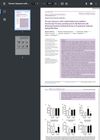
 In this rodent study, researchers found that the drug finasteride may reduce anxiety and depression-like behaviors in a model of aging, despite inducing metabolic disturbances and depressive-like behaviors in young rats, suggesting potential considerations for its use in elderly populations.
 2 citations
,
April 2018 in “Journal of Investigative Dermatology”
2 citations
,
April 2018 in “Journal of Investigative Dermatology” This study defines two types of RDEB wounds, chronic open and recurrent, and finds that patient self-reports on wound size correlate well with investigator measurements when complemented by serial photography.
 12 citations
,
January 2016 in “Journal of Orofacial Orthopedics / Fortschritte der Kieferorthopädie”
12 citations
,
January 2016 in “Journal of Orofacial Orthopedics / Fortschritte der Kieferorthopädie” This study identified a novel mutation in the EDA gene, which may impair protein stabilization and be involved in the development of oligodontia and mild ectodermal dysplasia phenotypes.