 November 2024 in “SKIN The Journal of Cutaneous Medicine”
 This study reports that ritlecitinib was prescribed to a diverse group of patients, including adolescents and adults with and without prior treatment for Alopecia Areata, in the first three months after FDA approval, potentially expanding care options for this condition.
January 2024 in “Wiadomości Lekarskie” This pilot clinical study introduces DEC cells as a novel therapy for Duchenne muscular dystrophy, confirming safety and efficacy in seven patients up to 24 months post-treatment.
 February 2023 in “Archives of Dermatological Research”
 This study found fractional carbon dioxide laser therapy effective in treating alopecia areata, both alone and with topical treatments, suggesting decorin's involvement in improving hair growth.
1 citations
,
September 2023 in “Journal of the American Academy of Dermatology” In this study, patients with alopecia areata who didn't initially respond to ritlecitinib at Week 24 showed improved response rates by Week 48, with up to 34% achieving better hair regrowth outcomes.
 31 citations
,
February 2014 in “Inflammation Research”
31 citations
,
February 2014 in “Inflammation Research” This study found that reduced expression of CD200R1 on monocyte-derived macrophages in rheumatoid arthritis patients was significantly associated with higher disease severity and an imbalance in Th17/Treg cells.
 1 citations
,
July 2025 in “SKIN The Journal of Cutaneous Medicine”
1 citations
,
July 2025 in “SKIN The Journal of Cutaneous Medicine” In this study, ritlecitinib 50-mg showed clinically meaningful efficacy, with improvements in the Severity of Alopecia Tool score observed in patients with alopecia areata over a 3-year period, demonstrating long-term benefit in both clinician- and patient-reported outcomes.
February 2026 in “The Journal of Dermatology” This study reports that ritlecitinib 50 mg, with or without an initial loading dose, demonstrated meaningful and sustained efficacy up to 24 months in the Asian subpopulation with severe alopecia areata, showing significant scalp, eyebrow, and eyelash hair regrowth, along with an acceptable safety profile.
 March 2009 in “The Journal of Urology”
 This paper discusses the potential of PSA doubling time after radical prostatectomy to predict overall survival but reports no new results.
5 citations
,
August 2021 in “Journal of biological chemistry/The Journal of biological chemistry” This study observed sexually dimorphic effects of reduced Rdh10 on energy metabolism and muscle function in mice, with males experiencing decreased endurance and females showing increased endurance on a high-fat diet.
 April 2019 in “Journal of Investigative Dermatology”
 This study demonstrated that gene-corrected 3D skin constructs from RDEB patient-derived iPSCs, grafted onto immunocompetent mice, showed normal collagen VII expression after two months.
 2 citations
,
October 2023 in “Frontiers in Immunology”
2 citations
,
October 2023 in “Frontiers in Immunology” In this study, researchers used Mendelian randomization to find a significant genetic association between rheumatoid arthritis and an increased risk of alopecia areata, suggesting RA patients should be vigilant for potential AA development.
1 citations
,
January 1989 in “Carcinogenesis” This study found that dexamethasone treatment inhibited the inflammatory response and the induction of ornithine decarboxylase activity in mouse skin after TPA application, although the effect on ODC was weaker during the hyperplastic stage.
 March 2019 in “Journal der Deutschen Dermatologischen Gesellschaft”
 This clinical letter identifies Rothmund-Thomson syndrome type 2 as a rare cause of chronic wounds, but provides no new experimental findings.
8 citations
,
August 2017 in “Skin appendage disorders” Red dots on the upper chest may be an early sign of certain types of hair loss.
 June 2025 in “Aesthetic Cosmetology and Medicine”
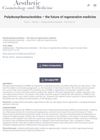
 This article reviews the potential uses of PDRN in regenerative and aesthetic medicine, noting promising results in various treatments but highlighting the need for further long-term studies to confirm their safety and effectiveness.
13 citations
,
April 1994 in “Baillière's clinical endocrinology and metabolism” This review discusses inherited forms of vitamin D-dependent rickets and explains their genetic and metabolic causes but reports no new clinical findings.
 July 2023 in “Journal of medical and health studies”
 This case study reported on a 3-year-old child with vitamin D-dependent rickets type II treated in the Gaza Strip, whose condition deteriorated despite vitamin D and calcium treatments, leading to recurrent chest infections, respiratory failure, and eventual death.
 2 citations
,
February 2024 in “Journal of the European Academy of Dermatology and Venereology”
2 citations
,
February 2024 in “Journal of the European Academy of Dermatology and Venereology” This study resulted in a draft version of the Patient‐Reported Impact of Dermatological Diseases measure, PRIDD, which includes 27 items refined from patient consensus and is now undergoing psychometric testing.
53 citations
,
May 1996 in “The Journal of Clinical Endocrinology & Metabolism” This study identified multiple mutations in the 5 alpha-reductase-2 gene among male pseudohermaphrodites in the Dominican Republic, suggesting they do not share a common ancestry.
July 2025 in “SKIN The Journal of Cutaneous Medicine” This study describes characteristics and outcomes for adults initiating ritlecitinib for severe alopecia areata, highlighting increased hair regrowth and physician satisfaction with longer treatment durations, despite ongoing psychosocial impacts like embarrassment and anxiety among patients.
 2 citations
,
June 2024 in “Frontiers in Plant Science”
2 citations
,
June 2024 in “Frontiers in Plant Science” This study found that RALF peptides, through liquid-liquid phase separation, form condensates with pectin and other proteins, playing a pivotal role in plant development and stress response regulation.
 9 citations
,
November 2008 in “Journal of Womens Health”
9 citations
,
November 2008 in “Journal of Womens Health” This study found that recruiting healthy naturally menopausal women for a DHEA therapy trial was challenged by concerns about hormonal treatments and time constraints, impacting study feasibility.
 April 2024 in “The Journal of urology/The journal of urology”
 This study observed that although 5-alpha-reductase inhibitors reduce PSA density in patients on active surveillance for prostate cancer, those who progress to more serious disease still show higher PSA densities, suggesting these inhibitors accentuate differences in clinically significant cases.
 4 citations
,
October 2024 in “American Journal of Clinical Dermatology”
4 citations
,
October 2024 in “American Journal of Clinical Dermatology” This study found that ritlecitinib improved patient-reported outcomes related to hair growth in individuals with alopecia areata, with some experiencing clinically meaningful hair regrowth, although changes in emotional symptoms and activity limitations were minimal and similar across treatment groups.
September 2017 in “Journal of Investigative Dermatology” RCS-01 is safe and may help rejuvenate aging skin.
9 citations
,
May 2002 in “PubMed” This study demonstrated that mice lacking skin-specific RXRalpha expression developed hair follicle degeneration and alopecia, indicating the importance of RXRalpha/VDR heterodimers in maintaining hair follicle homeostasis.
March 2026 in “Microchemical Journal” 91 citations
,
November 2008 in “Journal of biological chemistry/The Journal of biological chemistry” This study found that DGAT1 functions as a key enzyme in murine skin to regulate retinoic acid levels and prevent retinoid toxicity, impacting hair cycle and sensitivity to retinol.
January 2026 in “Dermatologic Therapy” This study found that elevated tissue RBP4 levels correlate with disease severity in alopecia areata and decrease after effective baricitinib treatment, while the rs3758539 polymorphism is linked to disease susceptibility but not to treatment response.
 January 2025 in “ACS Applied Materials & Interfaces”
 In this study, a nanoparticle system codelivering diphenylcyclopropenone and rapamycin successfully induced immune tolerance and promoted hair regrowth in a mouse model of alopecia areata, offering a promising new therapeutic strategy for this autoimmune condition.