 November 2023 in “Scientific reports”
 This study presents the first report on cloning and characterizing the full-length cDNA of SRD5A1 in Indian catfish (Clarias magur), revealing expression differences across reproductive phases and increased expression post-Ovatide administration in ovaries and testis.
 18 citations
,
February 2010 in “Odontology”
18 citations
,
February 2010 in “Odontology” This report describes Rabson-Mendenhall syndrome cases in two siblings and briefly reviews the literature, highlighting insulin receptor gene mutations as the underlying cause.
8 citations
,
July 2015 in “International Journal of Dermatology” This study reports that a homozygous A1103G mutation in DSG 4 is responsible for localized autosomal recessive hypotrichosis in a 2-year-old Chinese girl, resulting in reduced DSG 4 expression and hair defects.
January 2026 in “Journal of Biomaterials Applications” This study found that a fish skin-derived acellular dermal matrix improved wound healing in diabetic rats, showing faster closure rates and enhanced tissue regeneration compared to commercial alternatives.
This study found that 4-(ethoxycarbophenyl) retinamide (RI) exhibited significantly lower acute, subacute, and chronic toxicity compared to other retinoids in mouse and rat models.
 19 citations
,
January 2016 in “Annals of Dermatology”
19 citations
,
January 2016 in “Annals of Dermatology” This study found that dutasteride 0.5 mg was generally well-tolerated and led to overall improvement in male patients aged 18 to 41 with androgenic alopecia in a Korean clinical practice setting.
23 citations
,
August 2022 in “JAMA Dermatology” In this study, patients with alopecia areata indicated a preference for shared decision-making (SDM) with their dermatologists, and those who engaged in SDM reported less decisional regret about their treatment choices.
 September 2022 in “Research Square (Research Square)”
 This study found that overexpressing Rps14 in supporting cells promoted hair cell regeneration in the organ of Corti by facilitating cell proliferation and differentiation.
11 citations
,
December 2013 in “Clinical and experimental dermatology” This study reports a case of a child with congenital skin fragility, alopecia, and cardiomyopathy due to compound heterozygous mutations in the DSP gene causing desmoplakin deficiency.
 59 citations
,
September 2008 in “Experimental dermatology”
59 citations
,
September 2008 in “Experimental dermatology” This study reports that C3H/HeJ mice and DEBR rats serve as effective models for screening potential treatments for human alopecia areata, despite certain challenges in predictability and cost.
 8 citations
,
March 2020 in “Frontiers in Cell and Developmental Biology”
8 citations
,
March 2020 in “Frontiers in Cell and Developmental Biology” This study developed a DPC cell line by introducing mutant CDK4, Cyclin D1, and TERT, making it a promising tool to study downstream signaling pathways activated by testosterone in androgenetic alopecia.
2 citations
,
April 2024 in “Journal of Clinical Psychopharmacology” In this study, dutasteride 1 mg daily reduced heavy drinking days and drinks per week among treatment-seeking men, particularly benefiting those with high baseline drinking to cope motives.
January 2015 in “UNIFESP Institutional Repository (Universidade Federal de São Paulo)” This study found that a 30 Gy radiation dose was most effective in an experimental rabbit model of radiodermatitis, causing significant tissue changes and prolonged effects compared to lower doses and a control group.
7 citations
,
September 2024 in “PLANT PHYSIOLOGY” This study in Arabidopsis thaliana found that exposure to volatile compounds from Penicillium aurantiogriseum promotes root hair growth through signaling involving RALF22, ethylene, auxin, and photosynthesis, and that RALF22 plays a crucial role in the plants' response to these compounds.
 April 2026 in “Frontiers in Medicine”
 This study found that activating hair follicle resident T cells in a human organ culture can induce an alopecia areata-like immune response, and that the drug farudodstat partially reduced this effect.
 65 citations
,
February 2015 in “Neuro-Oncology”
65 citations
,
February 2015 in “Neuro-Oncology” In this study, four children with recurrent atypical teratoid rhabdoid tumors experienced disease stabilization or regression after treatment with alisertib, suggesting its potential role in future trials for this condition.
 5 citations
,
September 2015 in “Nepalese journal of ophthalmology”
5 citations
,
September 2015 in “Nepalese journal of ophthalmology” This case report highlights an 11-year-old girl with dermatopathia pigmentosa reticularis, identifying associated Salzmann's nodular degeneration of the cornea and emphasizing the need for a multidisciplinary management approach.
 27 citations
,
May 2007 in “Archives of dermatological research”
27 citations
,
May 2007 in “Archives of dermatological research” In this study, alopecia areata patients treated with diphencyprone showed a significant increase in CD8 lymphocytes around hair bulbs, which may be associated with hair regrowth.
October 2024 in “Journal of the Endocrine Society” This study highlights a rare case of vitamin D-dependent rickets type 2A caused by a heterozygous mutation in the vitamin D receptor gene, emphasizing the complexity of managing this condition with high-dose calcium and vitamin D therapy.
 1 citations
,
November 2025 in “International Journal of Clinical Pharmacy”
1 citations
,
November 2025 in “International Journal of Clinical Pharmacy” This study confirms known risks of cladribine and reveals potential new safety concerns, emphasizing the need for careful monitoring for early acute toxicity.
 July 2016 in “Journal of Investigative Dermatology”
 R-spondin2 may help treat hair loss, gene differences could explain baldness, a peptide's regulation is linked to psoriasis, B-defensin gene copies may affect a skin condition's risk and severity, and potential markers and targets for alopecia areata were identified.
39 citations
,
September 2018 in “American Journal of Medical Genetics Part A” This case report describes a 32-month-old girl with a newly identified pediatric disorder linked to a de novo mutation in the ODC1 gene, mirroring symptoms seen in a transgenic mouse model.
July 2026 in “Journal of the American Academy of Dermatology” 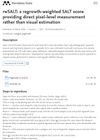 March 2026 in “Mendeley Data”
 In this study, researchers developed an open-source browser-based tool to enhance the reproducibility and accuracy of SALT score calculations from scalp photos, aimed particularly at assessing partial regrowth in alopecia areata patients on JAK inhibitor therapy.
 2 citations
,
October 2020 in “Journal of Investigative Dermatology Symposium Proceedings”
2 citations
,
October 2020 in “Journal of Investigative Dermatology Symposium Proceedings” This study reports promising preliminary trends in the safety and efficacy of a botanical drug candidate for pediatric alopecia areata, but conclusive results are not yet available.
 July 2026 in “Frontiers in Medicine”
 This study describes a new treatment algorithm for alopecia areata that includes both disease severity and quality-of-life considerations, highlighting recent therapeutic advances and the need for future validation and access equity.
 January 2019 in “Industrial Law Journal”
 This article reviews two new legislative measures affecting domiciliary care workers in Wales and reports no new research results; it highlights implications for labor law and devolution debates.
This study introduces a novel pro-drug formulation of all-trans retinoic acid that reduces skin inflammation and achieves sustained drug release over several days compared to traditional methods.
October 2017 in “DOAJ (DOAJ: Directory of Open Access Journals)” This study found that finasteride induced infertility and increased endoplasmic reticulum stress in rats, but these effects were mitigated by DA-9401 administration.
 February 2025 in “PubMed”
 In this study, researchers evaluated CS12192, a selective JAK3 inhibitor, in an alopecia areata mouse model and found it reversed hair growth inhibition comparably to baricitinib, with better safety and similar immune-modulating mechanisms.