48 citations
,
August 2001 in “Experimental dermatology” This study developed a rapid, cost-effective three-dimensional skin equivalent model using human dermal fibroblasts, collagen, and hair follicles, which closely resembles natural human skin and can be used for autologous transplantation.
 31 citations
,
November 2016 in “Cell Reports”
31 citations
,
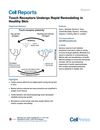
November 2016 in “Cell Reports” This study reveals that somatosensory neurons in mouse skin exhibit structural plasticity during hair-follicle regeneration, which may temporarily impair the reliability of encoding gentle touch.
14 citations
,
June 2020 in “Journal of the American Academy of Dermatology” This article describes international efforts by dermatologists to launch and harmonize registries focused on COVID-19's dermatologic impacts, aiming for better global collaboration and data sharing.
 13 citations
,
November 2022 in “Chemical Science”
13 citations
,
November 2022 in “Chemical Science” This review discusses the use of inorganic-based biomaterials for hemostasis and wound healing, including various preparation methods and mechanisms, but reports no new clinical results.
11 citations
,
December 2015 in “Indian journal of dermatology, venereology, and leprology” Dermoscopy quickly and accurately diagnosed a rare hair disorder in a 12-year-old girl.
9 citations
,
September 2023 in “Viruses” In this study, researchers in Southeastern Wisconsin characterized circulating SARS-CoV-2 lineages, notably identifying the dominance of Omicron variants, including sublineages XBB.1.5, XBB.1.16, and XBB.1.9.1, which exhibit mutations aiding viral transmission and immune evasion. This genetic analysis supports public health efforts in monitoring evolving virus strains.
 9 citations
,
February 2018 in “Journal of Pharmaceutical and Biomedical Analysis”
9 citations
,
February 2018 in “Journal of Pharmaceutical and Biomedical Analysis” This study validated a highly selective and fast LC–MS/MS method for accurately measuring levels of tadalafil and finasteride in human plasma, adhering to international bioanalytical guidelines.
 8 citations
,
January 2015 in “Clinical and Experimental Dermatology”
8 citations
,
January 2015 in “Clinical and Experimental Dermatology” This study found that an improved flap model in nude mice significantly reduces the time needed for hair induction compared to the traditional method, likely due to enhanced blood supply at the transplantation sites.
 7 citations
,
July 1976 in “PubMed”
7 citations
,
July 1976 in “PubMed” This study found that increased protein intake during fasting can nearly eliminate hair loss associated with weight loss, suggesting that protein availability is more critical than the speed of weight loss for hair growth.
 5 citations
,
February 1977 in “Archives of Dermatology”
5 citations
,
February 1977 in “Archives of Dermatology” In this study, increased protein intake during modified fasting nearly eliminated hair loss observed in patients with significant weight loss and negative nitrogen balance.
 4 citations
,
January 2018 in “Forensic Science International”
4 citations
,
January 2018 in “Forensic Science International” This study reported that a newly developed UHPLC-MS/MS method detected illegal synthetic hair-growth compounds in 10% of 76 hair-growth products, highlighting the need for ongoing monitoring to protect public health.
 4 citations
,
October 2009 in “Skin research and technology”
4 citations
,
October 2009 in “Skin research and technology” This study found that tristimulus colorimetry is a sensitive and quantitative method for projecting hair growth rates in depilated mice, and it observed that 890 nm LED irradiation promotes hair regrowth.
3 citations
,
August 2013 in “Journal of the American Academy of Dermatology” This study identified a novel microscopic "arrow sign" in hair root sheaths of patients on EGFR inhibitors, potentially aiding in diagnosing related hair changes and differentiating from fungal infections.
2 citations
,
January 2019 in “Methods in molecular biology” This protocol demonstrates that pharmacological inhibition of TGF-β signaling can enhance the proliferative capacity of mouse and human keratinocytes, facilitating their use in skin research and graft preparation.
1 citations
,
October 2013 This dissertation proposes a framework for analyzing medical images on mobile devices but presents no new research findings, focusing instead on development methodologies and their applications to hair transplant and glaucoma contexts.
January 2026 in “British Journal of Dermatology” This study developed a rapid ATP assay that effectively measures microbial populations on the skin and tracks changes after microbiome dysbiosis, with findings suggesting that ethanol-cleansed skin takes longer to recover than tape-stripped skin.
November 2024 in “Journal of Investigative Dermatology” Bimekizumab quickly improves psoriasis symptoms and skin at the molecular level.

In this study, baricitinib was used as monotherapy to treat a 21-year-old woman with severe alopecia areata, resulting in significant hair regrowth and reduced alopecia severity within three months, suggesting its effectiveness and potential as a robust treatment option for this condition.
 September 2022 in “JAAD Case Reports”
 In this study, researchers observed that approximately 25% of patients experienced hair loss after COVID-19 infection, with nonscarring alopecia being the most common form.
 October 2020 in “Journal of Pakistan Association of Dermatology”
 This analysis of seven studies explored the impact of finasteride (1mg/day for androgenic alopecia) on sperm concentration, finding that in most studies, sperm concentration increased after stopping treatment, but the largest study showed no change during or after treatment.
47 citations
,
August 2024 in “Science Advances” This study introduces a new biomimetic double wound mask designed to promote scarless healing by coordinating multiple biological pathways and providing enhanced protection and nourishment to wounds.
 24 citations
,
September 2001 in “Journal of Dermatological Science”
24 citations
,
September 2001 in “Journal of Dermatological Science” This study found that cyclophosphamide-induced hair follicle damage in C3H mice could be remodelled into intact anagen hair follicles with topical cyclosporin A, especially in anagen IV stage follicles.
15 citations
,
March 2007 in “BioTechniques” This study introduced a new in vivo angiogenesis assay using Gelfoam implanted in ND-GFP transgenic mice to efficiently identify angiogenesis stimulators and inhibitors through GFP visualization.
 1 citations
,
January 2018 in “Journal of Gynecologic Surgery”
1 citations
,
January 2018 in “Journal of Gynecologic Surgery” This article reports two cases where ovarian hyperthecosis caused hyperandrogenism in postmenopausal women, confirmed by imaging and resolved after bilateral oophorectomy.
August 2026 in “Acta Biomaterialia” 
In this case report, a 48-year-old woman with kerion celsi showed improvement with a regimen including antifungal, bacterial, and adjunctive treatments, though the specific role of mesenchymal stromal cell secretome could not be isolated from the other therapies.
April 2025 in “Frontiers in Bioengineering and Biotechnology” This research explores the potential of Gel-SHP hydrogels in tissue regeneration, suggesting they could contribute to new methodologies and understanding in wound healing and dermal shell formation, but results are not detailed.
 January 2025 in “Revista Vitae”
 In this study, researchers found that 2 out of 9 analyzed cosmetic hair growth products contained the banned substance minoxidil, demonstrating the presence of this antihypertensive drug in some cosmetics despite regulations.
In this case study, treatment with terbinafine effectively resolved symptoms of tinea capitis in an eight-year-old male, highlighting trichoscopy as a valuable diagnostic tool for this common fungal scalp infection and proposing its integration with clinical data for quicker diagnosis in settings lacking mycological facilities.
 January 2023 in “bioRxiv (Cold Spring Harbor Laboratory)”
 In this study, researchers observed that after mesenchymal cell division in mouse and chicken embryonic skin, elevated migration speed and persistence for 180 minutes contribute to mesenchymal dispersal and preferential recruitment to dermal condensates.